
Three thousand years of civilisation, economics and politics
1 November 2014 · Personal website
(Article 035 — 1 November 2014)
What is the Renaissance, the Age of Renewal, and the Reformation? What do these concepts represent? The terms “Renaissance” or, more broadly, “age of renewal” or “age of reform” – which have found a place in European political history – actually represent a period in which Western societies moved away from the barbarism, ignorance, and lack of scientific focus they had experienced in the past. The Middle Ages were a period characterized by the deaths of millions due to diseases like plague, dysentery, and smallpox, as well as instances of people being burned alive for their beliefs, a system where the peasantry were treated as less than human under the existing feudal structures, and a time when the king had no say over his own feudal lords.
At that time, there was a completely different world two thousand kilometers away from Europe. In this world, there were states with powerful and thriving economies, far surpassing Europe in fields such as physics, chemistry, biology, mathematics, astronomy, law, philosophy, and other academic disciplines. European historians refer to England, along with Holland and France – countries established entirely in the 17th century – as a “central state.” However, states in the East, with histories spanning two or three thousand years, stand tall with all their institutions. European historians, who ignore the Chinese, Iranians, Arabs, Hittites, Assyrians, and Turks, and treat them all as “barbarians,” fail to recognize that these states were the earliest and most enduring of all centralized states.
Europeans have achieved something remarkable: they have maintained dozens, even hundreds, of states with centuries-long histories, established state authority across a vast geography of millions of square kilometers spanning Asia, and sustained these states for thousands of years. They have accomplished this by successfully implementing the elements that define a state – including law, religion, finance, and public investments – and by effectively selecting and training the administrators and bureaucrats who govern it.
It is a common knowledge that modern world history does not have a very long past. Almost all of the developments that shaped Europe occurred within the last 300 years. Countries like Holland, Spain, Portugal, and Belgium – all prominent mercantilist colonial powers – went through almost the same process. Later, England and France, and finally Italy and Germany, joined this colonial network. If the global economy has undergone a profoundly significant transformation over the past 300 years, the primary reason for this is the innovations and developments in maritime transport. As we’ve mentioned, all the countries listed have been able to cross oceans and reach distant continents, establishing trade branches and colonies there. Spain, along with countries like Portugal and the Netherlands, used colonialism solely for exploitation and plunder. However, their dominance in this area did not last long; they quickly lost their colonies to the English and the French, one by one. Among these, England and France held a particularly significant position. These nations didn't simply aim to establish colonies; instead, they utilized the cheap raw materials obtained from these areas, transforming them into finished goods within their own countries, and then reselling them back to their colonies and to other countries around the world. Naturally, it was the very industrial revolution itself that provided them with this opportunity. The Industrial Revolution first emerged in England, and then in France, where these countries, through the development of new production techniques, initiated the use of machinery in industry. For a long period, they remained the unquestionable leaders of the world economy.
And in the meantime, what was happening in the East? For example, what was the state of the Ottoman Empire? Was the “maritime” aspect – which involved bringing European countries under colonial control and strengthening their position – significantly lagging behind in the Ottoman Empire? Certainly not. With the naval power it possessed, the Ottoman Empire had quickly conquered countries and islands such as North Africa, the Red Sea, the Aegean Islands, Egypt, and Rhodes, integrating them into its sphere of influence. They had become a nation possessing colonies, a fleet that, when necessary, engaged in naval battles with important European states and even managed to defeat them. Therefore, the Ottoman Empire was not lagging behind in maritime affairs; in fact, they were remarkably advanced in this area. The fundamental problem stemmed from the fact that the Ottoman navy was designed for relatively calm waters like the Mediterranean and Red Sea. Consequently, even a skilled captain like Piri Reis was unable to achieve success in battles against the Portuguese in the Indian Ocean, leading to his disillusionment. If the Ottoman Empire had initiated the construction of ships suitable for open seas at an early stage, it could undoubtedly have reached a significantly different and more advantageous position, both economically and politically.
The application of mercantilism, a system that causes people to feel differently in every country, has manifested differently across societies. Those who describe the privileges granted by Kanuni Sultan Süleyman to the King of France as “kapitülasyon” are, in reality, failing to recognize the subtle line between the Ottoman economic structure and state system and the European economic structure. The businessmen, who were mercantilists, were the ones who, rather than claiming special privileges from the Ottoman Sultan, were actually representing French businessmen and insisted on demanding special privileges from the Ottoman Empire. These French businessmen absolutely needed to sell goods to make a profit, as mercantilist teachings dictated this. The Ottoman merchants, however, did not understand or realize mercantilism. In 1488, the Cape of Good Hope was discovered, causing the Mediterranean region to lose its former significance. With the discovery of the Cape of Good Hope, the Silk Road, which was the most important economic activity of societies spanning from China to India, through Afghanistan to Iran, and from Turkey to Venice, lost its prominence. In reality, the world’s most significant economic crisis wasn’t the “1929 Global Crisis” or the “1979 Oil Crisis.” The discovery of the Cape of Good Hope—a pivotal event in history—resulted in the creation of a virtually impenetrable trade route between East and West. This dramatically diminished the commercial importance of cities like China, Venice, and Genoa, leading to widespread unemployment, the emptying of cities, and ultimately, the collapse of states, impacting millions of people. So, if we use today’s terminology, if we were to categorize this crisis using current language, the first “global” or more striking crisis the world experienced was the “1488 Cape of Good Hope Crisis.”
With the discovery of the Cape of Good Hope, seafaring communities who traded in the Mediterranean Sea, having lost their former significance, and almost none of them managed to muster the courage to venture into the oceans, ceased to hold their previous importance. The Dutch, who possessed trading ships suitable for open seas, were beginning to take over from Arab merchants – those who had been importing goods from these lands for thousands of years – by boarding their own ships and mooring them along the Indian coast. Meanwhile, the Ottomans had only recently settled in Istanbul, just 35 years ago. Mehmed the Conqueror initially granted privileges to Venice and Genoa, and Sultan Bayezid II extended the duration of these privileges. In 1535, under Sultan Suleiman the Magnificent, commercial privileges were granted to the French, while the privileges previously granted to the Venetians were terminated in 1540. Similar privileges were then granted to the English in 1579 and to the Dutch in 1612.
Let’s now re-evaluate the commercial privileges granted by the Ottoman sultans to foreign countries. It’s 1488, and the route around the Cape of Good Hope is being discovered, leading to commercial ships that were previously transporting goods from the Mediterranean now beginning to travel directly to the Indian Ocean. This resulted in a significant decline in the Silk Road. Initially, the decline was gradual, but it quickly accelerated into a sharp downturn. Every caravanserai, every village, every town, every province along the road, and even every country, is affected by this crisis. Due to the trade along the Silk Road, which generated significant tax revenues, the balance of payments for the countries and societies along that route is beginning to show a deficit. This is directly impacting the Ottoman economy. The state needs to take swift action and pursue initiatives to generate revenue. It would have been natural to support the Venetians, who during the reign of Fatih, were transporting all assets from the East to Western countries and providing the state with significant funds through the import tariffs they paid. However, these privileges were abolished in 1540. Because trade in the Mediterranean had ceased, the former importance of these regions had vanished. It was necessary to end the relationship with the bankrupt merchants. The Ottoman Empire needed money, but there were no more stable currencies in this region. They knew that the money was now in the hands of the new European states, which traded directly with the open seas and were flourishing. He was granted commercial privileges by the French in 1535, by the English in 1579, and by the Dutch in 1612. However, the Ottoman Empire had no liquid funds, as its economy was primarily based on a system of exchange – a “provizyonizm” policy, which formed the basis of the state’s economic strategy. Provizyonism was the economic policy of the Ottoman Empire, characterized by a desire to maintain a thriving domestic market and avoid exporting any goods or raw materials until the demand from the final consumer was met. This policy was based on the principle of “man must live so that the state may live,” aiming to ensure the continued well-being and prosperity of the population by prioritizing internal demand and avoiding external trade. The Ottoman Empire was only importing luxury goods, which served the same purpose. The primary goal was to ensure that there was no shortage of either local or foreign goods within the empire. Goods brought into Ottoman ports by foreign merchants were immediately taxed, and these taxes were collected in cash – either in gold or silver. A significant portion of these goods were then traded in reverse, going to the Eastern countries. The Ottoman Empire had initiated a new economic policy aimed at mitigating the effects of the “Hope Cape” crisis, utilizing the import tariffs collected in its ports to close its existing trade deficit. Looking at this from that perspective, do the privileges granted by Ottoman sultans to foreign countries constitute “capitulations,” or do they represent a method of generating foreign currency?
European mercantilist states viewed international trade as a means to increase national wealth and reduce unemployment, and therefore sought to boost exports and limit imports. Furthermore, these states also insisted on conducting foreign trade through their own national fleets. The Ottoman Empire, starting in its early periods, began granting special privileges to European ships and merchants in order to encourage trade. During the 14th and 15th centuries, these privileges were extended to the citizens of Italian city-states like Venice, who controlled the Eastern Mediterranean trade, and to those competing with them – including Ragusa (Dubrovnik), Genoa, and Florence. The state’s revenue from transit trade was of significant importance. Furthermore, the Ottoman Empire utilized trade privileges not only for financial and economic reasons, but also to establish political alliances with major European powers. One reason for granting trade privileges to countries like France, England, and later Holland, Austria, Prussia, and others, dates back to the 16th century.
Capitulations granted to European merchants (known as “müstemin”) residing in Ottoman port cities, provided them with rights to trade and travel within the Empire, to transfer goods between different regions, and to use ships flying their own country’s flag. As the privileges associated with the capitulations of the 17th and 18th centuries began to expand, European merchants were also granted new rights, including the ability to establish their own courts within the Ottoman Empire and to resolve commercial disputes within those courts – rights that directly challenged the state’s authority.
What was the economic policy of the Ottoman Empire, and how was it able to withstand challenges against all global actors for centuries?
The roughly 400 years from the foundation of the Ottoman state to the late seventeenth century were a period of expansion. With a few minor or temporary exceptions, the Ottomans suffered no significant defeat during those years. Having set foot in Europe in 1354, they advanced steadily there for more than 300 years. The circumstances in which the Turks first entered Europe deserve close attention. Between 1347 and 1357, plague swept across much of the continent. Having spread from south-western Asia and reached Europe in the late 1340s, it reduced the population in some regions by between 30 and 60 per cent. For roughly 100 years, with mortality so high and Europe preoccupied with its own troubles, Ottoman raiders were able to move rapidly into the interior without meeting much resistance. The Ottoman state, which had already gone a long way towards mastery of the world, displayed a resilience that is difficult to explain and survived until the First World War.
Mercantilism, which built everything on money, has led Eastern societies – those who previously sold goods to Europe – to suddenly become consumption-based societies. The Ottoman Empire, in its entirety, was actually displaying a centralized structure. However, this centralized structure, which had united and fostered Europe, began to cause problems for the Empire after a certain period. This hardship didn't stem from the decline of the Ottoman Empire, but rather from the inability to achieve capitalist capital accumulation. The Ottoman citizens had, in fact, never been exposed to wealth and capital accumulation – this was already impossible before the 1839 Tanzimat Edict. This was due to the fact that private property didn't exist within the Ottoman Empire; all land and assets belonged to the state. The only money in the possession of a middle-class Ottoman citizen, intended to last a lifetime, consisted solely of “kefen parası” – a rather ironic term for coins. Meanwhile, the farmers and villagers, who had been subjected to a long-standing system of in-kind taxation, could only manage to feed themselves by parting with a portion of their remaining assets. And what about the wealthy? Many wealthy Ottoman citizens who were of non-Muslim faith were involved in import and export businesses, while those with more wealth tended to engage in finance and banking. However, none of these activities offered any guarantee of future prosperity. If these individuals drew the attention of authorities due to a complaint or any other reason, the state could seize all their assets and property. Turkish individuals who came into wealth and fortune were primarily those serving in high-level government positions – soldiers and bureaucrats. For these soldiers and bureaucrats, the greatest danger was the direct seizure of all their wealth and assets. When an Ottoman bureaucrat was removed from their position, fell out of favor, or died, their entire accumulated wealth and fortune could be seized, and the assets painstakingly built up over years could vanish entirely. The absence of property rights and inheritance law hindered the formation of a capital-owning society in the Ottoman Empire. The work had no meaning, as everything would inevitably end up belonging to the state anyway. Consequently, the Ottoman economy was unable to develop large-scale industrial facilities, due to an environment where wealth became meaningless, and a more practical approach – simply managing one’s daily life and avoiding the accumulation of wealth – prevailed.
How, one might ask, did the Ottoman state tax crops and livestock across the vast territories it controlled? Most land in the empire belonged to the state. Across its extensive holdings on three continents, the timar system coexisted with other forms of ownership, each with its own arrangements governing production.
In Rumelia, the state was able to easily establish the timar system by controlling areas recently conquered from Christians, where private property belonging to Muslims had not yet been established. These lands were directly owned by the state. Conversely, during the period of the Anatolian Beyliks, the Anatolian Seljuk State had seen the emergence of private property on its former territories. Under Ottoman rule, the administration was obliged to recognize this specific form of property according to Islamic law. The conflict between the central state and local authorities resulted in the recognition of two separate property rights within these lands. The rights of the owner of private property were referred to as “malikâne,” while the rights of the state were designated as “divani,” and the lands themselves were known as “malikâne-divani.”
This type of private property system was most common in states where the central government was unable to fully establish its own form of governance. In regions of Eastern Anatolia, where Kurdish tribes were prevalent, in parts of the sancaks (districts) within Baghdad and Basra provinces, as well as in Egypt, Rhodes, Cyprus, and Crete – regions acquired later – the state tended to avoid interfering with existing structures. This state has only been collecting annual taxes determined on a state-by-state basis, while continuing to seize the surplus created in the land, belonging to private property owners. The state has also employed a similar method to encourage production on “mevat”—vacant land—as well. A document known as a “temlikname” was issued to those who brought these lands into cultivation, or, as it was known at the time, those who “developed” them. This document established private property rights on the land, and the owners of these properties were not obligated to pay land rent to the state.
In Ottoman society, private property owners were constantly faced with government interference and the ever-present risk of the state seizing their property. This led individuals who desired to protect their assets to seek new solutions. Property owners found a way forward within Islamic law, by transferring their possessions to the foundations they established, ensuring their assets would pass on to future generations.
The situation arose in the land, representing the exact opposite of private ownership, within state-owned, directly operated estates. These estates, established on lands remaining under the central state after conquered territories were divided into *tımarlar*, were places where revenues directly flowed into the central treasury. Therefore, the estates (haslar) of the Ottoman Empire differed significantly from those managed by sipahis (cavalrymen) and from the estates and zeamet (land holdings) that were allocated to wealthy state officials, which were part of the *timar* system. These estates were managed by *emin* – officials appointed by the central state and paid a salary.
During the second half of the millennium and the early part of the 15th century, both the Eastern Roman Empire and the small principalities in the Balkans were in a very weak state. The political fragmentation in these regions, along with diseases such as the plague mentioned above, facilitated the expansion of the Ottoman Empire. In the early stages of expansion, the small feudal lords in the Balkans frequently turned to the Ottoman Empire for assistance in their conflicts with one another. Later on, however, these feudal lords’ assembled armies – consisting of both *sipahis* and the *Yeniçeriler*, the Ottoman Empire’s first continuous standing army – proved to be significantly weaker against them. Initially, the Ottoman State did not interfere with the existing systems of property and production in the newly conquered lands. Instead, it simply brought the local feudal lords under the obligation of paying annual taxes. However, over time, the state began to increasingly emphasize its own ownership of these lands. The conquered territories were divided into units called “timar,” which were assigned to sipahis – soldiers – in exchange for military service.
The most glorious period of the Ottoman Empire was the 16th century. The Ottoman Empire, which continued to expand its geographical boundaries, had become one of the largest and most powerful states in both Europe and the wider “Old World” by the third quarter of the 16th century. By that time, its borders extended north to the Crimean Khanate, west to Hungary and Serbia, and south to the coasts of North Africa and the Nile Valley in Egypt. The Ottoman Empire had now become neighbors with Russia to the north, the Habsburg Empire to the west, and the Safavid State to the east. However, these achieved borders and the acquisition of powerful neighbors were also a sign that the era of rapid and easy expansion was coming to an end.
In all agricultural societies, whether located in the East or the West, the dominant groups consistently sought the same answer: how to tax agriculture and animal husbandry, which at that time were the most important sources of production. It was extremely difficult to collect agricultural surpluses as products, transport them to the market, convert them into money, and then distribute them as wages to soldiers. The origins of the system of care should be researched by examining its historical roots in Western Asia, particularly within the land tenure systems of Persia, in the Seljukian *ikt* system, and in the *pronoia* system of the Eastern Roman Empire.
Nature’s “pronoia,” which resembled the Western “fief” – a plot of land granted to feudal lords in exchange for military service – did not pass down through families. Unlike the Western system, it could only be obtained from the Emperor. This was a key difference that helped maintain the power of the central authority. When the Ottomans conquered the Eastern Roman territories, they adapted Rome’s military system, land organization, production methods, and warfare technologies with minor modifications. Furthermore, the system of local lords (derebeylik) and the system of cavalrymen (sipahi) within Ottoman society also stemmed from Eastern Roman institutions.
The practice of seizing agricultural surpluses resembles those seen in the West, which are not dissimilar to the Ottoman *timar* system. Similarly, European kings and leaders, like those in the Ottoman Empire, also resorted to allocating some of their land to their own feudal lords in order to meet the military needs – the required army and soldiers – during times of war. The most significant difference between the Ottoman system of *timar* and Western feudal land systems was that in the *timar* system, the peasants were free and autonomous, whereas in the feudal system, they were serfs – essentially, a form of bonded labor.
In regions where the system of registration (tahıl sistemi) was in effect, the state would conduct a census of all goods and human resources that could generate tax revenue, and record them in the registration records. This included not only agricultural lands, but also factories, marketplaces, ports, mills, and customs gates within cities. Subsequently, these tax revenues were divided into various units called “dirlik,” based on the annual income generated. The wealthiest units, known as “has,” received the highest income, while the middle-sized units were designated “zeamet,” and the largest number of smaller units received “tımar.” The income from “has” and “zeamet” was allocated to high-ranking state officials, directly or through their salaries. Jokes were distributed to the sipahis as a form of reward. The expectation of the sipahis, along with the large landowners, was to ensure the regular conduct of commercial activities within their own estates and to collect tax revenues recorded in the tahrir ledgers. Furthermore, the heads of the *dirlik* (tribal estates) allocated a portion of these revenues to support themselves, and then ensured that the *dirlik* provided a specified number of *cebelü* – armed and armored soldiers – to the army, depending on the size of the *dirlik*.
Starting from the middle of the century, the influx of precious metals – gold and silver – from America into Europe led to rising prices for goods across Europe, particularly in the Mediterranean region. Due to the influence of the Price Revolution, traditional taxes like “ çift resmi” (double levy) that were collected from agricultural producers were becoming obsolete. In this situation, the state began to frequently demand the “avarız-ı divaniyye” and “tekâlif-i örfiyye,” taxes traditionally only applied in extraordinary circumstances, such as wartime. As the state’s efforts to directly seize an increasing proportion of agricultural surplus led to the decline of the “tımar” system and the spread of the “iltizam” system, During the 16th century and before, the central state would entrust a portion of its trade, production activities in urban centers, and revenues collected from various sources to intermediaries known as *mültezim*. The *mültezim*'s purpose was to profit from collecting taxes on behalf of the state.
Another reason that made farms attractive to landowners and other capital owners was the increasing profitability of agricultural trade in the Mediterranean basin, driven by rising prices of agricultural products in the 16th century. Consequently, landowners were able to sell the agricultural products they collected – either through taxes levied on behalf of the state or through usury – to merchants at increasingly higher prices. The merchants, meanwhile, were sending a portion of the agricultural goods they obtained from local markets to cities, while also transferring a portion of these products to Western merchants, who then transported them to other regions of Europe, at higher prices.
From the early period of the Ottoman Empire, the state utilized the *iltizam* system, whereby specific tax revenues – outside of the *tima* system – were auctioned off to individuals known as *mülteci* for periods of 1 to 3 years. These tax revenues were referred to as *mukataa*. Capitation fees had defined geographical boundaries and represented a revenue source, previously determined by the treasury. For example, a city’s tradesmen’s guilds or a customs office could be designated as a “mukataa,” and similarly, various types of taxes or a combination of taxes from multiple regions could form a “mukataa.” Due to the state’s administrative deficiencies, a large portion of the revenues collected from mukata (tax farms) were gathered through iltizam (a system of collecting taxes through a specific intermediary). Furthermore, in regions where the system of şeriat (a system of land tenure and taxation) did not exist, such as in the provinces of Baghdad and Basra, tax revenues were also collected through iltizam. However, only a limited portion of the mukata revenues were managed by the state’s officials, known as emin (trustees).
As the state’s need for cash increased during the second half of the century, tax revenues – which were largely based on agriculture and formed part of the timar system – began to be converted into mukataals and then transferred to muktehil (landholders) through auctions. This created an attractive and increasingly expansive investment area for those who owned capital – including residents of Istanbul and those living in the countryside – as well as soldiers, high-ranking civil servants, religious scholars, and, to a certain extent, large lenders (known as “sarraf”). It was, in fact, the first serious opportunity for Ottoman citizens to accumulate wealth and capital. However, the fact that those who acquired these tax revenues through bidding then transferred the aforementioned land to lower-level administrators at a profit has led to a significant loss of a valuable opportunity. The high-ranking state officials, who were receiving instead of salaries, and were provided with substantial tax income, also began to delegate the collection of these revenues to lower-level administrators. The scope of *iltizam* expanded significantly in the 17th century. Wealthy *mültezim*s residing in Istanbul began acquiring large *mukata*s (land holdings) and dividing them into smaller portions, transferring them to local partners or lower-level *mültezim*s in the provinces. By the 18th century, the growing power of local *ayan*s led them to form partnerships with prominent officials in Istanbul and to seize control of the *mukata*s.
It’s also important to note a significant weakness in the Ottoman financial system. Following the conquests, the initial action taken in the newly acquired lands was *tahrir* – a process of inventory and accounting. During this *tahrir* process, the entire movable and immovable assets of that region were recorded. Land of significant agricultural importance, including vineyards, gardens, apricot orchards, olive groves, beehives, and detailed census data regarding the population’s gender, age, religion, and language, were all part of this. The Ottoman Empire, seeking a way to address both the seizure of agricultural surpluses produced in these lands and the need to secure the military strength required, adopted the timar system. This was done with the aim of collecting taxes in the most efficient and accessible manner, while simultaneously providing the state with the necessary military force without burdening the treasury. Almost the entirety of state revenues, excluding those collected in cash from ports and customs, constituted agricultural income, which was subject to indirect taxation within the system of timar, thereby preventing the Ottomans from establishing a permanent treasury system. The state itself had, in effect, taken the easy way out, deliberately avoiding the more advantageous tax sources it could have utilized to levy taxes for centuries. It took a full three centuries for people to understand how robust and lucrative the Ottoman tax resources were, and it wasn't until 1879, with the establishment of the “Sixteenth Tax Administration,” that actual figures for tax collection were revealed. The Rüsûm-ı Sitte Administration, with approximately 5800 employees, began collecting the tax revenues allocated to it, and once the initial collection figures were established, the seriousness of the undertaking became apparent. Established in 1881, this institution, incorporating all of its employees, laid the foundations of the Ottoman Finance system. Following the beginning of the liberation struggle in Anatolia, some of the Düyûn-ı Umûmiyye İdareleri (local branches) transformed into the first financial units of the Republic of Turkey.
Around the middle of the century, state tax revenues began to be increasingly divided between the *mil* system and the *iltizam* system, but following the rise in importance of a cash economy, the *iltizam* system began to shift in favor.
Meanwhile, the Ottoman Empire was entering a new period that would result in major disasters from its perspective. Following the Second Siege of Vienna in 1683, which ended in Ottoman defeat, a portion of Ottoman lands were lost, and ultimately, the Treaty of Karlofça was signed in 1699. Morale within the Ottoman Empire was at its lowest. The government decided to implement a system of selling “kayıt-ı hayat” – essentially, a form of life record – to individuals, requiring them to purchase these records with cash and at a price determined by the treasury. This decision was made in an effort to both improve tax revenue sources and address the cash shortages caused by ongoing wars. The system was formally implemented in January 1695 through a decree.
In this system, taxes were again sold through an auction, similar to the traditional *iltizam* system. However, unlike the traditional *iltizam* system where the annual tax amount payable to the Treasury was determined through an auction, in this new system, the annual amount was determined by the Treasury, and it was not possible to increase or decrease this amount through an auction.
The amount paid as the ultimate price for achieving annual profits throughout a lifetime was determined by the competition among buyers, based on the treasury’s assessment and subject to the condition that it should not fall below twice to eight times the annual net profit, while conducted over a long period within an office associated with the Treasury, where records were maintained publicly. The winning bidder, who offered the highest price, would be awarded the sale. A buyer who paid the customary fee (muaccele bedel) received a certificate outlining all rights and obligations pertaining to the property they would manage until death. The mukataa owner, adhering to the rules established by law, could manage their mukataa as they wished, and if they so desired, could sell it to someone else. The muaccele method was a secure and attractive system for administrators (mültezimler) within the framework of the traditional mukataa system. It was not possible to maintain a specific form of auction – relying on a single individual holding an item for a prolonged period – where the item would be handed over to whoever made a higher offer at any given moment.
The second siege of Vienna against Austria in 1683 and the succession of wars that followed, down to the Treaty of Karlowitz in 1699, gave rise to the malikâne system of lifetime tax farms. The financial difficulties of the Russo-Ottoman War of 1768–1774, in turn, made the need for a new system apparent. Under the Treaty of Küçük Kaynarca, which ended that war, the Ottoman state not only lost territory but, for the first time, had to pay a war indemnity to another state, Russia. After twelve long years of struggle and in the face of continuing financial difficulties, the Ottoman financial authorities sought a way out of the crisis by developing the malikâne system a stage further. The new arrangement, known as esham, was used from 1775 to 1860. Specified portions of the annual revenue from certain tax sources, or mukataa, were designated as faiz and divided into shares, or sehim, of 2,500 kuruş. Individuals bought the right to receive this income for their lifetimes in return for a lump sum paid in advance, called the muaccele.
Men, regardless of whether they were male or female, Muslim or non-Muslim, soldier or commoner, could acquire a share (sehim) in the Ottoman Empire. Individuals who paid a fee of 5% to 10% of the muaccel (tax) and deposited it into the treasury, would receive a certificate (berat) in their own name, with the condition that they could then sell their share, subject to depositing 10% of the muaccel into the treasury. The property, once owned, would be considered “orphaned” (belonging to no one) and remained within the treasury. No payments were made to the heirs; because, according to the system’s logic, the annual interest paid by the Treasury effectively covered the original debt, so there was no need to pay an additional principal.
Palaces were only granted to members of the military, due to the responsibility of managing tax payers. Like other rare exceptions, they were not given to women, and not to non-Muslims, outside of the Sultan’s daughters.
From the beginning of the nineteenth century the Ottoman state once again entered troubled times. There was war in Serbia in 1804, a Russo-Ottoman war from 1806 to 1812, and the Greek revolt from 1821 to 1829. The Kingdom of Greece was founded in 1821. In 1828–1829 another Russo-Ottoman war broke out. The Treaty of Adrianople, signed at the end of that war, recognised the establishment of the Greek state. Wallachia, Moldavia and Serbia were granted privileges, Russian merchant ships were given the right of passage through the Straits, and Russia received a war indemnity.
Following the death of Sultan II. Mahmut on July 1, 1839, Abdülmecid ascended to the throne. At the time, the Ottoman Empire was grappling with a significant internal problem. The Governor of Egypt, Kavalalı Mehmet Ali Pasha, had brought Ottoman forces to defeat in several locations, reaching as far as Kütahya. England and France announced that they would assist the Ottoman Empire in exchange for certain reforms. Ultimately, the problems stemming from the Crimean War were, in essence, caused by those within the Ottoman Empire itself. At the time, as Minister of Foreign Affairs, Mustafa Reşit Pasha informed the Sultan about the state’s precarious situation and successfully persuaded him to implement certain reforms. The Tanzimat Edict was officially read aloud on November 3, 1839, by Mustafa Reşit Pasha himself, in a grand ceremony. With this edict, it is hereby decreed that, unless a court decision is issued, no one shall be executed, nor shall anyone’s honor or reputation be violated. Furthermore, all individuals shall be free to manage their property, and no one’s assets shall be seized. Moreover, the practice of *iltizam*, which caused harm to the public, is officially abolished, and it is formally guaranteed that the ruler will not execute or poison anyone without a court judgment.
Here, the “esham” system was created in a period marked by a series of serious problems, with the aim of addressing the state’s increasing need for cash. The necessities that led to a transition from the traditional “malikâne” system to the “esham” system, which had previously created significant challenges, eventually began to put pressure on the “esham” system itself. Attempts were made to borrow from foreign countries, where interest rates were significantly lower, but these efforts were unsuccessful. During the Tanzimat period, the finance authorities sought to move away from the *esham* system – a method of financing that required the shares to be transferred to the treasury upon the death of the owner – and instead find a more affordable and medium-term borrowing method. This involved shifting shares that had previously been subject to the *esham* system to the heirs, effectively keeping the principal within the framework of private property, a provision already outlined in the Tanzimat Edict. On August 1840, the sale of newly issued shares called “evrak-ı nakdiye” (speculative notes) was successful. With names like “Esham kavâimi, kaime-i mutebere, evrâk-ı nakdiye,” this initial attempt was beginning to change the nature of “esham.” However, the rapidly increasing volume of these speculative notes quickly began to lose value, with one Ottoman gold coin eventually trading for 500 kuruş (pennies). However, due to guarantees of ownership and inheritance, the treasury was able to secure increasingly lower interest rates through this method. Initially, the interest rates on these official documents, which were first offered at 12%, were subsequently reduced to 10%, and then to 8%. As this rapid expansion occurred, the value of “kaime,” which had previously been a significant source of instability in the market, began to decline.
Finally, in 1849, a new type of “esham” – one that reflected the ownership of esham purchased by the children or grandchildren of the buyer – was introduced to the market. This “esham” type was created so that when the original buyer and subsequent purchasers died, the shares would revert to their children in equal portions. And, when this second generation also passed away, the shares would then be considered “esham” and returned to the treasury.
In 1838, a series of Trade Agreements signed with countries including England, brought an end to the Ottoman Empire’s traditional, provisionist, and fiscalist economic policies, integrating it into the era of liberalism. However, this structure abruptly brought the Ottoman economy into an open market system, which quickly proved unsustainable.
Trade agreements with numerous countries, both large and small, have led to a reduction in import duties from 12% to 3%, as well as the substantial elimination of export taxes and related formalities. This has particularly enabled foreign traders to freely operate within the country and to easily buy and sell the goods they require. Following these agreements, Ottoman exports, which were primarily based on raw materials, increased threefold, while imports based on finished products also doubled. This led to a significant outflow of gold and silver reserves within the country, resulting in payment difficulties, particularly in cities like Istanbul and other port cities, by 1845. The solution proposed to address the shortage of gold and silver money created a new problem that would plague the country’s economy for years: the introduction of “kaime,” paper money offering an annual return of 8%.
As it became clear that the state’s increasing need for financing could not be met through treasury revenues and domestic borrowing, the Ottoman authorities began seeking external debt. Initially, France and England, which had previously rejected Ottoman requests for external debt, began to offer loans in exchange for some form of collateral, following the Crimean War when they sided with the Ottoman Empire. However, the primary goal was to end the Ottoman’s provisionist economic policies and to open up the Ottoman economy. The West needed raw materials, which were readily available within the Ottoman territories. The provisionist system, by prioritizing the well-being of Ottoman society, limited export opportunities. Turning to the export of raw materials brought a sense of relief to Western nations, but would ultimately disrupt the centuries-old economic structure of the Ottoman Empire. And, as it turned out, this did indeed happen. While raw material exports increased Ottoman foreign trade revenues, the resulting scarcity of raw materials within the country quickly led to rising prices, the weakening of the guild system, and a rise in unemployment. It was what the Westerners wanted. The Ottoman economic policies, which had remained stable for 400 years, began to collapse, and within a very short time, everything fell into disarray. The Ottoman finance, which had not needed external debt until 1838, suddenly encountered payment imbalances shortly after the Black Sea Trade Agreement.
Following the 1854 Crimean War, the initial debt was followed by a series of subsequent debts. Between 1854 and 1874, a total of 15 external debt agreements were signed. The total amount of borrowing, totaling 238,773,272 Ottoman gold lira, resulted in 127,120,220 lira being received by the Ottoman Treasury. This figure represented approximately 53% of the total debt, and was included within the commissions paid to banks. Despite unfavorable borrowing conditions, the use of these debts to cover current expenditures and eliminate budget deficits, rather than directing them to productive areas, brought the state to the brink of financial collapse. Fifteen finance ministers changed within 15 years. Given the belief that the state would collapse without taking on external debt, a genuine fiscal reform could not be implemented. The state’s assets and resources were not utilized effectively, and permanent regulations could not be established in terms of the tax system and administration.
Despite the total annual principal and interest payments on 238,773,272 lira in Ottoman debt amounted to 13,200,000 lira during the period of 1854-1874, the entire budget revenue for the 1874-75 fiscal year totaled 25,104,928 lira.
In the sixteen years between the signing of the Treaty of Balta Liman in 1838 and 1854, when it was pushed into the Crimean War, the Ottoman state drained almost all its resources to the last drop. It took out its first foreign loan in 1854 and, just twenty years later, in 1874, ran up the flag of bankruptcy. Meanwhile the economic crisis that had broken on Europe’s stock exchanges in 1873 bought it some time. But the Treaty of San Stefano, signed after the Russo-Ottoman War of 1877–78, and the Congress of Berlin convened immediately afterwards laid bare the Western powers’ colonial ambitions and led to the dismemberment of Ottoman territory. Sultan Abdülhamid II realised that the clause on Ottoman foreign debt in the Treaty of Berlin would ultimately reduce the empire to a colony. In 1879 he assigned part of the state’s revenues for ten years to the Administration of the Six Revenues set up by the Galata bankers, laying the foundations for the Ottoman Public Debt Administration established in 1881.
In the turmoil of the last quarter of the century, had Abdülhamid II not taken that step, the Ottoman state would probably have vanished from the stage of history forty years earlier than it did. The Public Debt Administration allowed the empire to pay back the loans it had squandered, catch its breath and gain time.
During the Russo-Ottoman War of 1877–78, the government met its cash needs by borrowing from local bankers and banks in Istanbul, pledging its most important sources of revenue as security. The Ottoman Bank and the local creditors had lent to the government when European banks turned their backs on Turkey. It owed them a debt of gratitude and felt bound to repay them first. The first proposal to set up an Administration of the Six Duties, also called the Administration of the Six Revenues, was put to the government late in 1879 at the initiative of the Galata bankers and the Ottoman Bank. They proposed to lease certain Ottoman revenue streams for a fixed term, on the basis of their annual yield in 1879–80. The government accepted, and on 22 November 1879 signed a contract with the capital’s financiers. The lessees were H. Forster, Emile Deveaux and Von Haas, directors of the Imperial Ottoman Bank, and the Galata bankers Georges Zarifi, Salomon Fernandez, Bernard Tubini, Eustache Eugenidi, Theodore Mavrokordato, A. Vlasto, A. Barker, Paul Stefanovich Schilizzi, Leonidas Zarifi, Georges Coronio, Ulysse Negroponti and Z. Stefanoviç. Under the contract the Ottoman state assigned these creditors the duties on salt, silk, alcoholic drinks, fishing and tobacco, together with stamp duty, for fifteen years. They were to collect the duties, set the agreed contract sum against what the state owed them, and return any surplus to the government. This expertly drafted agreement would form the kernel of the subsequent settlement with European bondholders, the Decree of Muharrem.
The Ottoman Bank had taken the lead in founding the Administration of the Six Revenues, the forerunner of the Ottoman Public Debt Administration. The government had assigned six revenue streams to its creditors against its debts, hence the name the parties gave the body they set up to manage them: the Administration of the Six Duties. It showed just how remarkably productive the Ottoman revenues could be when well managed. Markets for the goods under its charge revived, and producers began to bring new land under cultivation. Silkworm eggs were imported from Europe so that diseased eggs would no longer be used, and sericulture around Bursa soon began to flourish.
The Administration of the Six Revenues began work on 13 January 1880 under R. Hamilton. With more than five thousand experienced officials who had previously worked for agencies collecting assigned revenues, it soon operated throughout the empire. Its foundation initially unsettled the European creditors. Under the settlement of 10 November 1879 the government had farmed out to its creditors the stamp and spirits duties, the hunting and silk duties in certain regions and the tobacco monopolies. The contract price was ten per cent above what these sources would yield between 1 March 1879 and 1 March 1880. Annual receipts had been estimated at 1,620,000 liras. When receipts exceeded expectations within the very first six months, Europe was taken aback and the holders of Ottoman bonds took heart.
Concerned by European creditors’ objections to the “Rüsûm-ı Sitte” administration and their subsequent protests to their governments, Sultan II. Abdülhamid reached out to the European creditors and proposed discussions regarding the repayment of Ottoman debts. Following meetings in Istanbul, attended by European creditors in late 1881, the “Rüsûm-ı Sitte” administration was transferred to the newly established “Düyûn-ı Umûmiyye” administration, including all of its active and passive personnel.
Starting in early 1882, the Düyûn-ı Umûmiyye Administration, which had begun its organizational activities, collaborated closely with Galata Bankers through the Ottoman Bank, leveraging the experience and expertise of the Rüsûm-ı Sitte Administration. The Galata Bankers, who established the “Rüsûm-ı Sitte” (Sixth Revenue Administration), had already, through their role as contractors, acquired and consolidated six sources of income allocated to them in 1879. This allowed them to establish an effective management system closely monitoring the situation of those involved. M. Lang, who headed this administration, possessed the technical expertise necessary for the operation. The Galata bankers possessed an extraordinary level of expertise regarding how, from whom, and in what manner taxes should be collected, due to their long-standing use of these six specific methods. The operation of ‘Rüsûm-ı Sitte’ under the umbrella of ‘Düyûn-ı Umûmiyye’ did not create a negative situation for the Galata bankers; in fact, they were pleased with this change. As for the reason, the Galata Bankers, who were part of the Rüsûm-ı Sitte group, were, in fact, Ottoman citizens. If the state decided to terminate the Rüsûm-ı Sitte agreement for any reason, the Galata Bankers would have very little to object to. Even a single sentence from the Sultan, the Grand Vizier, or the Finance Minister could completely overturn everything. However, the existence of a more formal and serious institution like the Düyûn-ı Umûmiyye (General Treasury) would have ensured their debts as well. Aware that II. Abdülhamid, wary of foreign intervention, would not allow any negative developments regarding the Düyûn-ı Umûmiyye, they were well aware of this.
The Ottoman Empire was transitioning to a novel system, in conjunction with the General Debt Administration – a system previously unseen in the West. The state agreed to allocate a portion of its revenues to foreign creditors, who would then collect these tax revenues and use them to make payments towards the outstanding debts.
The “Muharrem Decree,” which was an agreement signed on December 20, 1881, consolidated debts and altered the terms of those debts. Through this agreement, a reduction was made on both the principal and interest amounts, consolidating various types of debt. Specifically, a £94 million reduction was applied to the total principal debt of £190 million, and a £52 million reduction was applied to the total interest amount of £62 million, resulting in a total debt of £252 million being reduced to £106 million. However, foreign creditors had gained strict control over the Ottoman financial administration in exchange for consolidation.
This contract resulted in the division of the consolidated Ottoman debts into four categories: A, B, C, and D. In reality, the Düyûn-ı Umûmiyye Administration was a significantly more institutionalized form of the Rüsûm-ı Sitte Administration. The existence of such a system was not in line with the Ottoman State’s traditional right to sovereignty. During the period of 1909-1910, the Düyûn-ı Umûmiyye had over five thousand officials stationed in Istanbul and other provinces. There were only 50 of these individuals who were foreign nationals. The remaining ones were Ottoman citizens, with 8% being non-Muslims. Out of the 5,000 officials, 3,927 were assigned to various provinces, consisting of 1,491 infantrymen and cavalrymen. By 1912, the Düyun-ı Umûmiyye (Ministry of Finance) employed 8,931 officials, while the Ottoman Treasury had 5,472 employees at the time. Once again, during the same periods, the tax revenues collected by Düyûn-ı Umûmiyye (the Ottoman public treasury) amounted to one-third of the state’s overall income at that time.
The International Debt Administration Council comprised seven individuals: representatives from England, France, Germany, Italy, and Austria-Hungary, along with one representative from the Ottoman Bank and one from Galata Bankers. The Council was responsible for approving the budget prepared each year and for compiling an annual balance sheet. He was appointed as a Düyûn-ı Umûmiyye Commissioner within the administration, tasked with establishing contact with the Ottoman upper management. The management of approximately eight income sources and their collection were entrusted to the Düyûn-ı Umûmiyye Administration. These included revenues from monopolies on goods such as salt, tobacco, and alcoholic beverages; proceeds from fishing and stamp duties; surpluses in customs duties; increases in dividend (profit) taxes; Bulgarian taxes; Cypriot taxes; taxes from the Eastern Roman Empire; a portion of the revenue from sheep; and shares in the “Düyûn-ı Umûmiyye” (general debt) held in Serbia, Montenegro, Bulgaria, and Greece.
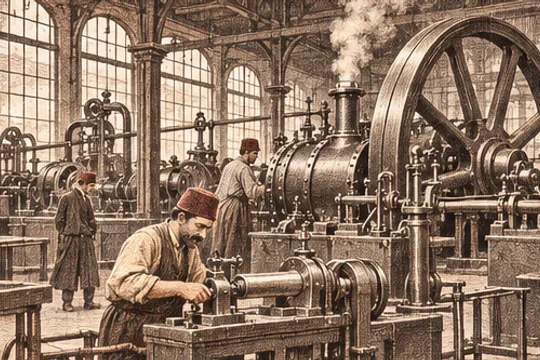
Despite the efforts and dedication invested in the Ottoman economy from the 18th to the early 20th century, non-agricultural sectors were almost completely neglected within this system. Prior to the onset of the Industrial Revolution in the West, the Ottoman industry, which had previously led Europe in the production of silk, cotton textiles, and other textile goods, rapidly lost this advantage due to the harsh realities of the mercantilist system. Production centers throughout Anatolia began to close one after another, losing their significance. However, the latest production fragments in this area disappeared entirely following the signing of the 1838 Baltalimanı Trade Agreement, and as a result, the Ottoman Empire entered the 20th century with only a single industrial facility – one that had a tangible presence.
Translated from the Turkish original. Türkçe