
How can anyone be so vile, so treacherous and so base?
11 December 2016 · Personal website
(Article 116 — 11 December 2016)
Exactly 38 cans.
Today, a total of 38 brave souls have passed away and ascended to the status of martyrs.
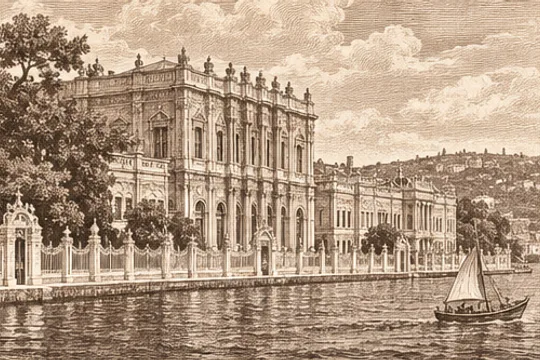
In İstanbul’s Dolmabahçe district, a bomb blast claimed the lives of 30 police officers, while some artists continued to share images on Twitter, becoming increasingly fervent in their criticism of the government within their own circles. The artist, named Levent Üzümcü, who was tweeting phrases like “If a media blackout is imposed, it will be for ISIS; if not, it will be for TAK,” was addressing an audience consisting solely of “deviants” and “nationalists.” After sending this message, he probably didn't stop, due to the praise from those who congratulated him: “You’ve really put it all in, Leventciğim – congratulations, truly! You’ve become the voice of millions, and I’m amazed by your courage. I haven’t seen anyone as brave as you in this huge country, etc., etc.”
Levent Üzümcü wasn't the only one; a whole group of individuals—people described as morally corrupt and exploitative—posted these tweets in succession.
utkudindar@justinyenutku: This was a bomb, hahaha.
Berfin@brfnkadem: She’s moved to a more agile force, well, let's just say that.
Cem Mumcu@cemmumcu: Seriously, you almost did it. Why aren't you stopping these bomb-laden vehicles, you heroes? (Columnist for Okyanus Publications)
Oya Başar@oyabasar_: Those who claim to be able to count 48 million votes and announce the results in 2 hours, and also provide figures for deaths and injuries in 3 hours – this is what they are saying. (Theater artist)
Melike Basmacı@melikebasmac: A ban on publication was imposed, almost as if a bomb had gone off. (CHP Denizli MP)
Mirgun Cabas@Mirguncabas: Last week, a friend of mine told me that after every bombing in Istanbul, they were calling friends in Beirut and saying, “Come here, it’s safe.” (Former CNNTurk program host)
Mücahit Avcı@avcımucahit: There seems to be a “MİT” issue going on here. (CHP’s Social Media Director for İstanbul)
I’m repeating myself. You can’t implement a presidential system in this country without bloodshed.
Arteş@21surr21: The perpetrator of the explosion is this OÇ individual. (with Erdoğan's photo)
During the Gezi protests, pieces of art like these, which were present at the forefront, continued to incite the crowds, rather than calming them, by bringing firewood to set fire to Taksim Square.
What is art and the artist? How can we distinguish between good and bad, successful and unsuccessful artists? I have always wondered about the answers to these questions.
There are so many artists who have made betraying the state and the people their motto. It’s difficult to know which one to focus on, but I can tell you about just three of them. The first two, Ziya Paşa and Namık Kemal, used money obtained from France to enjoy themselves in London and Paris, while also publishing newspapers and magazines. The third, Tevfik Fikret, wrote marches and poems with the aim of overthrowing Abdülhamit Han.
The poet Ziya Paşa is often recognized as a literary figure. However, like Namık Kemal, he was also a significant patriot. These two poets, who considered it their duty to oppose the government, as they did under the protection of Mustafa Fazıl Paşa, were proposed to travel to Europe and continue their opposition through their writing. When the subject is “pens for sale,” both of them immediately accept this offer. They are instructed to bring anyone else who might be selling their pens as well. Ziya Paşa and Namık Kemal, with the assistance of the French Ambassador, escape the country and meet in Messina, Italy’s port, and establish themselves in Paris in 1867.
These two traitors subsequently began publishing a newspaper called “Hürriyet.” In their articles, they made ruthless criticisms of Sultan Abdulaziz and launched serious slanderous accusations. When Mustafa Fazıl Pasha provided financial support, they then sold themselves to the Egyptian Viceroy Ismail, and continued to publish the newspaper with the support they received. According to Ziya Paşa, the country’s dire situation was due to the abuse of the ministers, while Namık Kemal attributed it to the flaws within the system. After a period, Ziya Paşa moved to London and continued to publish *Hürriyet* there. He then became a member of the Constitutional Commission that was established following the deposition of Abdülaziz and the accession of II. Abdülhamit. He died in Adana in 1880 due to cirrhosis.
Regarding Namık Kemal, from Tekfurdağ, he reconciled with Sadrazam Ali Pasha in 1870 and returned to his homeland, but after Ali Pasha’s death, he resumed his opposition. He then wrote articles against Abdülaziz Han and the state, first in a satirical magazine called Diyojen, and later in the newspaper he himself founded, İbret, in 1872. He passed away in 1888 and was buried near the tomb of Gazi Süleyman Paşa, a highly respected Ottoman military figure. The plan for his tomb was drawn by Tevfik Fikret, another traitor to the homeland.
However, when it comes to betraying one’s homeland, no one could ever bring Tevfik Fikret to believe it. For Tevfik Fikret, who lived in metaphors within his own inner world, concepts like ‘nation,’ ‘religion,’ ‘history,’ and ‘heroism’ were quite meaningless. The fact that Sultan II. Abdülhamit wasn't killed by the Armenian Komitacılar in 1905 deeply affected Tevfik Fikret, and he expressed this sadness in his poem “Bir Lâhza-i Ta’ahhur – Bir anlık duraklama” as follows:
Oh, valiant hunter, your trap wasn't set in vain!
Gold… but unfortunately, you haven’t been able to strike with all your wealth.
No one, not even Tevfik Fikret, deserves to “betray the place where they eat their bread.”
Before the proclamation of the Republic, following the initiative of the İttihat ve Terakki administration in Salonica, he wrote the “Song of the Nation.” This march, which heralded the revolution, circulated widely during those days. After the proclamation of the Republic, he wrote the poem “Retreat (Recourse)” and, as a result, reclaimed the curses he had received.
Tevfik Fikret, unable to find what he was looking for in the system of the constitutional government, subsequently became an opponent of İttihat ve Terakki. In 1909, at the age of 14, he sent his son, Haluk, to Glasgow, Scotland, to receive electrical engineering training, but Haluk, influenced by the Christian family where he was placed, abandoned his original faith and converted to Christianity, eventually becoming a priest and dying in Orlando in 1965. Tevfik Fikret himself was buried in Aşiyan in 1915.
If we look at the official history of the Republic, figures like Ziya Paşa and Namık Kemal, along with Tevfik Fikret, were both patriots who cherished democracy. But why? Because they opposed the Ottoman Empire and the Sultan. Due to the fact that, as artists and leading intellectuals of Turkey, they adopted a remarkable disregard, they came to see supporting “democracy and human rights” as a mission, effectively aligning themselves with terrorism and terrorists.
“Individuals engaged in betrayal against the nation – not just artists who prioritize profit and ratings, but also academics in black robes, monstrous figures, urban youth, journalists nostalgic for old Turkey, architects, engineers, lawyers, and leaders of various NGOs – are all seemingly capable of posting tweets in the style of Levent Üzümcü, spreading their opinions widely and loudly across various platforms.”
Let's not ever reward or recognize those who betray their country.
Let us make it clear to them that they are worthless, not just a small minority within this society, and that they have no value whatsoever. Let us boldly and consistently declare that they are not “heroes of freedom,” but rather “traitors to the homeland,” everywhere.
Today we mourn thirty-eight martyrs. My condolences to us all.
May God bestow His boundless blessings upon them all, and may their souls rest in Paradise.
There’s a lot to say, but for now, this is enough.
There’s no need to be afraid or to dwell on anxieties. As the Suras al-Tawba states: “Do not grieve, for Allah is with you.”
This country is and will always be ours.
From now on, nothing will ever be the same. The blood of our martyrs will not be spilled in vain…
Dr. Mehmet Hakan Sağlam
Translated from the Turkish original. Türkçe