
How was the world carved up?
14 December 2014 · Personal website
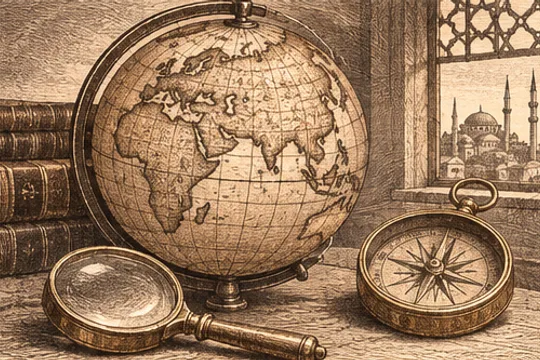
(Article 048, 14 December 2014)
Throughout history, many civilisations and empires have gone through periods when they were more advanced and prosperous than others. The Persian, Greek-Macedonian, Roman and Ottoman empires were leading powers of their day in wealth and prosperity. Economic historians today agree that the gap in development between East and West began to widen in Europe’s favour, especially from the mid-fifteenth century onwards. In Western history, the period between the Middle Ages and the Industrial Revolution is generally known as the mercantilist era. The main features of that era and of mercantilist economic policy can be set out as follows.
A strong nation-state.
The desire to acquire precious metals.
The necessity of foreign trade.
Are these not the very conditions a country needs to survive in today’s increasingly globalised world? Building a strong nation-state requires a powerful army and the technological knowledge to sustain it. Is that not what gives the United States or Russia an advantage over other countries today? The Ottoman army similarly held an advantage over Western states in the fifteenth and sixteenth centuries thanks to its advanced military technology.
The second element of mercantilism was the desire to acquire precious metals. For Western countries short of raw materials, maritime trade was the means of reaching India and China, the most important centres of trade in those days. But carrying on that trade required the establishment of colonies and dominions in many Asian countries, above all India. It took a powerful navy and army to do so, and building such forces took gold and silver, the only universally accepted means of payment at the time. In the medieval world, before paper money had been invented, states could not create value with paper and ink as they do now. A country’s wealth was measured by how much gold and silver it held. A country whose treasury was full of precious metals was considered rich. Where and how, then, was it to obtain that gold and silver?
Consider the seafaring peoples of the time: the Venetians, Genoese, Spanish, Portuguese, English and Dutch. Venetian and Genoese merchants mostly traded on inland seas, using Italian ports and Marseille to carry goods from Anatolia and the Black Sea basin to Europe. Neither their ships nor their ambitions were suited to ocean-going trade. When Bartolomeu Dias reached the Cape of Good Hope in 1488, the routes of world trade changed abruptly. The states and peoples along the old route, which ran from China and India to Aleppo, Egypt, Kefe, Istanbul and İzmir, grew poorer and declined within about a century, and some disappeared altogether. This is why Mehmed the Conqueror, his son Bayezid II, his grandson Süleyman the Magnificent and some later Ottoman sultans offered commercial privileges to merchants from Genoa and Venice and to powers such as France and England. They wanted to keep the fading trade with East Asia, or more precisely the Silk Road trade, alive as long as they could and preserve the state’s revenue from transit trade.
Contrary to what historians of the Republic and economic historians say today, the Ottomans did not grant Western powers commercial privileges out of weakness or fear. Ottoman officials understood that the opening of the Cape route had created new trade routes, that the Silk Road would soon lose its importance and that government revenues from transit trade would fall. Did the officials of the Republic, who called the Ottoman privileges “capitulations,” not call the privileges they negotiated with almost every other country after 1923 “reciprocal trade agreements”? One way or another, no country can survive without trade. Otherwise, as the saying goes, the blind and the deaf are merely entertaining each other. The same money changes hands in a closed economy. Ali’s money goes into Ahmet’s pocket and Ayşe’s into Fatma’s, and the country is not a penny richer.
Nearly every country in continental Europe had limited agricultural production and a narrow range of crops, so they turned to India and East Asia, where production seemed inexhaustible. That is why the Cape of Good Hope seemed like salvation. First the Portuguese and the Spanish, then the English, acquired colonies in these lands and occupied stretches of the Indian coast. With their shipboard cannon, the English soon drove the Portuguese and Spanish out of India. Spain then turned towards the Americas, which Europeans had yet to explore. In 1492 Christopher Columbus succeeded, bringing the queen of Spain shiploads of gold, silver, enslaved people and exotic animals and presenting her with the key to the New World. The English took the East’s spices, agricultural produce, gold and silver to Europe, while the Spanish plundered the wealth of Aztec civilisation and carried it home. In just a hundred to a hundred and fifty years, these precious metals and riches increased the stock of knowledge in the West and paved the way for the Industrial Revolution, giving rise to the Europe we know today.
The third pillar of mercantilism was foreign trade. Mercantilist countries had to sell their finished goods to other countries. Selling raw materials was strictly forbidden. Cotton picked in the fields had to be processed and sold as yarn, or, if possible, as cloth or finished textiles, so that more gold and silver would flow into the country. England and France, which met their raw material needs from India, now needed something else: the Ottoman market, where they could readily sell the goods they manufactured. The French king and the English queen asked the Ottoman sultan for commercial privileges because of this doctrine. To produce goods, merchants first needed raw materials and then a market in which to sell the finished products.
When Sultan Mehmed brought down the Eastern Roman Empire and raised the Turkish flag over Constantinople in 1453, he became the nightmare of the Western powers. The plague that devastated Europe from 1347 to 1351 killed around a third of its population, then estimated at seventy-five million. No European country had the strength or resources to field a powerful army. Europe’s population took another hundred and fifty years to recover. Some villages disappeared altogether and others lost most of their inhabitants. The population was recorded as seventy-six million in 1340 and fifty million in 1450. Some people died unnoticed in their sleep or alone, and their bodies were only discovered when the stench spread. The article gives the following tolls: nine-tenths of the population in Bristol, two-thirds in Norway and Iceland, 150,000 in Avignon, 50,000 in Paris, 100,000 in London, 70 percent of Venice’s population, 68 percent of Genoa’s, 45,000 in Florence, 16,000 in a month in Marseille, 70,000 in Siena, 14,000 in Saint-Denis, 16,000 in Strasbourg, 9,000 in Lübeck, 14,000 in Basel, at least 16,000 in Erfurt, 5,000 in Weimar and 2,500 in Limburg. In 1351 Pope Clement VI put the toll across the continent at 23,840,000.
The Ottoman Empire had secured room to expand by taking the Balkans and much of eastern Europe as far as the Adriatic coast. Sustained Western attacks against it intensified from the mid-seventeenth century, as Europe’s population began growing again. The nearest source of the grain Europe’s growing population urgently needed was the Ottoman Empire. Ottoman economic policy, however, was very different from the mercantilism that prevailed in the West. It was a policy of provisionism, founded on Sheikh Edebali’s maxim, “Let the people live so that the state may live.”
Under provisionism, all goods and services produced in the Ottoman lands were made available to Ottoman subjects first. Only what was left after domestic needs were met could be exported. Cotton, wheat, barley, grapes and salt were among hundreds of raw materials and finished goods offered first to the people who needed them at home. The basic rule was to prevent shortages within the country. A shortage would drive prices up and cause what the Ottomans called galâ-yı es’ar, or what economists today call inflation. Thanks to this remarkable policy, the author argues, prices rose by only 300 percent in roughly 350 years, from the fifteenth century to the middle of the nineteenth, while in ninety years of the Republic of Turkey they rose by 100 million percent.
How did European states develop economically and politically after putting the plague behind them and entering the early modern era? How did their economic practices differ from the Ottomans’? To answer these questions, we need to look closely at seventeenth-century colonisation.
For about 350 years after it was founded, the Ottoman state steadily expanded its territory and came to rule parts of Asia, Europe, Africa and the Caucasus. The following 250 years saw the end of that expansion and the loss of territory to Western powers. This article sets out the effects on the Ottoman Empire and the East of colonisation and empire-building, a subject the author considers unexplored. From 1299 to 1922, the Ottoman state treated people of different ethnic origins and religions under its rule as equal subjects and did not force them to change their religion or language. That is something Western powers could not understand, the author argues. The Ottomans regarded the peoples under their rule as a trust from God Almighty, while Western powers treated the native peoples of conquered lands as if they were inanimate. The article goes on to explain what that meant. For a powerful state that ruled across three continents for six centuries, even choosing not to impose its own language, Turkish, was a mark of restraint and maturity.
From the fifteenth century onwards, Portugal was the first European power to practise overseas colonisation for trade, followed by Spain, the Netherlands, England and France. Without understanding that process, one cannot understand what Western powers were doing in the East or what they sought there. Until the fifteenth century, Europeans were familiar only with Europe, northern Africa and western Asia. They knew there was a wealthy, populous empire in eastern Asia, China, and that silk came from there. But they knew almost nothing about the shape of the Indian Ocean. They assumed it was closed off to the south between Asia and Africa and that Africa therefore extended eastward. Scandinavians are believed to have reached Iceland, Greenland, the Labrador coast and Canada in the ninth century, and perhaps to have followed the coast of what is now the northeastern United States as far as present-day New York. French and English sailors also followed Africa’s western coast south, exploring as far as Guinea and beginning to trade in gold and ivory there.
The early modern era saw important discoveries in several areas. At the time, new ideas about the shape of the world were not considered an occasion for exploration in the way they are today. Little-known distant lands mattered because valuable goods came from them. Europeans used pepper, nutmeg, cloves, ginger and cinnamon liberally in their cooking. The plants that supplied them grew only in warm countries, and nutmeg and cloves came only from small volcanic islands east of the Sunda Islands. The spices travelled through the Strait of Malacca to Indian ports. Arab sailors then took them to Egypt and on to Alexandria, where European seafarers, especially Italians, bought them and carried them elsewhere. These goods did not come cheap. Arab merchants sold them to Europeans at prices far above their original value because demand was so high. Europeans hoped to buy spices more cheaply where they were produced, in the lands Europeans of the day referred to as the Indies.
Meanwhile, gold and silver were becoming scarce in Europe. Gold had become practically unobtainable. Silver in the long-worked mines was exhausted and newer mines could not meet demand. Europeans were eager to explore new lands where they could find gold and silver deposits.
From the thirteenth century onwards, some of the mysteries surrounding the geography of the world began to clear up. Marco Polo travelled for a long time in East Asia, and his account, the Book of Wonders (Livre des merveilles), further whetted Europeans’ appetite for exploration. Geographical works written in the Islamic world were translated into European languages and published. Europeans learnt more about geography, and the idea that the Earth was a sphere and that by sailing west one could go round it and reach India began to gain wide acceptance.
The First Colonial Power: Portugal…
From the beginning of the fourteenth century, seafaring made important advances, including what the author describes as the invention of the compass, a small device that changed world history. The time had come to explore new continents and new worlds. The Portuguese made the first move. In the author’s account, Portugal emerged alongside Spain in the western corner of the Iberian Peninsula as Muslim rule in al-Andalus collapsed. It was a tiny country hemmed in on the Atlantic coast, its growth checked by the Spanish, who had become the dominant power on the peninsula. Unable to expand there, the Portuguese made acquiring territory overseas their objective and built a strong fleet. Portugal’s territory was relatively small and insufficient for its people, making the search for new lands and continents all the more urgent.
The Portuguese began their explorations in Africa, which they believed held abundant gold, silver and precious stones. As well as expanding trade, they began spreading Christianity. Henry, a son of King John I of Portugal, had been fascinated by seafaring since his youth. He renounced his legal claim to the throne and turned to acquiring new territory. Henry took a ship or two from his father, sailed south from Lisbon and first discovered Madeira, which was uninhabited and covered in extensive forests. The Portuguese burned the forests, brought grapevines and sugar cane from Mediterranean islands and settled several hundred families from Portugal there. The wines made from Madeira’s grapes soon became famous. After this success in 1420, Henry spent about forty years pursuing new territory. He discovered the Azores, the Canary and Cape Verde islands, and explored the African coast as far as the equator. The Portuguese continued their explorations after his death. The article says that in 1486 a Portuguese captain, Bartolomeu Dias, reached the southernmost point of Africa. Storms kept him from rounding it, and he named what he took to be Africa’s southern tip the Cape of Storms. King Manuel of Portugal renamed it the Cape of Good Hope. The name reflected Portuguese hopes of finding a route to India.
In 1497, during King Manuel’s reign, another Portuguese captain, Vasco da Gama, rounded the Cape of Good Hope with four ships and reached Mozambique. He was warmly received by the Muslims of Mozambique. He told the local ruler that he wished to learn the route to India, and guides who knew the way were assigned to him. He crossed the Indian Ocean in twenty-two days and put in at Calicut, a major trading port on India’s west coast. Calicut had an Indian ruler, but there was a Muslim quarter on the waterfront. Arab merchants bought spices brought by sea from Malacca and carried them to other countries. Fearing the Portuguese would take over the Indian trade, the Arab merchants of Calicut encouraged local people to oppose Vasco da Gama. The ruler received him coolly but let the Portuguese open a trading post and leave a few men in the city. Vasco da Gama did not stay long before returning to Lisbon. A sea route to India was thus opened to Europeans. He made two more voyages to India and died there in 1524 during his third voyage.
At first the Portuguese contented themselves with opening trading posts in a few Indian ports and stationing officials there. Their ships came each year to pick up goods and carry them away. In 1505 the king sent twenty ships and a force of 1,500 men to India. He also appointed a viceroy to protect Portuguese rights and interests there. Half the force remained in India to guard the trading posts, which the Portuguese began to fortify. They later built similar fortifications on the east coast of Africa. They then stopped ships from any other country from trading along the coasts of India and Africa.
Albuquerque, the second viceroy, seized major points on the Indian coast and began building towns that the Portuguese could defend. He captured Goa and made it the seat of government. The Portuguese then took the town of Malacca, which controlled the strait at the centre of the spice trade. They also took Aden at the entrance to the Red Sea and Hormuz at the entrance to the Persian Gulf from the Arabs, two cities that controlled the routes by which Eastern goods reached the Mediterranean. They subsequently established themselves in Ceylon and reached the Moluccas, while opening trade with China and Japan. The article dates their trading establishments at Macao near Canton and at Nagasaki to 1517 and 1542 respectively. By the late sixteenth century, the Portuguese thus held extensive territory, had become a major power and had taken control of the Indian trade. Portuguese ships unloaded spices and other goods in Lisbon, from where they were distributed to cities across Europe.
The Portuguese king monopolised the trade in all kinds of spices, including pepper, ginger, cinnamon, nutmeg and cloves. Portuguese merchants traded in African gold, ivory, ebony, dates and perfumes, Persian carpets, pearls and horses, Indian white oak, indigo, rice and precious stones, timber and tin from Malacca, Chinese silk goods and vessels, and Japanese copper and bronze.
The Portuguese took a short-term approach to exploiting their colonies. Instead of improving and developing the agricultural resources of the lands they occupied, they acted against all reason. Viceroys were appointed for three years. The governors, their associates and other Portuguese officials oppressed the population and thought only of amassing wealth for themselves. Bribery and corruption knew no bounds. Portuguese sailors considered themselves superior and earned the hatred of local people by treating them harshly. The merchants, too, abused the privileges they had been granted. The Portuguese rushed to the colonies in pursuit of fortunes and abandoned work in fields and workshops. Portugal’s dream of colonial power did not last long. Its population was too small to do much more than occupy the coast, and it never penetrated the interior of its colonies. The central government did not have the strength to match even the territory it already held, much less to extend its power inland.
In 1580, under Philip II of Spain, Portugal and Spain were united under one crown, bringing their colonial possessions together. The Dutch, who were then at war with Philip, took the most important Portuguese colonies. When Portugal broke away from Spain and regained its independence in 1640, it was left with only a handful of scattered colonies and Brazil.
The New Colonial Power: Spain…
Spain quickly filled the gap left by Portugal. While the Portuguese had sailed east to find a route to India, the Spaniards hoped to find one by sailing west. The discovery that made Spain a leading power came from Christopher Columbus, who reached a continent previously unknown to Europeans in 1492 instead of finding a route to India. Columbus had travelled along all the coasts then known to Europeans. In 1470 he married a captain’s daughter in Lisbon, settled there and began drawing and selling maps. Around that time he became convinced that it was possible to reach India by sailing west. He approached the monarchs of Portugal, England and France and the Republic of Genoa for help carrying out his plan, but none took it seriously. After his wife died he left Lisbon and settled in Spain. He put the same idea to King Ferdinand and Queen Isabella and was turned down again. After the capture of Granada, however, the king and queen signed an agreement with him and commissioned him to find the route to India. Under the agreement, Columbus would receive money and ships valued at 350,000 francs, become viceroy of the lands he found and conduct their trade. King Ferdinand would have sovereignty over the lands discovered and taken, along with nine-tenths of the goods obtained there.
Columbus accordingly sailed from Palos on 3 August 1492 with three ships and 120 crew. He went first to the Canary Islands and then turned west. As the voyage into unknown waters dragged on, the sailors began to despair of ever getting back to Spain, let alone finding India. They wanted to turn back several times, but Columbus’s determination kept them going. A light was sighted on the evening of 11 October 1492, and land appeared the next morning. The source dates their Friday landing to 13 October 1492. The Spaniards named the first place they reached San Salvador, now the name of one of the Bahamas, north of the Antilles.
Columbus believed that San Salvador and the other islands he subsequently reached lay near India, and never gave up that belief. On his first voyage he reached the Bahamas, Cuba and Hispaniola. After spending several months there, he returned to Palos on 15 March [the source gives the year as 1492, although the voyage began in August of that year]. On his return he brought several of the Indigenous people he called Indians, a few birds unfamiliar to Spaniards and some pieces of gold. He went to the Americas three more times. On the second voyage he continued exploring the Antilles. On the third he set foot on the American mainland, and on the fourth he followed the coast as far as the Isthmus of Panama. The author says the governor of Cuba, out of jealousy, made a false accusation against Columbus, whereupon the king recalled him to Spain. He died in disgrace in 1506.
Columbus never reached India, his intended destination, because the American continent lay in his path. His discovery was of great geographical importance, but it did little to satisfy Spain's ambitions for spices and precious metals. Reaching the lands where spices grew remained imperative. Once Europeans realized that the newly discovered lands formed a separate continent from Asia, they hoped to reach India by sailing around it. The discovery of a sea beyond the mountains of Panama strengthened that hope. Ferdinand Magellan, a Portuguese navigator in the service of Charles V, king of Spain, ultimately found the route.
Magellan had spent a long time in India and learned about the Moluccas. He concluded that they could be reached by sailing west from Europe. After signing an agreement with Charles V, he set sail with five ships in 1519. He crossed the Atlantic, passed through the South American strait that now bears his name, and sailed across the Pacific to the Philippines. He died in a battle with local people, but his companions continued by way of India and the Cape of Good Hope and returned to Spain in 1522, three years after their departure.
In their search for gold, the Spanish continued exploring and reached Mexico and Peru. They found rich silver mines in Peru, which became Spain's principal source of silver. The conquest of Mexico and Peru laid the foundations of Spain's vast empire. By the late sixteenth century, it encompassed much of the Antilles, Mexico, Central America, and all of South America except Brazil.
The Spanish relied on deception, intrigue, coercion, and violence in conquering and ruling these territories, driven by relentless ambition. Cortés, who seized Mexico, had its ruler walk over fire because he would not reveal where his treasure was hidden, causing his death. Pizarro promised to free the ruler of Peru in exchange for a vast quantity of gold. After receiving it, he accused his captive of treason and sentenced him to be burned. When the ruler accepted baptism, Pizarro changed the manner of execution to strangulation. One of Pizarro's officers seized Quito, the capital of Ecuador, ordered the men killed, burned the city and had the women and children strangled while it burned. The atrocities continued after the conquest. The Spanish treated Indigenous people as if they were inanimate objects, denying their humanity and right to life. They forced them to work in fields, gold and silver mines, and other forms of unpaid labor without mercy. They destroyed their tools. Many people accustomed to living freely died under the burden of forced labor, while others withdrew into forests and the interior. The island of Haiti had over a million inhabitants in 1492. After the massacres, its population fell to 13,000 by 1514.
These abuses disturbed some observers. The Spanish priest Las Casas in particular became an outspoken advocate for better treatment of Indigenous people. Charles V eventually ordered that they be treated humanely and threatened severe punishment for those who disobeyed. The decree had little effect, and the measure intended to relieve Indigenous suffering gave rise to further massacres and hardships. As the Indigenous population dwindled and plantations ran short of labor, the trade in enslaved Africans took hold. Millions of people were taken from the coasts of Africa and carried to America as slaves, with many dying en route. This continued into the nineteenth century.
Spain and Portugal approached colonization differently. The Portuguese aimed to make money through trade, settling on the coast and staying away from the interior. The Spanish placed territorial acquisition first. They saw conquered lands as their own and moved inland to settle them. They administered the colonies along the same lines as Spain and gave these territories names such as Mexico, New Spain, Colombia, New Granada, Peru, and New Castile. Spanish settlers came to stay and excluded other nations from the benefits of the colonies. Until the nineteenth century, only Spaniards had the right to buy and sell goods in America. Apart from Indigenous people and Spaniards, no other people could grow new varieties of trees, set up factories or workshops, or trade with foreigners. Madrid fixed prices for colonial produce. Seville served as the warehouse for goods brought from America, and goods bound for the colonies from Europe were assembled in Cádiz. Imports and exports had to travel on Spanish ships. The entire system served Spain's interests and followed the rules of mercantilism to the letter.
The gold and silver brought back from America as spoils impoverished Spain instead of enriching it. Over the course of a century, the Spaniards brought home gold and silver worth about four billion francs. This gave Spain enormous cash reserves, but a severe economic crisis followed. Eager to go to America in any official capacity and make a fortune quickly, Spaniards abandoned agriculture and industry at home. Only Spaniards could ship the goods the colonies needed to America. As domestic production declined, they began sourcing those goods from France and England. Both countries knew how heavily Spain depended on them and imposed onerous terms, charging the Spaniards very high prices. Spain quickly lost the vast sums of gold and silver it had imported and soon returned to its former poverty. Weary of political and economic pressure, Spain's colonies grew in population and strength and, in the early nineteenth century, rose up and declared independence one after another.
The Economic Consequences of the New Discoveries
The successive discoveries of the early modern period brought major changes to trade. For centuries, goods from India, China, and Africa had been carried to the Mediterranean shores of Syria and Egypt and shipped from there to Europe. The overland routes to the coast were unsafe and costly, and goods passed through several customs posts. A handful of cities, including Venice and Genoa, controlled this trade, and the goods commanded very high prices in Europe. The discovery of new continents and seas eased some of these problems. Once voyages to India around the Cape of Good Hope proved viable, safer, faster, and cheaper shipping took the place of the long and expensive caravan journeys. The Mediterranean basin lost its position as the main trade route to the Atlantic, which retained its importance until the opening of the Suez Canal. Once the canal opened, the Mediterranean regained its importance as a trade route. As the Mediterranean powers of Venice and Genoa declined, the Portuguese, Spanish, English, and Dutch on the Atlantic coast began to grow and prosper. Lisbon, Cádiz, Bordeaux, Le Havre, London, Liverpool, Antwerp, and Amsterdam developed rapidly.
The newly discovered lands held abundant deposits of gold and silver. The discoveries increased the supply of both metals. With more money in circulation, prices rose, and inflation lowered living standards and quality of life. Previously, real estate had made up much of people's wealth, and it had been difficult to become rich. As money became more plentiful, industrial production, trade goods, and movable wealth increased. People with business acumen had a chance to acquire fortunes, and movable assets took the place of real estate as a source of wealth.
The inventions and discoveries described above also brought two major developments in other areas. One was the revival of education and industry known as the Renaissance. The other was a movement to reform religious beliefs and practices. Social thought in Europe broadened, literature found new forms, industry grew more refined, and religious reforms gave rise to Protestantism. These two momentous revolutions directly affected economic life. Rising standards of living increased demand for luxury goods, and demand surged for all kinds of valuables, whether needed or not. Protestantism, meanwhile, discouraged needless expenditure, advocated simplicity, and encouraged people to work diligently.
As Spain Declines, a New State Emerges: The Netherlands
In the fifteenth century, the Netherlands belonged to the Duchy of Burgundy. After the death of its last duke, Charles the Bold, the territory passed through his daughter Mary to the Habsburg dynasty and the Holy Roman Empire. It soon came under the rule of Mary's grandson, the celebrated Charles V, king of Spain, who had acquired many territories by inheritance. In an attempt to stamp out Protestantism, Charles had thousands of people killed in the Netherlands. His son Philip II took the persecution further by establishing Inquisition courts. Unable to bear the repression and ill treatment any longer, the Dutch revolted. The long uprising led to the founding of the Dutch Republic, which received the protection of Queen Elizabeth of England. The republic's independence was secured by the Peace of Westphalia, signed after the religious conflicts of 1618–1648.
When the Dutch Republic declared independence, it held only a small stretch of coastal land. To farm this small country and prevent the sea from flooding it, the Dutch built dikes and drained bays and marshes below sea level to make them cultivable. Even so, farming remained limited and industry was still underdeveloped. Faced with these economic limits and unfavorable geography, the Dutch turned to seafaring and colonization to build their country's prosperity. Fishing was their principal source of income. They caught herring in the North Sea, and whaling took them as far as the Arctic Ocean. The Dutch sent an official to explore its eastern reaches by a northeastern route and in 1597 discovered Spitsbergen and Novaya Zemlya. These places, however, could not provide the wealth they sought.
A decision by Philip II of Spain gave the Dutch an opportunity to pursue their ambitions. Philip barred the Dutch, whom he called rebels, from trading with Spanish territories, particularly Lisbon. The Dutch could no longer buy the spices they supplied to northern countries from Iberian ports, so they turned to the Far East to obtain them at the source. The Dutch expanded and strengthened their navy and began taking Portugal's Far Eastern colonies one by one. Portugal had been united with Spain under Philip II, and the Dutch were at war with Spain. The Dutch singled out the Portuguese possessions because they produced spices and, unlike the Spanish colonies, did not form vast, contiguous territories. Some captured Spanish ships were also brought into Dutch ports.
The Dutch first invaded the Malay islands. Admiral Houtman seized the nearby Sunda Islands and later the Moluccas. Seeing how fertile the Malay and Sunda islands were, the Dutch set up trading posts there, especially on Java. The Dutch admiral Warwick drove the Portuguese out of the Malay islands and Celebes. The Dutch built a fort on Java and in 1618 founded Batavia on the site of a local ruler's capital. Batavia became the center of the Dutch colonies, and its population reached 500,000 in the eighteenth century. The Dutch also succeeded in gaining access to Japanese ports at a time when Japan excluded foreigners and was hostile to Christians. With the Chinese emperor's permission, they established a colony on Formosa and gained access to several ports in China and Korea. They took Portuguese trading posts on the Malabar Coast in western India and in Ceylon, known as the pearl of the Indian Ocean. They established new colonies on eastern India's Coromandel Coast and settled at the Strait of Malacca. After taking the area around the Cape of Good Hope, they founded Cape Town on the shores of Table Bay, gaining control of the sea route to India and the Far East. Dutch ships traded at nearly every Asian port, and the Dutch gained a virtual monopoly on pepper and cinnamon.
The Dutch also seized territories in the Americas. In the north, they took control of the mouth of the Hudson River and founded New Amsterdam on the site of present-day New York. On the Brazilian coast in South America they seized Bahia, Pernambuco, and several other places. The Americas, however, did not produce the spices they sought. There were other reasons to give up the occupation of Brazil. Portugal broke away from Spain in 1640 and signed a peace agreement with the Dutch, so relinquishing Brazil, a Portuguese colony, was a natural step. Moreover, Brazil was a single, contiguous territory and was poorly suited to a seafaring people like the Dutch. From then on, the Dutch concentrated their activities mainly in the Far East.
The Dutch colonies were spread over a vast area, and a substantial share lay in Southeast Asia. The governor-general was appointed for three years and exercised the powers of a sovereign. The force placed at his disposal was considerable, comprising 180 ships, 13,000 Dutch sailors, and 120,000 locally recruited soldiers under Dutch commanders. In civil matters the governor sought the approval of the High Council. Officials serving under him were strictly forbidden to engage in trade.
The Netherlands was the first country to usher in the age of the great trading companies. Through two major companies, the East India Company and the West India Company, the Dutch kept the trade with the Indies under their control.
The East India Company
In 1602 several Dutch cities, among them Amsterdam, Middelburg, and Delft, joined forces to form the Dutch East India Company. Its capital amounted to 14.2 million francs, divided into shares worth 600 francs each. The company was granted exclusive trading rights in countries east of the Cape of Good Hope, as well as sovereignty over any new territories it acquired. It made Batavia its official base, where ships arriving from Europe unloaded their cargo. The goods were then transferred to smaller vessels bound for other Dutch colonies. To expand its trade, the company sent sailors to explore the shores of Australia. The continent was initially called New Holland. In 1642 Abel Tasman sailed around it, reached the island known as Van Diemen's Land or Tasmania, and discovered New Zealand. The company's headquarters were in Amsterdam, and it was governed by a board of 17 directors and 60 elected members. The company prospered to such a degree that for a century it paid its shareholders annual dividends ranging from 15 to 50 percent, averaging 21 percent.
The West India Company
The Dutch established the West India Company in 1621–1622. Headquartered in Caracas, Venezuela, the company held the right to trade only with Dutch colonies in the Americas. It was largely confined to smuggling goods to and from Spanish and Portuguese colonies and never matched the scale or importance of the East India Company.
The Dutch carried their manufactured goods aboard their own ships. Their carrying capacity was so great that they began transporting other Europeans' goods for income, and this became their main source of earnings. By the first half of the seventeenth century the Dutch had become the brokers and middlemen of the world, earning about a billion francs a year. A Dutch writer of the period described them this way: “The people of our republic are like bees that draw nectar from the flowers of every country. Norway supplies the Dutch with forests, the banks of the Rhine, Garonne, and Dordogne with vineyards, Germany, Spain, and Ireland with sheepfolds, Prussia and Bologna with granaries, and India and Arabia with gardens.”
Goods from all over the world poured into Amsterdam, which had supplanted Cádiz and Lisbon. A bank was founded in the city in 1609 and soon grew powerful enough to lend money even to sovereigns. Its many canals earned Amsterdam comparisons with Venice and the name “Venice of the North.” By then Amsterdam's trade was many times greater than Venice's.
The Netherlands' remarkable growth whetted the appetite of other European powers for a share of its trade. England was the first to challenge the Dutch. After Cromwell came to power, England passed a law in 1651 barring foreign ships from bringing goods into England unless those goods came from their own countries. The Dutch did not take this severe blow to their trade quietly and fought two naval wars with England over it. They lost the first in 1653. Neither side secured victory in the second, fought between 1665 and 1667. Another war seemed imminent when a major development put an end to such expectations. In 1688 William of Orange, ruler of the Netherlands, took the English throne as William III, reconciling the two rivals. Yet this came at a heavy cost to the Dutch. The Netherlands lost its political and military supremacy at sea, and its fleet was reduced to a small boat following in the wake of the English navy. England, meanwhile, rose rapidly in economic and political power.
England Takes Center Stage
The English and the French were late to claim a share of world trade and acquire colonies, but they made rapid strides. They first acquired colonies and then caught up with other powers in maritime trade. England's expansion remained limited until the early eighteenth century. In that century the English did not hesitate to fight the French, their principal rivals. Though they suffered heavy losses in America, they more than made up for them at France's expense and built a major empire.
England's political transformation in the late fifteenth century coincided with the start of Spanish and Portuguese exploration of new lands. The Tudor dynasty came to the English throne in 1485, at the end of the Wars of the Roses, a thirty-year civil conflict that had exhausted the country. Henry VII, the dynasty's first king, sought to consolidate his rule by directing his subjects' attention elsewhere. To increase England's prosperity, he urged them to look beyond their country's agricultural produce and seek wealth beyond the Pacific. Queen Elizabeth strongly supported this policy in the late sixteenth century.
Early English Exploration
England accomplished relatively little in exploration during the sixteenth century. Spain and Portugal already held most of the lands that yielded precious metals or offered fertile soil. The English concentrated on finding new routes to India.
In 1497 John Cabot, an Italian in the service of King Henry VII, and his son Sebastian sailed west along a route somewhat north of the one Christopher Columbus had taken. They discovered part of Labrador, the island of Newfoundland, and several places in what is now the United States. Expeditions in this direction resumed only in the late sixteenth century, pushing progressively farther north. Frobisher reached Greenland. Between 1585 and 1587, Davis sailed through the strait that now bears his name and reached 72 degrees north. In 1610 Hudson discovered the body of water now known as Hudson Bay in northern Canada. Baffin ventured farther north than his predecessors and was forced to stop at 78 degrees. Exploration of the far north of the Americas did not resume until the nineteenth century, when new routes were found.
The English also sent expeditions northeast in search of a route to China. In 1553 Willoughby and Chancellor rounded the Scandinavian Peninsula and sighted the mouth of the Ob River in Siberia, then turned back without venturing farther.
England's first colony was claimed in 1584 by Admiral Walter Raleigh on the Atlantic coast of North America. The colony, located in what is now the United States, was named Virginia in honor of Queen Elizabeth, who never married.
The East India Company
Queen Elizabeth followed in the footsteps of her grandfather, Henry VII, by encouraging the English to trade throughout the world. In 1599 she authorized the formation of the Company of London Merchants Trading to the East Indies, laying the foundations of England's future wealth. The company initially operated on a limited scale. It had capital of 1.8 million francs and traded mainly in the East Indies, Sumatra, Cochinchina, China, and Korea. Unlike its Dutch and French counterparts, it pursued exclusively commercial objectives and served as a model for later companies. Its founders were numerous and mostly well-to-do members of the middle class, whose chief aim was to build an efficient, profitable enterprise and earn as much money as possible. To that end, the company obtained exclusive trading rights in the regions where it operated, as well as the right to establish trading posts and private agencies and recruit troops for defense and security. In places where it settled, such as India, it readily paid local rulers a fixed sum each year and acknowledged itself as their vassal. In return it soon secured the right to acquire land, enjoy production privileges, and open trading posts. These posts were simple establishments, consisting of a few houses and warehouses within a small walled enclosure. When a post expanded, the company appointed an officer to oversee it. The East India Company focused on imports. It bought large quantities of tea, rice, silk goods, cotton cloth, and Indian textiles from local producers for sale in Europe. It had little involvement in the spice trade.
In 1639 the company first acquired land on India's east coast, where it founded Madras and made it a trading center. Bombay, on India's west coast, passed to King Charles II of England as part of the dowry of his wife Catherine of Portugal. In need of money, he sold it to the company in 1662. The Mughal government, which ruled India at the time, also ceded land at the mouth of the Ganges to the company. Construction of the first warehouses of present-day Kolkata began there in 1680.
The Western Colonies
In the seventeenth century England also established colonies to the west. These colonies were founded by private individuals or by the government. Several circumstances contributed to this pattern.
War with Spain gave England opportunities to seize several territories. In 1655 Cromwell occupied Jamaica, a gathering point for ships carrying enslaved Africans and an island renowned for its sugarcane cultivation. Several other islands in the Antilles became bases for English pirates.
Civil wars and religious conflicts helped drive the growth of the English colonies. English Protestants known as Puritans, who said they faced oppression and persecution in England, crossed the Atlantic and established five colonies north of Virginia under the name New England. These settlers favored independence and had no intention of returning to England. After the execution of Charles I and Cromwell's victory in 1649, English nobles who were Anglican or Catholic also emigrated to America and established three new colonies around Virginia. They acquired large estates and began growing tobacco and rice, relying on the forced labor of enslaved people brought from Africa to work their land.
England's colonies expanded after it seized several Dutch settlements in 1667 and established Georgia in the first quarter of the eighteenth century. England thus held thirteen colonies between the Atlantic Ocean and the Allegheny Mountains. Together they had a million inhabitants, whom the author describes as highly industrious. Each colony functioned much like a state in its own right. The king appointed its governor, but the members of its governing council were chosen from among the settlers. The colonies developed rapidly. By the late seventeenth century, New York, Philadelphia, and Boston had become major centers of trade.
As noted above, the English acquired new territories and fertile land and soon developed a class of successful merchants. Cromwell pursued policies to protect their interests. With Parliament's approval, he enacted a new Navigation Act on October 9, 1651. A European ship entering England could bring in only goods from its own country. Goods from America, Africa, and Asia had to be carried on English ships. If carried on a foreign ship, the captain and at least a third of the crew had to be English. Fishing and shipping in English waters were likewise reserved for English vessels.
This protectionist policy marked an important moment in England's economic history. The law prompted the English to go abroad in search of the goods they needed and made it necessary to build a powerful navy. It laid the foundations of England's maritime power.
The Development of Industry in England
Cromwell's Navigation Act led to two wars between England and the Netherlands. Having failed to prevail in either war, the Netherlands ultimately had to yield the government of its country to England. The Spanish and Portuguese, too, had lost their commercial supremacy by the seventeenth century. France tried to check England's remarkable growth, with little success. In fact, several strategic mistakes helped England develop. After Louis XIV revoked the Edict of Nantes in 1685 and intensified the persecution of Protestants, many took refuge in England. Their arrival helped establish and develop industries that had previously been absent there. Both England and its colonies benefited from this migration. New York and Virginia became new homes for many Protestants.
Despite their rapid rise, the English pressed ahead with the aim of surpassing every other nation in seafaring and trade. To do so, they believed they had to defeat their French rivals. They devoted much of the eighteenth century to that aim and began fighting France with the sole objective of bringing it to ruin.
The Struggle with France and the Origins of the Rivalry
At the beginning of the eighteenth century, the English colonies faced a serious threat. France controlled Louisiana, Canada, and the course of the Mississippi River, almost completely encircling the thirteen English colonies. Unless they could break out of this semicircle, the colonies would remain hemmed in between the Atlantic and the Allegheny Mountains. Meanwhile, in India the French and English trading companies were fierce rivals. Under Generals Dumas and Dupleix, the French company grew so strong that even the survival of the English trading posts was in doubt, let alone their expansion. From the English perspective, conflict had become unavoidable. They pursued victory with great determination and achieved their objective after fifty years of struggle.
The approach that brought England victory was simple but skillful. While France was occupied with wars on land, England concentrated on fighting at sea. It benefited especially from the Austrian war, the war the source calls Rasti, and the Seven Years' War. In the Treaty of Paris, signed in 1763, France formally acknowledged England's victory.
The Anglo-French Struggle in India
The Anglo-French rivalry centered on the colonies in India and America. At first, few expected the English to prevail against the French in India. The French East India Company had achieved notable successes through its officials, officers, and soldiers and gained a monopoly on trade and shipping between Indian ports. General Dumas raised an army from the local population and intervened in a dispute among local princes to make his power felt. General Dupleix continued the same policy after Dumas. During the Austrian war and the war the source calls Rasti, the French, supported by the fleet commanded by La Bourdonnais, repelled the English attacks and went on the offensive.
The Treaty of Aix-la-Chapelle, signed in 1748, recognized France's predominance in India. Madras, which the French had taken from the English company, was returned to the English.
During the peace that followed, the English company tried to thwart General Dupleix at every turn and diminish French influence over the territories stretching from the Gulf of Oman to the Bay of Bengal, with a population of 30 million. It failed. At the company's urging, England made strong representations to the French government and protested some of Dupleix's actions. Louis XV and his ministers paid little attention to colonial matters in the hope of preserving peace. Under pressure from the French company, they replaced Dupleix in 1754 with Godeheu, whom the author describes as ignorant. Dissatisfied with the company's already meager profits, the French government took a step that would bring its prospects in the region to an end. Godeheu arrived in Pondicherry and, following the company's instructions, signed an agreement highly detrimental to French interests. Both rival companies pledged to relinquish their rights of protection and suzerainty over the Indian principalities.
The terms seemed equitable. In practice, the English company gave up only a few trading posts, whereas the French company withdrew from the entire Indian peninsula. For the French, this brought their enterprise in India to an end. England still considered the agreement insufficient. Fearing that another French general might reestablish a foothold, the English sought to drive France out of India altogether. The Seven Years' War gave them that opportunity. Despite the courage shown by the French governor, the career soldier Lally-Tollendal, Pondicherry fell on January 18, 1761, ending French supremacy in India.
From 1761 onward, the English set out to conquer all of India. Robert Clive had taken the first steps, following Dupleix's policy and securing Bengal for England through his victory at Plassey in 1757. The Treaty of Paris confirmed France's defeat in 1763. France retained only five towns, which could neither be fortified nor defended by troops. They were to serve merely as trading posts with a few small tracts of land around them. As these towns were close to English settlements, France could hardly establish any influence there. From that point on, England gained control of India, and the English company secured the right to trade throughout the country.
The Anglo-French Struggle in America
At about the same time, the English pursued a policy in America similar to the one they had followed in India. They proceeded more cautiously, however, because the French colonies in America formed a contiguous territory and had a large population.
England needed to break through the semicircle of French colonies that blocked the westward expansion of its own settlements. It made some headway in the early eighteenth century. Under the Treaty of Utrecht of 1713, which ended the War of the Spanish Succession, France had to cede Newfoundland, the Acadian peninsula of Nova Scotia, and the entrance to the St. Lawrence River, the gateway to Canada.
The main struggle resumed later. England had captured Louisbourg during the War of the Austrian Succession but had to relinquish it under the Treaty of Aix-la-Chapelle, which ended that war in 1748. The treaty greatly eased England's position in America and provided for a commissioner to determine the borders of the English and French colonies. The Ohio Valley, the shortest route between Canada and Louisiana, became a major point of contention. The French built defenses there, while the English sought to break through to the rich Mississippi Valley. The dispute led to war between the two countries in 1755.
The English committed their full strength and enjoyed the support of all their colonies. France, weakened by war with Frederick II of Prussia, largely neglected Canada. Nevertheless, the resourceful commander Montcalm held off English attacks until 1758 and won significant victories. In 1759, however, the English sailed up the St. Lawrence and sent a large army to Québec. They won a decisive battle on September 13. A few years later, the Treaty of Paris of 1763 ended the Seven Years' War and, in the author's account, transferred Canada and all the lands along the Mississippi to England. At the outset of the dispute, Franklin had declared, “As long as the French are in America, there can be no peace of mind for our thirteen colonies.” The outcome exceeded his hopes. The thirteen colonies could now expand westward, and England had acquired vast territories to the north and had already begun developing them.
The Loss of the American Colonies
Twelve years after England's victory, however, its thirteen colonies rose in revolt and went to war with it. The new war was an indirect consequence of the conflict with France. Having spent heavily on that war, the English government imposed new taxes and raised some existing ones to recoup its costs. King George III and his ministers argued that the colonies should yield as much revenue as possible to offset the cost of the war. They introduced several measures affecting the colonies.
1) The old law reserving the right to ship goods to the colonies to English vessels was reinstated.
2) The stamp duty payable on all kinds of legal transactions in England was extended to the colonies.
The Americans did not object to the first measure because they knew they could circumvent it through smuggling. They opposed the second, arguing that as colonies of English subjects they should first have a say in approving it. The English government took their objections into account and repealed the stamp duty in the colonies. In its place, however, it made what the author describes as an irresponsible decision to tax iron, paint, glass, paper, and tea imported from England. The Americans decided to boycott these goods, and imports from England fell by about a third. The duties were then repealed except for the one on tea. In response the Americans resolved not to import tea, and in 1773 they threw the entire cargo of three tea ships arriving in Boston Harbor into the sea. This incident precipitated the outbreak of war.
The war continued until 1783. The colonies united against England, George Washington, a wealthy planter from Virginia, showed determined leadership, and France intervened and provided assistance in the hope of avenging its earlier defeat. England lost the war. The peace agreement signed on September 3, 1783, recognized the independence of the United States of America and set its borders from the Atlantic Ocean to the Mississippi River. Under the settlement, Senegal and several small islands in the Antilles were returned to France. Florida went to Spain and, according to the author, Louisiana went to France.
England thus suffered a major setback in the late eighteenth century. Powerless to prevent the rebellion of its own subjects, it had to accept their independence and the creation of a new state, the United States of America. Nevertheless, England's position at the close of the century was much stronger than at its beginning. The English displaced the French in India and Canada, where they had once held a minor position, and achieved military and commercial supremacy at sea at the expense of the United States.
England's Colonies
Throughout the nineteenth century, England expanded its colonial possessions considerably to protect domestic industry, find new markets and customers for its manufactured goods, and earn revenue. Its eighteenth-century victories over France had already given it some of the world's most important colonies and made it the leading colonial power. England held on to these possessions and expanded them further in the nineteenth century. By the early twentieth century, its colonies covered 30 million square kilometers and had a population of 400 million.
a) England's Colonies in the Mediterranean and the Americas
England occupied Gibraltar in 1704 and added it to its colonial possessions. It added Malta in the early nineteenth century and then, following the Congress of Berlin in 1878, took Cyprus from the Ottoman Empire and occupied it.
By the end of the century, England's possessions in the Americas were as follows.
1) The Falkland Islands in the southeast, Bermuda and some of the Lesser Antilles to the east, Jamaica in the Greater Antilles, and Newfoundland.
2) On the American mainland, Guiana, British Honduras or Belize, and, above all, Canada. The British had extended Canada west to the Pacific and north to the Arctic.
b) Oceania
The British acquired many islands in Oceania in the nineteenth century. Chief among them were the Viti or Fiji, Cook, and Tonga island groups, the last listed under 1899. Farther west and north they acquired part of New Guinea in 1886, Borneo in 1887–1888, and the islands of Labuan. Their most important possessions in the region were New Zealand, Australia, and Tasmania. New Zealand was taken in 1840, but the British did not bring the Indigenous population under their control until 1866. Britain took Australia from the Dutch in the eighteenth century, according to the author's account. At first Australia received convicted prisoners. Later, free settlers also went there and established colonies including New South Wales, Western Australia, and Victoria. To encourage British migration to Australia, the authorities barred convict transportation from 1840 onward. The population grew rapidly, especially after the discovery of gold in 1851.
c) Asia
In Asia the British began by occupying India and extending their control across the country. Robert Clive, appointed to command in India in 1757, secured Bengal for Britain through his victory at Plassey. The British later defeated the Maratha Empire and brought the Ganges Valley under their control between 1805 and 1818. At the Congress of Vienna in 1815, Ceylon was taken from the Dutch and awarded to Britain. Thereafter the British expanded rapidly east and west. An uprising in 1857, however, caused them serious difficulties, and the East India Company was dissolved as a result. The British government assumed direct administration of the region.
In the west, the British subdued the Sikhs and invaded the Punjab between 1843 and 1848. To secure its frontier in that direction, Britain took Balochistan under its protection and brought Afghanistan into its sphere of influence. It also gained control of strategically important points along the routes connecting Europe to India, establishing itself in Aden in the south of the Arabian Peninsula in 1839, on the island of Perim at the entrance to the Red Sea, and in Bahrain in the Persian Gulf in 1876.
The British pursued the same expansionist policy toward the east and brought all Burmese territory under their rule between 1824 and 1886. They also acquired the Andaman and Nicobar Islands, Singapore, and the city of Malacca in 1819–1824, along with several other points on the Indochinese peninsula along the route to the Far East. Finally, they occupied two ports in China, Hong Kong in the south and Weihaiwei on the Shandong Peninsula in the north.
d) Africa
The British also acquired important positions in Africa. Leaving aside Ascension and Saint Helena in the Atlantic and Mauritius, the Amirantes, the Seychelles, and Socotra in the Indian Ocean, the territories under British control in Africa fell into three groups.
The western holdings were comparatively less important and consisted chiefly of small territories. Among those the author lists are the Gambia (1843), Sierra Leone (1787), the Ivory Coast (1667), and the Slave Coast. Nigeria alone covered a large area. After Britain and France signed an agreement on the subject in 1898, it stretched from the lower Niger to Lake Chad.
In the east the possessions formed a continuous territory, apart from the colony in Somaliland. Under the Anglo-German agreement of 1890, Britain gained the right to exercise a protectorate over the Sultanate of Zanzibar and to establish its East African colony across the territory extending to Lake Victoria, in the area known as IBEA. Under agreements with Britain in 1899 and 1904, France recognized Britain's occupation of Sudan and Egypt and relinquished its claims there.
The southern holdings were larger than the others. The British took the Cape Colony from the Dutch in 1815. They began expanding their territory slowly at first and later resorted to extreme violence. They drove the Boers, who were of Dutch descent, northward and, after a series of bloody wars, annexed Natal in 1843, part of the territory known at the time as Kaffraria in 1853, and Zululand in 1878. To keep the Boers from moving south, they acquired Basutoland and the diamond mines of Griqualand in 1871. To block German expansion toward the southwest, they extended their protection in 1884–1885 over the territory inhabited by the relatively small Bechuana population as far as the Zambezi River. This brought the British up against Portuguese possessions, which at the time extended across southern Africa from the Atlantic to the Indian Ocean. In 1890–1891 Britain used force to cut through these territories and reach Lake Nyasa. After that, the Orange Free State and the Transvaal were the only independent states left in southern Africa. Britain made several unsuccessful attempts to annex them and eventually went to war against them. The war began in 1899, lasted until May 1902, and cost Britain five billion. The Boers resisted bravely but ultimately had to accept British rule.
Characteristics of the British Colonies
The most striking feature of Britain's colonies was the variety of territories they encompassed. They stretched from the Arctic in the north to the equator in the south. Some, including Canada, Australia, and the Cape, received immigrants who settled there. In the tropical territories, colonial rule took all its harsher forms. Wharves, coal depots, and commercial warehouses were scattered throughout the colonies. The possessions were so numerous and so close together that traveling from one to another seldom meant covering a great distance. Telegraph lines and submarine cables linked them to one another and to the capital.
Economic interests were undoubtedly the chief reason Britain sought to expand its territory so extensively. The British wanted to possess many countries, particularly fertile ones, in order to trade and earn substantial profits. They overcame their rivals through force or diplomacy. To consolidate their power in the countries they acquired, they applied the principle that the Romans had used in Persia: “To rule, divide and fragment.”
Britain's colonies can be grouped according to how they were governed.
Territories under British protection included Egypt, Balochistan, and parts of India.
Colonies governed directly by the British government. Britain chose to govern some colonies through a governor vested with executive authority. Gibraltar was one example. In some cases, as in India, that authority was exercised by a council drawn from the officials who served alongside the governor.
Colonies with representative government. In these colonies, the governor and a council selected from among the officials governed jointly. The council had the power to approve the budget. The Antilles were governed in this way.
Colonies with a parliament and an empowered government. These included Canada, Newfoundland, the Cape, the Transvaal, Australia, and New Zealand. These countries already functioned much like republics. The governor appointed by the British monarch served as a ceremonial representative and did not interfere in the government's work. Although each colony was legally tied to Britain, it could act in accordance with its own wishes and interests.
The State of the Spanish, Portuguese, Dutch, and Belgian Colonies
The powers that had pioneered seafaring and international trade lost much of their predominance in the nineteenth century, though the decline took a different form in each country. Spain lost almost all its colonies, Portugal suffered major territorial losses, and the Netherlands was able to retain only the colonies left to it by the Congress of Vienna in 1815. While the remaining Spanish and Portuguese colonies were of limited importance, most Dutch colonies were significant and well developed. Belgium became a colonial power under a particular set of circumstances.
Spain's Colonies
Spain lost its colonies in the nineteenth century. The author attributes this chiefly to Spain's refusal to change the system under which it had governed its colonies for three centuries. In the sixteenth century, no resident of the Spanish colonies could be appointed to public office. Spanish nobles looked down on people of mixed Spanish and Indigenous ancestry, who made up a substantial share of the colonial population. The colonies served to enrich Spain, and they could neither establish new industries nor trade freely with foreign countries. When the French invaded and occupied Spain from 1808 onward, the Spanish colonies in the Americas took advantage of Spain's difficulties and rose in revolt. Between 1809 and 1826, Spain's colonial empire in the Americas began to break apart, and new republics emerged. Spain nevertheless retained several islands, including Puerto Rico and Cuba, known as the pearl of the Antilles. After Spain lost its war with the United States, the treaty signed in Paris on December 10, 1898, required Spain to relinquish these islands. The treaty also secured the transfer of the Philippines from Spain to the United States. Two months after the treaty was signed, on February 12, 1899, the Spanish government concluded that the colonies no longer mattered much to it and sold the Mariana, Caroline, and Palau islands it still held in Oceania to Germany for 25 million pesetas.
Portugal's Colonies
Portugal led the colonial powers at the beginning of the sixteenth century but later lost that position, chiefly because its strength was out of proportion to the size of its empire. Portugal began losing colonies in the seventeenth century, and the losses continued throughout the nineteenth. Brazil broke away in 1822. Initially tied to the Portuguese crown, it later became an independent republic. The Portuguese had acquired a vast territory in Africa extending from the Indian to the Atlantic Ocean. Because this obstructed the expansion of Britain's colonies in southern and central Africa, Britain issued Portugal an ultimatum and sent a fleet to the mouth of the Tagus. Unable to resist, Portugal dropped all claims to the disputed territory on June 11, 1891.
Portugal was then left with two colonies in southern Africa, Angola in the west and Mozambique in the east. Although extensive, the author attributes their limited development to a shortage of natural resources. Administration, commerce, and industry were largely left to private companies, and only a few stretches of railway were built over centuries of exploitation. In a secret agreement in 1898, Britain and Germany promised to lend Portugal money if necessary, provided it put up collateral. This posed a particular threat to Mozambique, which had an excellent port at Lourenço Marques. Mozambique attained independence in 1975.
Portugal held two other possessions on the African mainland. One was the port of Cabinda, which separated the French Congo colony from the mouth of the Congo River. The other was Portuguese Guinea, small but important. São Tomé and Príncipe, in the Atlantic at the entrance to the Gulf of Guinea, were of less importance. Cape Verde, Madeira, and the Azores were administered like other Portuguese provinces and did not have colonial status. They generated little revenue and served mainly as ports of call. Like other African colonies, Portuguese Guinea gained independence, which the author dates to 1973.
Of its former possessions in Asia and Oceania, Portugal retained only Diu, Daman, and Goa in India and Macao in southern China. British competition held back their development. Portugal also held part of Timor, counted among the Malay islands, and a few of its smaller outlying islands, although it had not brought them fully under its control.
Portugal's colonial territories were larger than Spain's but of limited importance. The gap between Portugal's small size and the vastness of its colonies continued to weaken the country, as it had in the past. Since the Methuen Treaty of 1703 brought Portugal under British economic dominance, Portugal had itself become, in a sense, a British colony.
The Portuguese colonial enterprise effectively ended after the wars fought between the Portuguese army and independence movements in Portugal's African colonies from 1961 to 1974. Unlike other European powers, Portugal had kept its African colonies through the 1950s and 1960s. In the 1960s, amid the growth of communist movements there, numerous armed liberation organizations began fighting for independence. The most prominent struggles took place in Angola, Mozambique, and Guinea-Bissau. The MPLA in Angola, the PAIGC in Guinea-Bissau, and FRELIMO in Mozambique coordinated their armed resistance and put the Portuguese government under pressure. The decisive blow came from within Portugal. Amid public discontent with the bloody colonial wars and the Salazar regime, the Armed Forces Movement, organized within the Portuguese military and backed by the public, staged a coup in Lisbon in 1974 that began the Carnation Revolution. The new government made major changes to the country's political system, quickly withdrew its remaining troops, and transferred power in the African colonies to local organizations.
The Dutch Colonies
Like Portugal, the Netherlands lost a substantial share of its Asian and African colonies, including the Cape, Ceylon, and Malacca. Under British economic influence in the eighteenth century and French influence during the First Empire, the Netherlands made little headway. Nevertheless, the settlements of 1815 left it a large colonial territory of two million square kilometers and an estimated forty million inhabitants. Almost all of these colonies lay in fertile tropical regions where a wide variety of crops grew. They fell into two principal groups.
The Dutch West Indies comprised the less valuable territories, including Dutch Guiana and several of the Antilles. The Dutch East Indies were more populous and more developed. They included Sumatra, Java, Celebes, and the Moluccas, as well as three quarters of Borneo, a substantial part of Timor, and a third of New Guinea. These islands covered 1.5 million square kilometers and had a population of 38 million. They were initially administered by a company, but its charter privileges were abolished in 1798 and the Dutch government took its place. A commission was set up to handle trade and colonial affairs. The Netherlands turned to this colony for the funds it needed to suppress the Belgian uprising. In 1832 Governor van den Bosch introduced a new system in Java. Under the system that bore his name, local cultivators had to give the state one fifth of the land they farmed in lieu of land tax and work sixty days a year without pay. On the land taken from them, they had to grow crops such as coffee, tea, tobacco, pepper, and indigo during the prescribed period. The governor contracted out the land together with its forced laborers, and the contractors had to turn over the crops to the Dutch state for a fixed payment. The state sold them at large profits, as high as 100 percent, particularly in Amsterdam. This yielded an annual budget surplus of thirty million florins. The system led to widespread abuses and placed ever greater pressure on colonial farmers. Heated debate in the Dutch press led the Liberal Party to take up the cause of those whose lands had been seized and whose labor had been coerced. It passed laws to abolish slavery in the Dutch colonies in America between 1854 and 1862 and to extend abolition to the Dutch East Indies. The party eventually succeeded, with difficulty, in abolishing the forced cultivation system in 1870. The colonies were then required to pay the central government ten to eleven million francs a year.
Once the Netherlands lost its monopoly on colonial trade, budget deficits became a regular occurrence. Colonial revenues fell sharply. From 1873 onward the Netherlands waged a series of wars against the ruler of Aceh in northern Sumatra. It seized Aceh only after a long struggle and at great expense. The Dutch also modernized the Javanese ports of Batavia and Surabaya. These works cost considerable sums, but their eventual benefits pleased the Dutch.
The Dutch colonies produced spices and most crops suited to tropical climates. These were among the principal commodities that drove trade in Rotterdam and Amsterdam. There were mines as well. Although Sumatra's coal output was still limited, Java's petroleum and especially the tin of Bangka and Billiton began to make the colonies significant in world trade.
The Netherlands lost its Far Eastern colonies in 1942. It had remained neutral during the First World War but was occupied by Germany during the Second. Nazi Germany invaded Belgium and the Netherlands on May 10, 1940. Japan took advantage of the situation and occupied all of Indonesia, a Dutch colony, in 1942. After the war ended, Indonesia declared its independence.
The Congo Free State
King Leopold II of Belgium founded an international association in 1876 to complete the exploration of Africa and prohibit the slave trade. It later became known as the International African Association. Stanley, who had explored the Congo, was sent back with sufficient funds and a party tasked with establishing a military post on the Congo River. Between 1879 and 1883 the Congo thus became a kind of colony run by a private company headed by the Belgian king. When the colony became a matter of dispute, the European powers whose interests in Africa clashed convened an international conference in Berlin. The resulting Berlin agreement of 1885 recognized an independent Congo state with the king of Belgium as its head. Its administration was entirely separate from that of Belgium. Extensive works made the Congo River navigable, and railways were built across the country. Large tracts of land were granted to private companies with the stated aim of developing the country. Ivory and rubber, the principal exports, made Antwerp one of the world's leading markets for those goods. They were mainly exported to London, Hamburg, and Bordeaux. In 1908 Leopold II left the Congo state he headed to the Belgian government by testament. While Spain, Portugal, and the Netherlands gained major colonies around the same period and later lost them one by one, the comparatively young state of Belgium acquired an important colony in Africa. Belgian rule there ended when the colony declared independence on June 30, 1960.
The Ottoman approach to governing conquered lands differed profoundly from that of the Western powers. Can you imagine hearing anyone from the countries taken from us during World War I and under the subsequent Treaty of Lausanne and made “independent,” as it were, say, “The Ottomans exploited us. The Ottomans massacred us”? You will hear no such thing. The Ottoman state reached Europe in the fourteenth century and the Middle East and Africa in the sixteenth. For some five centuries it governed the peoples under its rule without abandoning justice. By now, it should be clearer how Portugal, Spain, the Netherlands, England, and France acted during those same centuries, why they wanted to partition Ottoman lands, and why they started World War I.
The Treaty of Lausanne was a grand piece of theater in which the Western powers carved up Ottoman lands at the negotiating table and subjected the peoples of the Balkans, the Middle East, and Africa to colonial rule.
The Western exploitation of Africa, Asia, and the Far East over the centuries stands against the Ottoman state's conduct on the three continents it ruled. This difference goes far toward explaining why the Ottoman state, having expanded steadily for roughly 350 years, did not collapse as soon as it began to weaken and why its dissolution took more than two hundred years.
And it left behind a great nation and state in the Republic of Türkiye.
The Ottomans have no one else's blood, gold, silver, diamonds, or oil on their hands.
The political and economic stability Türkiye has displayed over the past ten years has once again drawn attention to our country. The humanitarian example it has set in Syria and in nearly every other region in crisis has deepened the affection and respect that Muslims around the world, especially the peoples of the Middle East, feel for Türkiye.
We are now closer than ever to creating a New Türkiye, perhaps even a United States of Türkiye, that would include some Middle Eastern states in the near future.
All we need is to believe.
Bibliography
Mehmet Hakan Sağlam, The Evolution of Economic History, Türkmen Kitabevi, Istanbul, 2009.
Figen Sağlam, A Comparison of Late Ottoman Sources of Revenue with Those of the Republican Period, doctoral dissertation, Department of Economic Theory, Institute of Social Sciences, Istanbul University, Istanbul, 2011.
Translated from the Turkish original. Türkçe