
The smell of hot iron under the hammer
10 November 2014 · Personal website
(Article 040 — 10 November 2014)
Things we experienced a mere ten or fifteen years ago show just how much technology has simplified our lives. By simplicity I mean the monotony it has brought into them, the loss of enthusiasm and colour, the feeling that nothing quite satisfies us.
We used to take up pen and paper and write to friends and family at the drop of a hat: for the religious holidays, the holy nights, weddings and circumcision celebrations. We sent each person a kiss in turn, taking care to mention every relative lest one uncle get cross or another feel hurt. We never forgot to slip in a black-and-white photograph, full of feeling, the kind that still speaks to you when you look at it today. We addressed the envelope with great care, made the trip to the post office without a second thought, and paid ten kuruş for a stamp. Each was as lovely as a little painting. We carefully licked it, stuck it neatly to the envelope and handed it over the counter. The clerk inspected it gravely and put it on the scales if he had any doubt. If all was in order, he brought the round postmark down on it with all his might. That was that.
Then what happened? First came the automatic franking machines. Those inseparable lovers, stamp and envelope, were parted for good. Once a stamp had clung to its envelope in all its beauty, lending the plain white paper a grace and meaning all its own. Now there was only a machine mark in red ink, utterly devoid of character.
Colour pictures took the place of black-and-white photographs. Most are tucked away in digital memory and deleted three days later. The second blow came with the typewriter and the computer. The beautiful handwriting that laid bare a person’s inner world gave way to ugly, insubstantial rows of mechanical lettering. Just as we were about to say enough was enough, electronic messages entered our lives. There’s no feeling in them, no laughter, no weeping. You can’t let a tear fall where it will show, blurring the ink to say, “I’m crying for you.” You can’t singe a corner of the letter to show your beloved how much you miss them. And as for asking after someone’s health, forget it.
So much has changed in our lives. We go on living, but does anybody even stop to wonder what for? We marvelled at how comfortable lifts were and forgot our neighbours on the floors in between. We marvelled at television and forgot the magic of the open-air cinemas: the light summer breeze, cracking sunflower seeds as we watched, all crying together at the saddest scene and booing the villain. We forgot queuing at a payphone to call a sweetheart with a token good for three minutes. We forgot whittling a pencil, getting a shoe patched, keeping a handkerchief in our pocket, boiling mint for a stomach ache, doing homework by a paraffin lamp, roasting chestnuts on a tin woodstove, spreading Sana margarine on bread and dipping it in sugar. We forgot the old crank telephones, booking a call at the post office and waiting days to speak to someone. By the time the young woman at the exchange called out, “Your number’s ready!”, you’d forgotten whom you meant to ring, and then you had to queue for the phone. The candyfloss vendors who roamed the streets and the simit sellers with their sesame-covered kahke rings have long since vanished. As for haytalya, known today as bici bici, who outside Kilis, Adana and Mersin has heard of it? Many people don’t even know what fresh chickpeas or sugar cane look like.
How many remember the trolleybuses with their twin horns on the Ortaköy–Eminönü route? Or the conductors on the municipal buses who took your fare, tore off a ticket according to how far you were going and counted out your change to the last kuruş? How many students are left who, too hard up for the fare, drew themselves a counterfeit ticket on cheap straw paper with coloured pencils? None, none, none. The ticket is digital now, and so is the contraption we put in the conductor’s place.
The family greengrocer has gone, and so has the family butcher. Into the supermarket you go: look, choose, buy. Yesterday in Güneşli I saw a neighbourhood grocer with a wonderfully apt name: Karagün Market — the Hard Times Grocery. Those old grocers really were friends in hard times. In every grocer’s ledger of goods bought on credit were a thousand and one stories, and just as many friendships and bonds of trust. Today, if you haven’t a lira in your pocket, can you walk into any supermarket and come away with so much as a loaf of bread?
And who remembers those evenings when the whole family went visiting together? We would go round to our relatives’ homes. There was no television, of course. We talked for hours. Once television came along the visits grew fewer. Even on the ones we felt obliged to make, the people fell silent and the televisions did the talking. And then? Things went from bad to worse: the internet age began. Nowadays, after dinner in a household of four, everyone retreats to a different corner and they message one another endlessly.
They’ve built a tunnel beneath the Bosphorus. A splendid thing, isn’t it? But what will become of the Bosphorus ferries? One day they, too, will disappear, like the paddle steamers to the Princes’ Islands that live on only in Sezen Aksu’s songs. And if we can lay our hands on a single book or newspaper that hasn’t been digitised, perhaps we’ll feel moved to look up what those Bosphorus ferries were like.
Here we are in the twenty-first century. Look what technology has given us! Has the mask torn yet and shown the face beneath? Or is what we see today only a tiny fraction of what is still to come? You can’t help saying, “My God!”, can you?
Please, set aside one day for yourself. Take your camera and walk through the city you live in, street by street, photographing it as you go. Don’t try to arrange it with anyone else. Everybody will find some excuse and throw your plans off. There are so many things you can see today that you’ll soon go looking for in vain. Photograph whatever you see, and date the pictures so you can pass them on to the next generation. I picture Kilis as it was when I was little. How much we have lost! There was the 500-year-old Arasta Bazaar, demolished on the pretext of building a road. My grandfather’s blacksmith’s shop, the one with the double doors in Nacar Market, fell to the same demolition. Of the stone houses that had stood for centuries, very few survive. Lovely works left to us by the Seljuks and the Ottomans were torn down on the strength of that specious slogan, “Roads are civilisation.” What bears witness to a civilisation: the historic monuments built on our soil, or roads of black asphalt? Talk about getting things muddled.
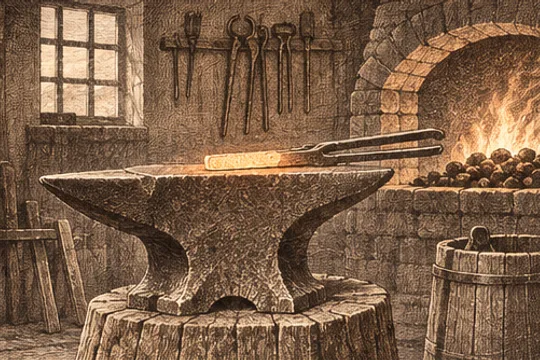
What a shame about those 500-year-old double-doored shops in the Arasta Bazaar and Nacar Market. When I walk those old streets now, I can no longer smell the stout leather in the saddlers’ shops, or catch the scent of hot iron under the hammer drifting out from the forges. What a loss. What a loss…
Translated from the Turkish original. Türkçe