
Why did the AK Party lose while Erdoğan won?
25 June 2018 · Personal website
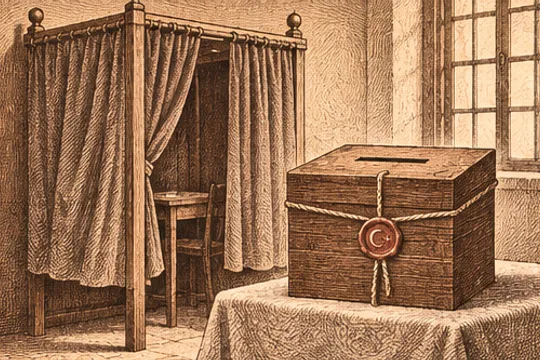
(Article 233 – 25 June 2018)
The presidential and parliamentary elections of 24 June, among the most important and consequential in the history of the Republic of Turkey, have just ended in victory for Erdoğan. With 52.5 percent of the vote, Mr Erdoğan won the right to govern until 2023 as the first president under the new system of the Republic of Turkey, which carries on the legacy of the Asian Hun Empire founded in 220 BC.
If another party had won 52 or 53 percent of the vote, its members would have danced like mad, kept drinking until morning, and refused to question the result in any way. But we have to discuss it.
Let me explain why…
In the election of 7 June 2015, the AK Party won 258 seats with 40.9 percent of the vote, losing its parliamentary majority. Coalition talks followed. When they came to nothing, the election was rerun on 1 November 2015.
The Turkish people showed good judgement in the general election of 1 November 2015. Voters who did not want Turkey to be at the mercy of coalitions gave the AK Party 49.5 percent of the vote and 317 seats. In the same election the CHP won 25.3 percent and 134 seats.
Now to today…
Erdoğan alone won 52.5 percent in the presidential election. In the parliamentary election the AK Party managed only 42.3 percent, which put just 291 of its members in parliament. Please remember that under the new system the number of seats rose from 550 to 600.
So the AK Party ended up ten percentage points behind Erdoğan and sent just 291 members to a 600-seat parliament. Even at worst, the figure ought to have been 370 to 380 seats.
I more or less expected that the election might turn out this way. But I did my part to avoid adding to tensions in the country and kept my criticisms to myself unless I had no choice. Now the election is over. Had I written what I am about to say earlier, someone might have asked, “Is Mehmet Sağlam trying to take advantage of the situation?” and drawn just the sort of false conclusion I wanted to avoid.
I have every right to criticize. You might ask where I get that right. Let me answer that too.
During the 24 June 2018 general election campaign, did you see even one member of parliament going through neighbourhoods and down streets anywhere in Turkey? Did you meet a single person from the AK Party’s women’s or youth branches, or from its provincial or district organisations? I’ll answer that: “NEVER!”
Only two people went from city to city holding rallies throughout the campaign: Mr Erdoğan and Mr Binali Yıldırım. There were also a handful of people such as Süleyman Soylu and Berat Albayrak. The rest amounted to nothing.
Speaking for myself, I maintain that I did more effective work on my own than a million AK Party members. Throughout the campaign, at talks I gave in numerous provinces and districts, in dozens of articles I published and on the many television programmes I appeared on, I kept explaining why Mr Erdoğan deserved support. My talks were watched and shared on social media by more than five million people. That is why I have every right to criticize the vote the AK Party received today.
The main reason the AK Party lost this election was the rise of cliques inside the party. The same clique that drew up the parliamentary lists made the same mistake in the election of 7 June 2015. Let’s go back and remember how it happened.
When the AK Party first came to power in 2002, the country had undergone a major economic crisis and collapse. Twenty-seven banks had closed, thousands of businesses and industrial companies had gone bankrupt, and millions of people had lost their jobs. The Turkish lira was scarcely recognisable under all its zeros. Seeing no future in their own country, people were looking for ways to leave and go abroad. Amid the chaos and uncertainty of those days, the AK Party’s cadres, drawn from the National Vision (Millî Görüş) tradition, looked like a lifeline to the Turkish people. The party ended up taking power on its own with 34.63 percent of the vote. That rose to 41.67 percent in the 2004 local elections, 46.58 percent in 2007, and 49.90 percent in 2011. The steady rise continued uninterrupted until the general election of 7 June 2015, when its share abruptly dropped to 40.86 percent.
Now let’s go back to that first election in 2002.
As a party from the National Vision tradition, the AK Party could already count on the 15 to 17 percent core vote of the Welfare Party and the Felicity Party. The coalition governments involving ANAP, DYP, DSP, Welfare, Felicity, and MHP that ran the country between 1994 and 2001 could no longer cope with the 1999 Marmara earthquake and the deep-rooted economic problems that worsened afterward. They had to throw in the towel. At the 2002 general election the AK Party won 363 seats with 34.28 percent of the vote, while the CHP won 178 seats with 19.39 percent. Turkey’s oldest and most established parties fell below the threshold, and some disappeared altogether. The DYP received 9.54 percent, the MHP 8.36 percent, the Young Party 7.25 percent, ANAP 5.13 percent, Felicity 2.49 percent, the DSP 1.22 percent, and the BBP 1.02 percent. The most striking figure to me is Felicity’s 2.49 percent. Islamic conservative voters became the AK Party’s core constituency. Millions of people with different political views who were fed up with coalition governments made up its “temporary” or “borrowed” vote. As Recep Tayyip Erdoğan’s AK Party delivered not only on the economy and social issues but also on democratisation, those temporary or borrowed votes began to stick. With new supporters coming on board, they took the party to 49.90 percent. Even the Gezi protests in 2013 and the judicial and police coup of 17 and 25 December 2013 increased its vote instead of diminishing it.
After 2011, however, the AK Party visibly changed. It turned increasingly inward. People from National Vision were held in high esteem and placed in influential posts at nearly every level, while other groups were shut out and driven away from the party.
A week before the 7 June 2015 election, I visited a businessman very close to the AK Party and told him: “You are turning further and further inward and excluding everyone who didn’t come up through National Vision. I cast my first vote in 1983 for Turgut Özal’s Motherland Party. I have voted for other parties since then. But I have voted AK Party since 2002 because I want my country to break out of its vicious circle, to become wealthier, to gain standing, and to grow and develop. Voting AK Party does not mean I’ve moved closer to National Vision, nor should it. As you see it, there are two kinds of AK Party supporter: the ‘real’ ones from National Vision and the ‘fake’ ones who don’t have those roots. In your words, we are the people who were ‘welded on’ to the party afterward. To put it bluntly, you see us as turncoats, or at best people who ‘sold out’ their old party for one reason or another and came to the AK Party. You and we have entirely different political DNA. Worse, you can never accept us. In the general election you will find out very painfully what a mistake that was and what it costs you.” One by one, what I said came to pass. The AK Party suffered a major defeat in the elections of 7 June 2015 and lost its parliamentary majority.
We face the same problem today. A handful of AK Party members who have secured their seats may be deeply troubled by what I write. I don’t care in the least. I have nothing on my conscience and nothing to fear.
The chief reason the AK Party ended up with 291 members in a parliament of 600 seats is that the parliamentary lists were drawn up VERY BADLY. Let me make this perfectly clear: not one of the 291 won on the strength of their character, ability, or accomplishments. Every one of them rode Mr ERDOĞAN’s coattails into parliament. Those 291 contributed nothing whatsoever to the 42.4 percent of the vote.
The mistake made on 7 June 2015 was repeated on 24 June 2018. They walked into the same trap with their eyes open.
Old habits die hard. The National Vision system of advancement, which gives no one outside its own ranks a chance, kept turning inward. In many provinces and districts, the party ran people with no public support. Had the AK Party drawn up its lists with real care and chosen candidates who could appeal to the public at large, it could easily have won 50 to 52 percent nationwide.
From here on out the AK Party has no room for error. Many people voted for it purely for Recep Tayyip Erdoğan’s sake even though they neither liked nor approved of the parliamentary candidates.
But there is no more room to manoeuvre…
I know Mr Erdoğan, too, is unhappy with these results. Erdoğan is the only person who can put an end to the cliques in the party.
Now we should put a question to the esteemed gentlemen who drew up the lists, interviewed prospective candidates, and strutted about as if they were something special: “Is this how you choose candidates?”
Sadly, you turn out to be remarkably incompetent.
Believe me, I still can’t work out how you managed to reduce the AK Party to a parliamentary minority. Well done indeed.
The people showed your list a huge “RED CARD.” They said: “We don’t trust this list you put together. We won’t give you a mandate to govern alone. We’ve let you run loose for too long, so from now on Devlet Bahçeli will keep an eye on you.”
In 711 Muslims led by Tariq ibn Ziyad set foot in Spain and established the Islamic civilisation of al-Andalus there. The first attempts to drive Muslims out of Spain began in the ninth century and, as we know, were completed in 1492. Muslim rule in that land came to an end altogether in 1492. According to legend, Abu Abdallah (Muhammad XII), the last sultan of the Emirate of Granada, hands the keys of the city to the Spanish king and queen without a fight. Realising he can no longer stay, he leaves the city. Sunset is approaching. The sun falls for the last time on the Alhambra, which took almost 250 years to build, every inch worked in fine detail, its walls inscribed everywhere with “Wa lā ghāliba illā Allāh” (“There is no victor but God”). It is the final farewell to a civilisation that had ruled the land for centuries. Sultan Abdallah stops at the top of the hill and turns for one last look. As the first tears fall, his mother, standing beside him, says the harshest thing anyone could say: “Weep, my son, weep. You did not fight like a man, so now it befits you to weep like a woman.”
And in that vein I now say to the people who drew up the parliamentary lists: “Go ahead and weep. The AK Party lost its parliamentary majority because of your whims, your incompetence, and your poor choices.”
Have I made myself clear?
Dr. Mehmet Hakan Sağlam
Translated from the Turkish original. Türkçe