
Did you say “Armenian genocide”?
15 February 2015 · Personal website
(Article 63 – February 15, 2015)
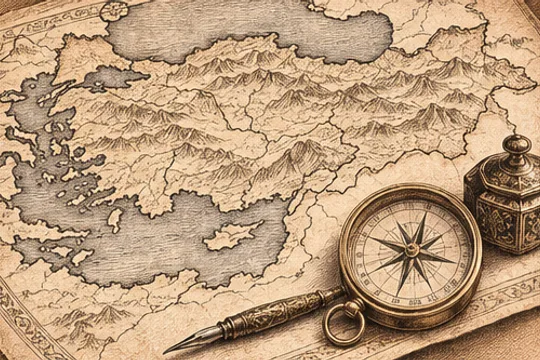
The author traces the first use of the name “Armenian” for a people to 521 BCE, when the Persian king Darius recorded in the Behistun inscription that he had defeated the Armenians. In the author’s account, Armenians first settled around Yerevan, Lake Sevan, Nakhchivan, the northern shore of Lake Urmia, and Maku. They later spread into the Caucasus, eastern Anatolia, and Cilicia as a result of state resettlement policies, pressure, and economic conditions within their communities. They sometimes established small, short-lived kingdoms and principalities. Among the most important were the Kingdom of Ani, founded by the Bagratid dynasty, and the Kingdom of Vaspurakan, founded by the Artsruni dynasty east of Lake Van. These states did not last long and were succeeded by other powers. In the chronology given here, Armenians came under Persian rule from 521 to 333 BCE and Macedonian rule from 333 to 215 BCE, and enjoyed limited independence between 115 and 64 BCE. Their lands changed hands between Rome and Persia from 64 BCE to 220 CE, then came under Sasanian rule from 220 to 500, Eastern Roman rule from 500 to 700, Arab rule from 700 to 1000, and Turkish rule from the eleventh century onward.
Some accounts hold that the Armenian language developed under Assyrian, Parthian, Persian, and Greek influences. The author considers this largely correct, given the many governments and cultures that shaped the region.
The author sees similarities between early Armenian religious beliefs and those of neighboring peoples. He says Armenians initially held beliefs centered on natural phenomena under Persian influence and embraced Christianity as it spread through the region. He describes them as the first nation to adopt Gregorian Christianity as a state religion.
The author says that from the early years of the Ottoman state, Armenians lived in dispersed communities and formed a majority nowhere they lived, citing studies by foreign scholars and reports by foreign journalists and officials. He maintains that Armenians did not come into conflict with the existing political authorities before the late eighteenth century and that opposition to the state began to emerge among them thereafter, particularly under the influence of the French Revolution.
The French Revolution posed a serious threat to multinational states such as the Austro-Hungarian and Ottoman empires, the author argues. He sees Europe’s shifting political and economic balance and the struggle for power and colonies abroad as factors in the emergence of the Armenian question. From the nineteenth century onward, the region inhabited by Armenians and known as Armenia became a point of rivalry among Britain, Russia, and France. The author alleges that these powers cultivated ties with Armenians to establish their influence, encouraged opposition to Ottoman rule, and began to present themselves as protectors of Armenians, invoking religion in particular. He argues that the independence struggles of Greeks, Serbs, and Bulgarians encouraged similar movements among Armenians.
The Treaties of San Stefano (March 3, 1878) and Berlin (July 13, 1878) brought the Armenian question onto Europe’s agenda. During the Russo-Turkish War, Russian forces advanced to the outskirts of Istanbul. As they approached San Stefano, Armenian Patriarch Nerses Varjabedian of Constantinople and other Armenian leaders met Count Ignatiev to request autonomy for Sivas, Van, Muş, and Erzurum. Ignatiev promised to include the Armenian question in the treaty and did so in Article 16. The Treaty of Berlin then made it a European concern. Under Article 61, the European powers took on the role of protectors of the Armenians, as the author describes it.
By this period European powers’ colonies covered more land than their territories in Europe. Nearly all the raw materials Europe needed came from its colonies. The author argues that overseas territories, more than the European continent itself, sustained the European economy. As a result, the policies of countries such as Britain and France reached beyond their borders and even beyond their continent. They sought spheres of influence abroad to secure their colonies and the routes that led to them.
The author says Armenian leaders believed the Treaties of San Stefano and Berlin had granted major concessions but fallen short of their aims. He alleges that they tried to draw international attention by creating unrest where they lived while sending delegations to the great powers to seek support. He says they wrote repeatedly to the Russian tsar asking for assistance and even sought Russian annexation of the Armenian region. They also repeatedly appealed to Britain, alleging that Ottoman authorities oppressed them, that their lives were no longer safe, and that the government was inciting Kurds and Circassians against them.
Russia approached the Armenian question differently from other countries. Originally a land power, it sought access to the seas, and the author presents the route through the Black Sea to the Mediterranean as the easiest. The policy of securing access to warm seas began under Peter I and developed under Catherine II. Through the 1774 Treaty of Küçük Kaynarca with the Ottoman Empire, Russia gained access to the Black Sea coast and, in the author’s account, the right to protect Christians in Ottoman lands. Britain, which then held India, sought to prevent Russia from reaching warm waters to protect the route to India.
Oil increased the importance of the Middle East and intensified British–Russian rivalry. Armenians lived across a swath of Anatolia from Erzurum to Mersin, and in the author’s view an Armenian state under Russian protection there would have given Russia access to warm waters.
After the Russo-Turkish War of 1877–78, Russia took several towns in eastern Anatolia and, the author alleges, encouraged local Armenians to seek independence from the Ottoman Empire. He says Russian agitation in eastern Anatolia intensified following the Treaty of Paris and the Reform Edict and that a clandestine group called the Union of Salvation was set up in Van in 1872 with Russian support. He also alleges that Russian agents stepped up their activities in five provinces they called Turkish Armenia and trained and armed local Armenian groups. He argues that Armenian independence within the Ottoman Empire would not have suited Russia, as it might have mobilized Armenians within Russia itself. In his view, Russia sought to bring Ottoman Armenians under its rule and open routes to the Mediterranean and Basra.
Britain’s policy in the East took a different form. Britain was the dominant player in nineteenth-century European politics, and its colonies around the world shaped its approach. It wanted new states emerging from Ottoman territory to secure India and the route to it. Its chief aim was to prevent Ottoman lands from falling to a power that could threaten British interests or colonies and to keep Russia from reaching warm waters. The author says that the concentration of oil reserves in Ottoman territory made the Middle East indispensable to Britain.
After the Treaty of Berlin, Britain took an active interest in Armenian affairs and pressed the Ottoman government to introduce the reforms it had promised. In 1878 it appointed consuls to Sivas, Erzurum, Van, and Kayseri. The author credits British missionaries with spreading Protestantism among Armenians and attributes the establishment of the Armenian Protestant Church, dated in the article to 1859, to British efforts. He argues that the church gave Britain a legal basis to intervene on behalf of Armenians, comparable to the rights Russia had gained under the Treaty of Küçük Kaynarca.
Unlike Russia, the author says, Britain envisioned an independent Armenian state. He claims British officials doubted it could stand on its own or endure without British protection, under which it could serve as a buffer against Russian expansion southward. He alleges that Britain planned to bring Armenians into eastern Anatolia from elsewhere, gradually remove Turks from the region, reconcile Armenians and Syriac Christians across their religious differences, and use force to bring local Kurds into line.
British efforts to act as protector of the Armenians intensified after 1880, the author says. He alleges that when diplomatic moves on their behalf produced little progress, Britain used consuls and missionaries in eastern Anatolia to encourage armed resistance. Violence escalated in the region. He further alleges that Britain offered asylum to members of Armenian committees and insurgents and prevented the Ottoman authorities from punishing members of armed groups they had arrested.
France’s relations with the Ottoman state began much earlier. The article dates their start to the capitulations the Ottomans granted France in 1535. Ties deepened from the eighteenth century onward, and France became a model for Ottoman reform. The author argues that the right to protect Catholics in the Ottoman Empire, granted alongside the capitulations, gave France an indirect means of intervening in Ottoman affairs.
French contacts with Armenians went back much further, to encounters with the Franks during the Crusades. While Britain and Russia focused on Armenians in eastern Anatolia, France took a greater interest in those in and around Çukurova. That interest grew after the American Civil War broke out, the author says, because France imported raw cotton from the region for its textile industry. It increased its investments there and sought converts to Catholicism, announcing that Armenian converts could receive French citizenship and benefit from the existing capitulations. Catholicism spread among Armenians and a growing Armenian Catholic community took shape.
France entered World War I alongside Britain and Russia against the Ottoman Empire. The author alleges that it encouraged the Armenians of Çukurova, also called Cilician Armenians, to rebel and supported local uprisings. In the episode known as Musa Dagh, the French navy rescued five thousand Armenians besieged by Ottoman troops, whom the author describes as members of armed groups, and took them to Port Said. The author argues that France wanted an independent Armenia in southern Anatolia chiefly for Çukurova’s cotton and the mineral deposits of the Taurus Mountains. He credits France’s efforts with the settlement of 200,000 Armenians in and around Adana.
The author attributes the origins of what is known as the Armenian question, which continues to return to public debate, to competing Western ambitions in the Middle East. In his view, European powers used Armenians as political pawns, reaping the benefits while Armenians lost out. He argues that missionary efforts by Russia, Britain, and France deepened religious divisions within Armenian communities.
The author says Armenian revolutionary organizations formed after the Russo-Turkish War of 1877–78, also known as the War of ’93, targeted Muslims as well as Armenians loyal to the Ottoman government. He cites numerous documents held in the Prime Ministry’s Ottoman Archives.
One message to Ferhad, son of Kirkor and a shopkeeper in Sulu Han, demanded that he pay the organization fifty liras immediately. It threatened to kill him if he failed to pay or told anyone about the demand.
A message to Mesrob, the Armenian prelate of Edirne, accused him of betraying his people by showing loyalty to the sultan and praying for him. Its authors called themselves nihilists and threatened to kill him as punishment.
Minas Ağa, from the village of Eğrek and living in Russia, writes to his brother-in-law Aramel that he received his earlier letter and that all are well. The letter says he is sending two associates with weapons and asks Aramel and the young men of the village to join the organization. Minas welcomes the news that Ağanik, son of Manuk Ağa, and Mardinos have enlisted as volunteers. He stresses the importance of weapons and money for fighting the Turks and expresses confidence that the difficult days will pass and that acting together will bring victory.
In the author’s account, Greek committees devised a strategy to induce European powers and Russia to pressure the Ottomans over non-Muslims: manufacture the appearance of persecution and then give Europe an exaggerated account of it.
The author maintains that Russia, with France and Britain, backed the Armenian committees and that even members caught in the act escaped punishment. He describes propaganda, funds, and weapons as the committees’ three main pillars and considers intercepted correspondence now held in the Ottoman Archives the strongest evidence of their internal workings. He cites a letter of November 15, 1895, from K. V. Hallward to his friend Komitas Hekimian, asking when a crate containing rifles and other items had been sent to Erzurum, what had happened at Bitlis and elsewhere, whether Armenians or Turks had started the violence, and whether an attempt on Bahri Pasha had sparked it. Hallward, in the author’s rendering, mocked the attackers for missing their target.
The author says open support emboldened the committees and made their dealings with the state more threatening. He cites a June 30, 1894, letter from the Hunchak Committee’s Istanbul branch to the grand vizier. It says that many Armenians were arrested over letters addressed to the Armenian clergy, that the committee alone wrote and distributed the letters, and that the detainees had no part in it. The writers say the sultan removed Archbishop Khoren Ashikian, recognized demands concerning the patriarchate, and withdrew the accusation, if an accusation had indeed led to the arrests. They demand the detainees’ release, warn that only measures of justice and fulfillment of Armenian demands could prevent a revolution across the empire, and say the letter was shared with representatives of foreign powers.
The author also quotes a letter from committee member Tanil Çavuş that tests the addressee’s patriotism and portrays the band as sacrificing for the nation. Tanil claims it was organized along British lines under Hunchak leadership and boasts of his standing as its mountain commander. He threatens to kill Patukyan wherever he is found and demands one hundred pounds sterling to spare him. The letter ends by telling him to consider the demand and challenging him to report it to the government.
The author alleges that Armenian activists worked covertly before World War I and that Armenians joined Russian and French units against the Ottomans once the war began. He says the United National Armenian Congress initially decided Armenians would remain loyal to the Ottoman state but claims 180,000 later volunteered in the Russian army against it. He portrays those volunteers as backed by tsarist Russia and motivated by territorial ambition, accusing them of turning on Turks after nearly a millennium of coexistence.
The author alleges that Armenian forces allied with Russia and France massacred Turks and burned homes and settlements where they had once lived. He presents the Ottoman decision of April 24, 1915, to arrest Armenians who had joined the fighting and deport Armenians in the east to Ottoman territories in Iraq, Syria, and Lebanon as a response to these events. He says many deportees died en route from disease, hunger, and thirst. He argues that the war and the subsequent treaties of Kars and Moscow with Soviet Russia ended hopes for a Greater Armenia. He cites Ottoman archival orders directing that deportees be provided for during the journey and their lives and property protected.
The author disputes the Armenian genocide and cites Bruce Fein, whom he identifies as a legal adviser to US President Ronald Reagan. According to the article, Fein called the genocide allegations false and said the congressional resolution was driven by domestic politics. At a conference on minorities in the Ottoman Empire, to which he was invited by the Baruch College student union in New York and the Federation of Turkish American Associations, Fein spoke mainly about the allegations. He argued that Ottoman minorities enjoyed considerable tolerance, autonomy, their own laws, and religious freedom. He accused Armenians of betraying Ottoman rule and presented the removal of Armenians from militarily sensitive areas as the government’s response. He acknowledged that harmful events occurred during the deportations but rejected their characterization as genocide.
Fein said the White House examined the issue in 1981 under Reagan and that its estimates were around two million Turkish Muslim deaths and between 300,000 and 600,000 Armenian deaths. He accused Armenians of progressively increasing their estimates. He argued that the Ottoman authorities would not have convicted and sometimes executed their own officers or soldiers for mistreating Armenians had genocide been their aim. He contrasted this with Nazi Germany, asking whether Hitler would have punished German officers for sending Jews to gas chambers or spared Jews living in Berlin from deportation to camps. Fein said using the term genocide in this case undermined its seriousness. He pointed to Armenians who held senior Ottoman posts, described Armenian independence movements as uprisings against an empire weakening from the nineteenth century onward, and accused Armenian armed groups of fighting alongside Russia and France in World War I and killing many Ottoman Muslims.
The author also cites historian Guenter Lewy, saying that his research in British, German, and American archives led him to reject the characterization of the events as genocide.
The author sees Armenia’s first prime minister as having made the most important statement on the subject. Hovhannes Katchaznouni was the first prime minister of the Armenian state, which the article says was founded when the Yerevan region was given to the Armenians in 1918. The author argues that a report Katchaznouni presented to a Dashnak Party meeting on the Armenian question in Bucharest in 1923 lays bare the facts.
Katchaznouni’s signed report on events in the Ottoman period was translated from Russian into Turkish and published as a book in the years before this article. The author argues that the book decisively contradicts the account of an Armenian genocide and regards it as a historical document showing what he calls Armenian betrayal of the Ottoman Empire.
The author asserts that Katchaznouni’s 128-page report refutes Armenian genocide claims and quotes a passage he attributes to it. In the version reproduced in the article, Katchaznouni says that they fought to sabotage peace, sided with the Allied powers against the Turks, demanded an Armenia stretching from sea to sea, and appealed to Europe and America to send Allied troops to Turkey to secure Armenian rule. He says they fought the Turks continuously, killed and were killed, and could hardly expect the Turks to trust them. He says they took part in military operations, were misled, and tied themselves to Russia. The passage calls the deportation justified and necessary, takes responsibility for events, says the Turkish national struggle was justified, and calls rejecting peace and arming themselves a grave mistake. It says the Treaty of Sèvres blinded them, and that the Allied promise of a Greater Armenia drove their rebellion and prevented them from recognizing that a state called Turkish Armenia was a fantasy.
The author says the report was banned in Armenia immediately after its presentation at a Dashnaktsutyun party meeting in Bucharest in 1923. He says copies of the book, which had been translated into several languages, were removed from bookshops and libraries and destroyed. A copy of the book, which he says had been widely discussed among Armenians, was found in Russia’s Lenin Library and published in 2005 by Kaynak Yayınları.
On the basis of these sources, the author concludes that there was no Armenian genocide and claims that, if there was a genocide, Armenians rather than Turks committed it. He argues that documents from US, French, and Armenian archives support his conclusion and are strong enough to settle the debate.
The author alleges that Western countries, seeing Turkey grow stronger, began looking after 1965 for a new means of pressure and turned to the accusation of genocide, which he calls slander. He accuses Western governments of demanding documents from Turkey while accepting what he regards as an unsupported claim. He then turns to the conduct of Western powers themselves.
The author asks why, in his view, so little attention is paid to the atrocities he attributes to Spain, Britain, and the United States against Indigenous Americans, to France against Algerians, to Germany against Jews, and to Russia against Turks. For a more recent example, he asks why the killings at Khojaly on February 26, 1992, which he describes as genocide committed by Armenian forces, receive so little attention. He turns to the histories of the countries that accuse Turkey of genocide.
Genocide of Indigenous Americans by Spaniards, Portuguese, French, Italians, British, and Americans
The author dates the start of the slaughter of Indigenous Americans to the arrival of Christopher Columbus, often described as the discoverer of the Americas. Not long after Columbus’s men landed at Guanahani on October 12, 1492, the author says, they began killing captured Indigenous people, putting them in chains and forcing them to labor, or sending them to Europe to be sold into slavery. In a September 1498 letter to the Spanish monarch, Columbus said they could send as many enslaved people from there as could be sold.
The author cites a study in the German magazine P.M. that put the population remaining in the Americas in 1550 at ten million. He interprets this to mean that seventy million of the original eighty million Indigenous people were killed or sold into slavery. He says the destruction left too few laborers for the fields and led to the forced transport of enslaved Africans to the Americas.
The author quotes Bartolomé de las Casas as an eyewitness to colonists mutilating Indigenous men and women for amusement in different parts of the region and taking nursing infants from their mothers and killing them.
According to the author’s reading of Las Casas, three million Indigenous people lived on the island of Hispaniola when the Spanish arrived, but only two hundred remained. Las Casas’s account, the article says, put the number of Indigenous people killed over forty years at more than twelve million, including women and children, and said that the killings continued.
The author attributes to George Washington, a founder and the first president of the United States, a comparison of Indigenous peoples to wolves and a call for their extermination. He also attributes to Theodore Roosevelt a remark approving of the saying that the best Indigenous person was a dead one in nine cases out of ten. He alleges that US authorities paid a bounty of five dollars per person killed and that basements of state buildings were filled with Indigenous skulls. He ends by caricaturing the American defense as the claim that there can be no genocide unless everyone is killed.
The author contrasts US and EU attention to the Armenian genocide, which he denies, with what he regards as indifference to the destruction of Indigenous peoples in the Americas, whose dead he puts at 80 to 100 million. He attributes this to a lack of a diaspora and advocates. He describes the 1637 massacre of the Pequot in New England as an early instance and attributes to Puritan colonists a statement that God did not want the Pequot in their earthly paradise and that they gave thanks that no one bearing the name remained.
According to the author, Puritans carried out the massacres alongside their religious leaders and saw themselves as fulfilling a sacred mission. He says they used passages from the Hebrew Bible to justify killing Indigenous men, women, and children, including by burning their dwellings, and believed the slaughter earned divine approval.
The author says many of those who killed Indigenous people and seized their land were of Spanish, Portuguese, British, French, and Italian origin, with Britain the dominant power. Colonists divided up the territories they could reach and established settlements. The author holds them responsible for laying the foundations of the United States. He dates the first step toward its founding to July 4, 1776, describes the war between the colonists under George Washington and Britain as lasting six years, and notes that independence was recognized in 1783 and the thirteen-state United States established in 1787.
The author maintains that Washington personally approved of violence against Indigenous peoples. He attributes to him a 1783 statement comparing them to wolves, describing both as prey, and saying that Indigenous people deserved destruction at the hands of white settlers.
The author says that in 1807 President Jefferson told his secretary of war to meet Indigenous resistance to American expansion with force. In the statement attributed to Jefferson, he said that once war began against a tribe, it would continue until the tribe was destroyed or driven beyond the Mississippi, even at the cost of American lives.
Congress passed the Indian Removal Act in 1830 after President Andrew Jackson strongly pressed for it. Tribes in the East were to leave their homelands for designated lands in the West. In subsequent years tribes were forced to sign treaties giving up their land and were driven into designated areas. Thousands died during the forced march known as the Trail of Tears. Those who reached Indian Territory faced deadly disease and starvation. The author says removals continued elsewhere by presidential order and that the Chickasaw and Choctaw were expelled from their ancestral lands in the 1830s. He says the Creek, Seminole, and Cherokee suffered particularly high death rates. He also alleges that disease was deliberately spread among displaced people under the guise of aid.
The 1890 massacre of Sioux people at Wounded Knee marked the symbolic end of Indigenous freedom, the author says. He cites the words of survivor Louise Weasel to convey its brutality: “We tried to run. But they shot us one by one like buffalo.”
Black Elk, who lived through the massacre, said something else died that day. He recalled that he could not tell how many had died at the time. Looking back from old age, he could still see with his younger eyes the bodies of women and children piled on the ground. Something else, he said, had died there in the mud and been buried in the blizzard: the dream of a people.
Geronimo, the great Indigenous warrior, died in 1909. The author quotes an Indigenous account of the one promise white people kept: “The fork-tongued palefaces kept only one of their promises. They said they would take our land, and they did.”
France’s Genocides in the Vendée and Algeria
For years Turkey has proposed that historians investigate the Armenian claims, addressing Armenia and nearly every country with an active Armenian diaspora, particularly France and the United States. The author says no country has taken up the proposal. He accuses France of a double standard: it legislates on the Armenian genocide, which he denies, but tells Algerian leaders who seek an apology for what they call genocide in Algeria to leave the matter to historians.
The author cites French intellectuals such as Jean-Paul Sartre and Didier Billion as describing Algeria as a French taboo. He argues that taboos run through much of French history. He accuses France of ignoring massacres in New Caledonia, Madagascar, Haiti, Martinique, Guadeloupe, French Guiana, the Comoros, Senegal, Mali, Côte d’Ivoire, Gabon, Cameroon, Ghana, Guinea, Benin, Rwanda, Vietnam, Laos, and Cambodia, some of which remain French territories. He also alleges that France avoids acknowledging war crimes in Antep, Maraş, Urfa, and Adana, cities he describes as occupied during World War I.
The author argues that France also treats episodes of mass violence within its own borders as taboo. His examples are the Vendée (1793–1796), which he calls genocide by French people against French people, the St. Bartholomew’s Day Massacre of August 24–25, 1572, the era of slavery, the Reign of Terror during the French Revolution, and the Vichy government’s collaboration with Hitler during World War II.
The French Revolution of 1789 reshaped the world and, in the author’s view, ushered in one of history’s bloodiest periods. In France’s official account, the events in the Vendée on the Atlantic coast are known as the Vendée uprising or war. The people opposed Louis XVI’s execution, rejected officials appointed by Paris and priests who swore allegiance to the constitution, and refused to pay new taxes. The region became a center of opposition. The author says Paris sought to make an example of the Vendée and issued a decree on August 1, 1793, that paved the way for massacres. Forests were to be cut down, crops and livestock seized, rebel property confiscated, and women, children, and older people displaced. The peasant army was defeated and dispersed at Savenay near Nantes in December, and small groups withdrew to the forests to continue the revolt. The author describes mass killings that followed and continued until 1796. Republican troops known as the Infernal Columns, led by Louis-Marie Turreau, killed people who surrendered and massacred defenseless villagers, including women, children, and older people. In a report attributed to General François Joseph Westermann, he declared the Vendée destroyed, boasted of killing women and children under orders, and said peasants who came to surrender were killed and no prisoners taken, to show the ruthlessness of the revolution.
The author says few Turkish readers may know about the Vendée, but most have heard of French violence in Algeria. In the early nineteenth century Algeria was an Ottoman province governed by Dey Hussein Pasha, originally from İzmir. Ottoman weakness left it vulnerable to France. According to the article, the French government owed five million francs and grain to two Algerian Jewish creditors, Bacri and Busnach. The restored monarchy acknowledged the debts but stopped paying. The creditors sought Hussein’s help and he seized some French ships. While discussing the debt on April 29, 1827, Hussein struck French consul Pierre Deval with his fan. France treated it as a declaration of war and blockaded the coast from June 16. Istanbul, occupied with events in Greece, attempted a diplomatic resolution. France, Britain, and Russia destroyed the Ottoman fleet at Navarino on October 20, 1827. The Russo-Turkish War of 1828–29 then left Algeria increasingly isolated. France sent a new fleet and 37,000 troops under General Bourmont on June 14, 1830, and occupied Algiers on July 5. Resistance led by Emir Abd al-Qadir continued until 1847, and the author dates France’s control of the whole country to the end of that resistance.
France established the Governor-Generalship of French North Africa on July 22, 1834. The author describes the occupation as using military, political, religious, cultural, and economic pressure to break Algerian resistance and cut support for independence. The authorities sought to suppress Muslim and Arab identity, make French dominant over Arabic and Berber, and spread Christianity through missionary work. They confiscated lands of resisting tribes and property belonging to public-service endowments, established colonial settlements in desirable areas, brought in Europeans, and gave settlers land seized from local tribes.
After occupying Algeria, France established military offices known as Arab Bureaus to administer the Indigenous population. In 1870 civilian rule replaced military rule and Algeria was placed under the French Interior Ministry. In 1871 some two hundred tribes rallied around Muhammad al-Muqrani in an uprising that spread across the country. Another uprising followed under Sidi Sheikh in 1881 and was suppressed in 1884. The author says colonial authorities killed thousands while putting down the two uprisings. He argues that the second revolt was used as a pretext to suspend the judicial system and impose repressive laws known as the Indigenous Code. He says these laws, enforced until 1919 in his account, privileged French people and deprived Algerians of rights, causing many to die or leave the country.
Italy’s Genocide in Libya
On September 27, 1911, Italy sent the Ottoman government an ultimatum through its embassy in Istanbul demanding the surrender of Benghazi and Tripoli without bloodshed. After the demand was rejected, Italy declared war on September 29 and reached the port of Tripoli on October 3. Italian troops bombarded the city and occupied part of it in the first days of the war. An Ottoman counterattack on October 23 recovered some of the lost ground. The author says that Italian troops then massacred local men, women, and children. The killings, which he says lasted four days until October 28, prompted protests in Britain and elsewhere in Europe. The Italian government asked its commander in Tripoli, General Caneva, for an explanation. He denied ordering a massacre and said he had ordered that only armed people be killed. The article cites Reuters war correspondent M. E. Ashmead-Bartlett for a figure of four thousand killed between October 23 and 28, in a dispatch the source dates October 11, 1911.
Even after the Treaty of Ouchy forced the Ottoman state to cede Tripoli to Italy, Italian forces never fully controlled the region, the author says. The resistance led by Omar al-Mukhtar made gains against them. The author says Italy responded with a new campaign of repression, killing local sheikhs, killing thousands of people, and subjecting tens of thousands of women to sexual violence in its attempt to take control.
The author dates Italy’s landing in Tripoli to September 27, 1911, and says Italy expected to occupy Libya in fifteen days but failed to control it for years. When Senussi leader Sayyid Ahmad went to Anatolia to support the Turkish War of Independence, Omar al-Mukhtar replaced him and led the struggle against Italy for many years. The article counts more than fifty battles and two hundred smaller clashes annually from 1923 to 1932. The author denounces the unequal war and says Italy reinforced its air and ground forces and attacked villages to cut off support for the resistance. Mussolini appointed General Rodolfo Graziani to command the occupation forces. The author describes Graziani’s repression as genocide and says Mussolini’s troops committed massacres, torture, and rape after occupying Kufra in January 1931. He recounts that Graziani desecrated the Qur’an in front of people who had surrendered and taunted them by telling them to call on their prophet for help.
The author accuses Graziani of killing leading religious scholars, cutting down the oasis’s date palms, closing wells, burning Mahdi al-Senussi’s historic library, and ordering sexual violence against women. Kufra’s fall tightened the siege of the resistance. The author dates Omar al-Mukhtar’s capture to September 11, 1931, when Italian forces surrounded the valley as he visited the tomb of Sidi Rafi, a companion of the Prophet. Al-Mukhtar rejected the demand that the resistance surrender. The article says an Italian military court sentenced him to death in a sham hearing on September 16. He told the court that judgment belonged to God alone and that its ruling had no validity. In the author’s account he went calmly and fearlessly to his execution that day before thousands of Libyans brought from the camps, and died a martyr.
Massacres of Turkish Cypriots
The author dates the start of massacres of Turkish Cypriots by Greek Cypriots to 1912. He describes attacks in thirty-five locations in which Turkish-owned businesses, mosques, and homes were burned and people killed. He dates the founding of EOKA, which he calls a terrorist organization, to 1952 and attributes to its attacks the deaths of one hundred Turks and the destruction of thirty villages. He says EOKA members began a new campaign of ethnic cleansing in 1963, with five hundred Turks killed, 130 Turkish villages burned, and 25,000 people driven from their homes. The author puts the number of Turks killed by Greek Cypriots from 1912 to Turkey’s military intervention in 1974, which he calls the Cyprus Peace Operation, at more than a thousand.
Greece’s Massacres in the Morea
The author says Greece, which recognized the Armenian genocide in 1996 in his account, has its own record of atrocities. He writes that many Turkish Muslims died in Balkan massacres as the Ottoman Empire disintegrated and that when Greece gained independence in 1829, Turks in the Morea were forced to leave and twenty thousand were killed. He argues that the 1923 Lausanne agreement on the exchange of Turkish and Greek minorities was followed by what he calls systematic ethnic and cultural genocide against Turks in Western Thrace. Much of the area was made a military zone under martial law, travel between villages was subject to permission, and passports were confiscated. The author alleges that restrictions on legal, political, cultural, and religious rights, including worship, forced four hundred thousand Turks to leave.
Nazi Germany’s Genocide of Jews and Roma
The author turns to Auschwitz, the concentration and extermination camp in occupied Poland. He attributes the choice of the site to Hitler, citing its central location in Europe and its capacity for concealment and expansion. The gate bore the words Arbeit macht frei, “Work sets you free.” Rudolf Höss became commandant in 1940. Initially used for forced labor, the camp took on a different role in 1941. According to the article, Höss was summoned to Berlin to meet Heinrich Himmler, who ordered the elimination of Jews above all, as well as Roma, gay people, sick and disabled people, and opponents of the Nazis.
The author describes what followed as one of the largest and most systematic genocides in history. People deported from across Europe arrived by train over four years. Many believed they were being brought to work and carried luggage, food, clothing, and money. The article describes the labeling and sorting of luggage, the separation of men from women and children, and the selection of arrivals by German doctors and officers on the basis of age, health, and ability to work. It says children under fourteen and people unable to work were sent to their deaths, while those selected for labor were separated. The author describes how the Nazis deceived people about their fate, killed them in gas chambers, took valuables and hair from victims, and forced Jewish prisoners to dispose of the bodies in crematoria. The article also makes claims about the use of victims’ remains and the capacity of the furnaces.
Those selected for forced labor were stripped, washed, registered, photographed from three angles, and tattooed with prisoner numbers, the article says. It alleges that the numbers used a special coding system and that IBM won a German contract for the associated equipment. Prisoners were held in barracks originally built for horses, with three-tier bunks and some four hundred people to a building. In the author’s account, disease, hunger, beatings, and torture killed almost all within a year, while very few survived several years.
The author describes forced sterilization and other abusive experiments performed by Josef Mengele, known as the Angel of Death, on women, people with dwarfism, and twins. He says only two hundred of fifteen hundred twins survived, and that Mengele sought to alter eye and skin color. The article recounts other experiments on prisoners involving exposure to extreme conditions, disease, and harmful substances. It also describes prisoners left to starve, collective punishment following escape attempts, and executions by shooting, hanging, or torture.
People who were not taken to the camps were also murdered. The author describes mobile gas vans and links their development to the German chemist August Becker. The Nazis used these vehicles to kill Jews and Roma by carbon monoxide poisoning.
The author says reports from spies and a handful of people who escaped revealed the camp’s existence after a year, but that reports of mass killing and cremation met with disbelief. When the camp was liberated in 1945, only about seven thousand prisoners remained. The article puts the death toll over four years at 1.1 million in Auschwitz and another 1.6 million in other camps, and lists shootings, hangings, torture, starvation, experiments, and gassing among the causes of death.
The British Genocide of Aboriginal Peoples in Australia
Aboriginal peoples occupy an important place in the history of British colonialism, the author says. He argues that between 1788 and 1938 the British government and the colonial authorities systematically subjected Australia’s Indigenous peoples to genocide and forced removal to clear Sydney, New South Wales, Tasmania, Queensland, the Kimberley, and the Northern Territory for farming, livestock, mining, and the supply of raw materials.
The author cites research claiming that British authorities carried out genocide and forced removals under a martial law measure issued in 1824 that gave legal cover to abuses in the colonies. He cites the English novelist Anthony Trollope’s Trollope’s Australia, which the article dates to 1966, for an account of settlers taking Indigenous land and livelihoods, making Indigenous people subjects of laws that disregarded their customs, and killing those who tried to defend themselves to demonstrate who held power.
The author says British colonial authorities, in power from 1788, regarded Aboriginal peoples as racially inferior despite their having lived on the continent for millennia and speaking, by his count, some five hundred languages across thirty-one groups. He argues that the doctrine of terra nullius, or land belonging to no one, denied these peoples any rights to their land and gave settlers license to humiliate and kill them. He attributes to colonial parliamentarian Vincent Lesina a call to eliminate Black people to clear the way for white expansion. He also cites a September 4, 1880, editorial in The Queenslander that accepted Aboriginal suffering as the price of that expansion and urged intimidation to discourage resistance to the settlers.
The author points to an 1883 issue of The Normanton Herald as another example of racist and genocidal views. He says the newspaper portrayed Black people as guilty even when destitute and in need of help, and called for their elimination.
In the author’s account, colonial officials used security as a pretext for organized hunts and killings of Aboriginal people. Participants publicly displayed victims’ remains as proof, and the remains of prominent resisters such as Pemulwuy were sent to London. He says an 1805 military law made approaching new settler communities punishable by death for Indigenous people. He claims colonial laws in 1824 gave settlers in Bathurst, Sydney, and New South Wales authority to kill Indigenous people on security grounds. He describes the violence as spreading to Black people across the continent and says officials also authorized settlers in Tasmania to kill Aboriginal people they encountered in order to seize their lands.
The author alleges that during the colonization of Tasmania, authorities forcibly castrated captured Aboriginal men to prevent them from having children and intimidate their communities. Those who survived were uprooted from lands they had inhabited for millennia and cut off from their culture and social life. They were forcibly removed to other parts of Australia and to distant islands in what the author describes as a genocidal policy. People who resisted were killed.
The author estimates that ten thousand Aboriginal people, a quarter of Queensland’s Indigenous population, were killed there between 1824 and 1908. He describes resistance between 1885 and 1887 and alleges that colonial authorities retaliated by killing fifty Indigenous people for every white person who died. He says Indigenous women were killed and their bodies burned in a campaign intended to terrorize, subjugate, and enslave Indigenous communities.
The author estimates that white settlers killed 1,750 Indigenous people in Central Australia between 1861 and 1895 and 10,000 in Northern Australia between 1861 and 1930. He says the violence continued elsewhere. Citing research, he argues that between 1910 and 1970 authorities pursued another measure he describes as genocidal: forcibly separating about 100,000 Indigenous children from their families, keeping them as labor in white households, and seeking to assimilate them, which he compares to the treatment of Native Hawaiians. He says Indigenous women were sterilized without consent. He puts the Aboriginal population at 750,000 in 1788 and 31,000 by 1911, and attributes many deaths to introduced illnesses, deliberate poisoning, and shootings.
Belgium, France, and the Rwandan Genocide
Rwanda is a small, landlocked, agricultural country in central Africa surrounded by lakes and rivers. In the author’s chronology, it was a German colony until it passed to Belgium in 1907. He traces the roots of the genocide to Belgian colonial rule, arguing that it divided the population into a Tutsi minority of ten percent and a Hutu majority of ninety percent. He says the authorities privileged the minority and gave it government positions while excluding the majority, fueling Hutu resentment. According to the author, Tutsis were seen before Hutus at hospitals and Hutus were excluded from universities. He compares such discrimination, which he says had Belgian backing, to the treatment of Black people in the United States.
The author describes how people were assigned to the two groups on the basis of physical appearance, comparing the practice to classifying breeds of sheep. In his account taller people with broad, short noses were classified as Tutsi and shorter people with narrow, long noses as Hutu. He argues that as independence approached, Belgium switched its support to the Hutu majority in hopes of installing a government it could control. Rwanda declared independence in 1962. He says the Hutus won the first election afterward, that between 20,000 and 100,000 Tutsis were killed, and that nearly 200,000 fled in fear of their lives.
The author portrays the killing of Tutsis as having gone unpunished by the 1970s, encouraging a sense of impunity. He says exiled Tutsis eventually organized, returned, and began a civil war in 1990 that lasted about two years. The Hutu government proposed peace and a temporary agreement followed. During that period, extremist Hutu groups formed, armed themselves, and secretly compiled information about Tutsis.
On April 6, 1994, as extremist groups were arming in secret, the plane carrying Rwanda’s Hutu president was shot down. The author describes what followed as a genocide launched in revenge. He alleges that the United Nations pulled back under US pressure, citing the deaths of ten peacekeepers, while countries sent planes to evacuate their own nationals and failed to protect Tutsis. He says radio broadcasts dehumanized Tutsis and incited listeners to murder them. Prominent and wealthy Tutsis were killed first, followed by other members of the community.
The author describes Tutsi women held captive and repeatedly subjected to sexual violence. He says captors sometimes demanded money from wealthy prisoners in exchange for a less painful death, while others endured torture and mutilation before they were killed. He estimates that six hundred thousand Tutsis were killed in about two months. Roughly two and a half months after the genocide began, he says, the Rwandan Patriotic Front, a Tutsi-led movement organized in neighboring countries, entered Rwanda and took the capital.
The author then turns to France, which he accuses of repeatedly using genocide allegations against Turkey. He alleges that after the Rwandan Patriotic Front entered Rwanda, France provided military and logistical support to the Hutu government responsible for the massacres. In his account, French troops halted the front’s advance and took control of almost half the country, allowing the genocide to continue. He claims more than 200,000 people were killed in areas under French control. He puts the total at over 800,000 Tutsi deaths in one hundred days and says two million Hutus fled to neighboring countries fearing reprisals. He quotes President Paul Kagame as calling the French government the principal accomplice in the genocide.
The author calls the episodes covered in the article only a few examples of what he describes as Western genocides across Africa, Asia, the Americas, Europe, Australia, and elsewhere. He denies that the Ottoman treatment of Armenians constituted genocide and calls it deportation. To support that distinction, he argues that the Ottoman authorities did not subject Armenians to the forms of killing, deliberate spread of disease, or forced sterilization that he attributes to other powers in the cases discussed above.
The author urges Turkey to respond to what he calls the use of Armenian genocide recognition as leverage by preparing counterarguments. He proposes that parliament keep dossiers ready and form joint working groups with legislatures in countries that have suffered genocide. He says Turkey should raise Rwanda with Belgium, the treatment of Aboriginal Australians and Indigenous Americans with Britain, Rwanda, Algeria, and the Vendée with France, the genocide of Jews and Roma with Germany, and Libya with Italy. He predicts that doing so will change the terms of the debate.
Translated from the Turkish original. Türkçe