
Pharaoh said, “Did we not bring you up among us as a child, and did you not spend many years of your life among us?”
28 September 2014 · Tarafsız Haber
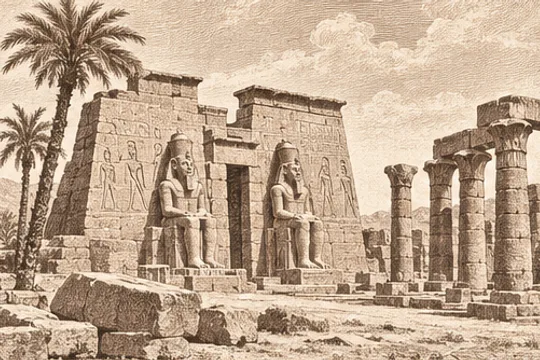
On 24 September 2014, President Erdoğan delivered a speech at the United Nations General Assembly that would go down in history. He looked all the representatives, world leaders, the coup makers and the famous group of five in the eye and said, “THE WORLD IS BIGGER THAN FIVE.” At a dinner hosted afterwards by Ban Ki-moon, he declined to sit down and went to the Turkish House because Egypt’s coup leader Sisi was to be at the same table. Immediately thereafter, the parallel and mainstream media circulated photographs purporting to show an empty hall in an effort to belittle Erdoğan’s speech. In fact, the photographs showed speeches at the United Nations Climate Summit, and the hall was quite full.
Whether the hall was empty or full, the representatives there gave Erdoğan’s speech a long round of applause on four separate occasions, and it went down in history. In a United Nations with 193 member states, only five countries have any influence, a situation that leaves every country deeply dissatisfied. The victors of the Second World War, the United States, Britain, France, Russia and China, are driving this international organization step by step toward isolation, disrepute and disintegration with their misguided and biased decisions. We may see an alternative to the UN emerge in the near future. This five-member structure at the United Nations is no different from Egypt’s Pharaohs. Many countries cannot even pay their regular UN dues. Those dues, ties of dependence, aid, perks, bribes and hush money from this gang of five, above all from the United States, or the fear of falling out with them politically, usually force UN member countries to side with the United States. If they object or go against it, they are promptly reminded in no uncertain terms of what Pharaoh said to Moses, the words that give this article its title.
President Erdoğan’s speech at the UN General Assembly was directed at all Western countries, especially the United States, Britain, France and Germany. In effect he was saying, “I’ve been telling you for four years, but you played the three wise monkeys. Now you’re paying for your stupidity. If you hadn’t stayed silent about Syria, you wouldn’t have a problem called ISIS today, and so many people wouldn’t have died.” The rescue of 49 consular personnel from ISIS undoubtedly put both Turkey and its National Intelligence Organization (MİT) at the top of the world’s agenda. Faced with Erdoğan’s justified and scathing criticism, not a single world leader stood up to say a word.
Erdoğan told the General Assembly, “We are saddened to see that the lands that were the theatre of the First World War still lack stability, tranquillity, peace and prosperity, despite the century that has passed. From Iraq to Syria, Palestine to Yemen, Egypt to Libya and Afghanistan to Ukraine, a vast region in the grip of deep crises is witnessing scenes that wound the conscience of humanity.”
Speaking at length about Palestine, Erdoğan said, “Those who object to the murders in Iraq and Syria and to the killing of democracy in Egypt face unjust and baseless allegations and are immediately accused of supporting terrorism. The world’s conscience has noticed that those who fiercely criticize certain countries over a lack of press freedom ignore the 16 journalists killed in Palestine and turn a deaf ear to pressure on media workers. Let me be quite clear. Those who look on, remain silent or fail to react when children are killed, innocent women are cruelly murdered and elected governments are overthrown in coups by guns and tanks openly become accomplices in this crime against humanity. Before any more time is lost, any more innocent lives are taken or the world’s conscience is wounded further, the United Nations must bring its weight to bear. I wish to emphasize that THE WORLD IS BIGGER THAN FIVE. The world’s conscience cannot accept that the five permanent members of the Security Council should render the United Nations ineffective in a manner at odds with the realities of the world. As Egypt’s popularly elected president was toppled by a coup and thousands of innocent people who wanted their votes to count were slaughtered, the United Nations and democratic countries simply watched. And the man who carried out the coup is being legitimized. If we say we believe in democracy, let us respect the ballot box. If we are going to defend those who come to power through coups instead, then I wonder why this UN exists.”
Problems originating in the Middle East are undoubtedly among the main subjects discussed at the United Nations today. And no one today can deny that, regrettably, the first things that come to mind when Islam is mentioned are terrorism and violence. Borders drawn by the West and artificial tribal states created overnight on paper in the Middle East have brought the region’s peoples poverty, hardship, grief, sorrow, death and tears over the past 90 years in place of wealth, prosperity and happiness.
Sultan Abdülhamid II took a great interest in photography. He appointed special teams to build a photographic archive over many years and kept the collection in Yıldız Palace. The collection is now preserved intact in Istanbul University’s Rare Books Library. It contains nearly 45,000 unique photographs of cities across the empire, from Albania to Yemen, Egypt to Tbilisi and Sarajevo to Mecca and Medina. I saw these photographs, paid the reproduction fee for 27 unique images of my hometown and gave them to the Kilis governor’s office. Here is why I bring this up. Please go to the library and look carefully at photographs taken about 130 years ago of Mecca, Medina, Basra, Aden, Sana’a, Al-Faw, Mosul, Kirkuk, Baghdad, Aleppo, Damascus, Beirut, Palestine, Jerusalem and many other places in the Middle East. Then go online and see what they look like today. You will find that despite the 130 years that have passed, time has stood still in many Middle Eastern cities. Since the Ottomans left the region, scarcely a stone has been laid on another. Many cities have not developed at all, and some have even disappeared. How can countries that own, extract and sell oil end up like this? That is the question that really needs answering. It is because the people who truly own the land do not truly own the oil beneath it. They will not be able to own it in the centuries ahead either. There are no leaders in this region. It cannot produce leaders. It has only ersatz leaders recruited and trained by Britain and America. Many princes from Arab countries are educated at Britain’s fancy military schools and set on the throne when the time comes. As they have been taught for years, they serve their masters instead of their own people. Sometimes the seats are occupied by kings, sometimes by emirs, sometimes by presidents in name only, and most often by officers who came to power in coups. With personal accounts worth billions of dollars in Swiss banks, these gentlemen live in luxury in the world’s most expensive cities on money that is not theirs, enjoying their private jets, yachts and cars worth billions. The Arab peoples, meanwhile, try to survive by picking clean the chicken bones their masters throw them. America is the real owner of Saudi Arabia’s oil. The oil of Iraq, Kuwait, the United Arab Emirates and Qatar belongs to the British. It is incredibly difficult to break this arrangement.
Mohamed Morsi, who came to power in Egypt in a democratic election with the support of the Muslim Brotherhood, was a leader of real merit who could have set an example for the entire Arab world. The political career that would take Mohamed Morsi to the Egyptian presidency began in the Muslim Brotherhood in 2000. Since the Brotherhood was barred by law from standing for election, Morsi entered parliament as an independent and served from 2000 to 2005. He supported the 2011 uprising that toppled Hosni Mubarak as a member of the opposition and was later elected chairman of the Freedom and Justice Party, founded by the Muslim Brotherhood. When Egypt’s Supreme Constitutional Court disqualified the Muslim Brotherhood’s candidate Khairat al-Shater from the 2012 presidential election, Mohamed Morsi was chosen in his place. With 25.5 percent of the vote in the first round, he qualified for the runoff. In the second round he took 51.73 percent of the vote, making him Egypt’s fifth president and its first elected one. Protests against Morsi began on 30 June 2013, the anniversary of his election, and ended with the Egyptian military seizing power on 3 July. Morsi rejected the coup and called for resistance. After the coup he was removed from office and the chief of the general staff, Abdel Fattah el-Sisi, became president in his place. The seedling of democracy that had begun to take root in Egypt survived for only a year. In the end, democratic life in this region, which Western powers had never wanted, was brought to an end with their support. The similarities between Egyptian and Turkish democracy are astonishing. Egypt has the same institutions of tutelage that we have. First comes a military eager to stage coups, then a Supreme Constitutional Court that ostracizes anyone or any institution as it sees fit. Let us also remember that the Egyptian army, like the Turkish army with its OYAK, has its own organization, called the NSPO. The Egyptian military is said to account for around $100 billion of the country’s economy today, as a result of commercial activities it has conducted since 1956 without answering to its own people. It operates not just in the defence industry but in other sectors as well. Analysts who examined the issue, particularly after the 25 January 2011 revolution, say the military manages between 25 and 40 percent of the economy. Generals run companies that enjoy tax advantages unavailable to the private sector. The constitution declares all military activity exempt from oversight. It is almost impossible to find reports or statistics on economic activity outside defence manufacturing. After the Arab-Israeli wars of the 1960s, the army and all its other activities came to be treated on security grounds as national security secrets that Israel must not know.
After the Camp David accords, the 500,000-strong Egyptian military established the National Service Products Organization (NSPO). The military now owns 36 companies, all run by generals and eligible for various incentives and tax exemptions. Their activities range from buying and selling land on the government’s behalf to cleaning services, running cafés, restaurants and petrol stations, farming and livestock, food production, particularly pasta, plastics manufacturing, water treatment, construction of infrastructure and buildings, and the manufacture of electrical and electronic goods. They use enlisted soldiers as workers. The Egyptian military owns many hotels and resorts and has multiple luxury housing and residential projects in Nasr City, a prominent part of Cairo. The military initially built only military vehicles and now manufactures cars in partnership with the US company General Dynamics. After it toppled Mohamed Morsi, Egypt’s first and only popularly elected president, Saudi Arabia, the United Arab Emirates and Kuwait gave Egypt $12 billion in aid. The United States announced it would continue its annual $1.3 billion in military aid, which it had been paying regularly since the Camp David accords.
Egypt’s economy is hardly as strong as people suppose. It produces practically no oil. So why do Western countries, especially the United States and Britain, look so favourably on Egypt, given its lack of oil and gas? Two considerations come to the fore: the security of the Suez Canal and, more importantly, the security of Israel. The two countries shook hands and ended their state of war by signing the Camp David accords. For Israel, it is imperative that they remain on friendly terms. The most sensitive point on Israel’s southern border is the West Bank. Egypt serves as such an important watchdog there that it prevents not only iron and cement but even medicine and food from entering the West Bank, condemning Palestinians to death.
The deception of “secularism” is another similarity between Egypt and Turkey. Egypt too has institutions of judicial tutelage that present themselves as the tireless guardians of democracy and protectors of secularism. Removing Mohamed Morsi from the presidency and trying him behind bars, just like Hosni Mubarak, sent a message to the Turkish people as well as to Egyptians. It is striking that no country apart from Turkey spoke up for Morsi, who had come to power through a democratic election before being removed, or for the Muslim Brotherhood members killed by snipers in Tahrir and other squares. The West’s message to Egyptians was clear: “That’s enough playing at democracy for you. Any more makes us nervous.” Consider the judicial and police coup that took place in Turkey on 17 and 25 December 2013, just five months after the Egyptian military seized power and toppled Morsi on 3 July. Had the operation against the trucks belonging to Turkey’s National Intelligence Organization (MİT) succeeded, first Hakan Fidan, then the prime minister and ministers would have been put in animal cages and tried like Mohamed Morsi. We now know whose interests the coup in Egypt served. Had the coup in Turkey succeeded, Israel would have been the main beneficiary. A Turkey that defends the rights of Middle Eastern peoples, reminds them of their humanity, rouses them and stirs them against Western imperialists, criticizes Israel at virtually every turn and takes it to task at international meetings is far too dangerous for the Middle East and, more importantly, for Israel. The operation of 17 and 25 December was the product of Israeli thinking. Its subcontractors were the Parallel Structure, institutions in secular Turkey that set themselves up as powers in their own right, such as the Constitutional Court, the Court of Cassation, the Council of State and the High Council of Judges and Prosecutors (HSYK), and certain judges and prosecutors serving in the courts.
For now, some judges, prosecutors and institutions of constitutional tutelage in Turkey and Egypt blindly obey the Pharaohs who gave them power, office, prestige and rank. Is the situation any different for the nearly 200 countries in the UN that look to the five countries for cues, helplessly raising and lowering their hands? Today there are all sorts of Pharaohs in different parts of the world. The Earth turns and the centuries pass, but the Pharaohs never run out, and neither do those who worship the Pharaohs.
Translated from the Turkish original. Türkçe