
Britain, that little island state, has realised it can do nothing without Turkey…
9 November 2016 · Personal website
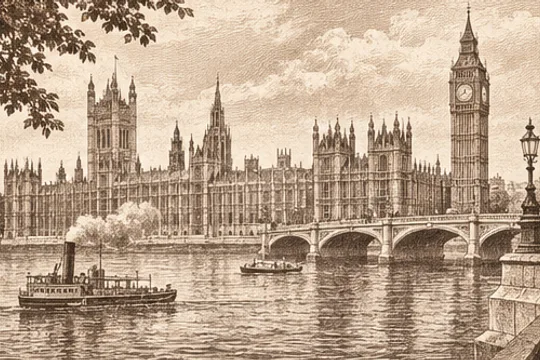
(Article 109 – November 9, 2016)
After the attempted coup on the night of July 15, Turkey waited a long time for Western support. Two weeks passed before Britain became the first to offer it. The highest-ranking Western visitor to Turkey was Alan Duncan, a Foreign Office minister of state responsible for Europe and the Americas.
The visit, Britain’s first diplomatic initiative after the Brexit referendum, coincided with Turkey’s efforts to improve relations with Israel and Russia, particularly in the Middle East. Russia’s military presence in the region, Israel’s plans to develop major gas reserves in the eastern Mediterranean, Turkey’s gains in Cyprus through water policy, and the presence of energy corridors supplying Europe all prompted Britain, which has two major military bases on Cyprus, to act to avoid being sidelined.
In the new world order after 1945, the United States secured recognition as a superpower and, the author argues, threw its full weight behind the project now known as the European Union, openly or behind the scenes. This would sideline Britain, previously the world’s superpower, and make France and Germany, the other major powers of continental Europe, dependent on each other. While Britain and France argued at the opening of the Channel Tunnel over whether announcements on the train should be in English or French, the United States was busy shaping the world.
The European Union project drove Britain above all, along with Germany and France, further and further inward. By the time they realized they had lost their influence in the world, it was already too late.
The author alleges that Sweden, Norway, Denmark, France, Luxembourg, Belgium, the Netherlands, Switzerland, Spain, and Portugal were debating whether prohibiting incest would constitute a major human-rights violation. He makes sweeping claims about sex between parents and children and the legality of sex between siblings in those countries. Meanwhile, he says, the United States left scarcely any part of the world untouched, from Afghanistan to Iraq, Syria to Somalia, and Egypt to Ukraine.
The author points to the clubbing of seals in Canada, alleged animal brothels in Denmark, cats and dogs allegedly skinned alive for fur in China, and bulls stabbed to death before crowds of thousands in Spanish arenas. While these things were happening, he says, the United States became the main power shaping events in almost every corner of the world.
Great Britain, whose empire the sun never set on, lost its colonies one after another and became a small island state. Meanwhile the author accuses Germany under Merkel, a pastor’s daughter whom he depicts as sympathetic to terrorists, of sinking trillions of euros into Bulgaria, Romania, and Poland after bringing them into the EU in an attempt to realize Bismarck’s dream of a Greater Europe.
The result was a complete disappointment.
In the end, there was neither a Greater Germany nor a Greater Europe for Germany to rule!
Meanwhile Turkey, just to the east of Europe, kept growing. Despite the obstacles, and contrary to expectations, the author says it quadrupled its economy in fourteen years. He portrays the military coups of 1960 and 1980, the 1971 military memorandum, ASALA, the PKK, the DHKP-C, the February 28, 1997 postmodern coup, the Gezi protests of 2013, what he calls the judicial and police coup of December 17–25, 2013, and the attempted coup of July 15, 2016, as attempts by enemies at home and abroad to hold Turkey back.
The defeat of the July 15 attempt prompted Britain’s pragmatic, self-interested diplomacy to seek closer ties with Turkey. The author sees this as a bid by Britain to act on its own in seeking alliances beyond the EU, safeguard its interests, and build political, diplomatic, and economic arrangements more effective than any the EU could offer.
The British saw the EU as responsible for worsening income inequality, poverty, uncontrolled immigration, and growing unemployment, and they made a decisive move with Brexit. The EU can no longer carry on as though nothing happened.
Britain drew closer to Turkey and offered its support ahead of other Western powers because of the importance of Turkey’s role in the emerging world order, the author argues. He alleges that Britain is among the countries most experienced in creating, supporting, and using groups such as FETÖ, and that it drew up the template for political movements of this kind in the region. He also claims it was Britain that used Muhammad ibn Abd al-Wahhab in the mid-eighteenth century to trouble the Ottoman Empire and create the problem of Wahhabism and Salafism.
Britain’s search for a renewed sense of purpose after Brexit brought it closer to Turkey. After the attempted coup in Turkey was repelled, Britain was among the countries quickest to grasp that a new world order would emerge.
Shortly after Duncan’s visit, British ambassador to Ankara Richard Moore also made several statements about July 15. Moore said he accepted that Gülenists had attempted a coup, that the Turkish people had stopped it in the streets, and that the political parties had then come together to defend civilian rule. He said Turkish democracy had proved itself and Britain was ready to cooperate if given information about FETÖ’s activities in Britain.
The Turkish people showed courage and good sense in the streets, climbing onto tanks and repelling what the author calls a pro-American coup. He sees their resistance as a modern echo of the victory at Gallipoli and says Britain, which he calls the architect of such schemes, was the first to recognize it.
Britain is one of Turkey’s most important economic and trading partners. Turkish–British relations go back to the sixteenth century. Nearly three thousand British companies operate in Turkey. The article puts the Turkish population in Britain at about one and a half million, most of them in London, and says British visitors account for about ten percent of tourists to Turkey.
For Britain, which is seeking a new order in the eastern Mediterranean, the Balkans, the Middle East, and Central Asia, friendship with Turkey matters a great deal. Turkey, the author says, defeated the July 15 attempt against democracy, the welfare state, and successful public–private cooperation through good sense and mass mobilization.
Exactly two years earlier, on September 29, 2014, Britain’s Foreign and Commonwealth Office published an official report. Its title, as the author gives it, was striking: “The Killer Factors of the Turkish Economy.”
The report made some important observations about Turkey. The author says that everyone he regards as a traitor working against Turkey ought to read it and take heed.
In the author’s interpretation, this official British report examined in detail how the Turkish economy had become a global threat from a Western point of view over the preceding decade. The article presents the following as the report’s exact wording:
Turkey is the world’s sixteenth-largest economy and Europe’s sixth-largest. According to HSBC’s report The World in 2050, Turkey will be the world’s twelfth-largest economy and Europe’s fifth-largest in 2050.
Turkey currently has the fastest-growing market and economy in Europe and among OECD countries. Its gross domestic product has risen rapidly over the past decade, growing by 8.8 percent in 2011, 2.2 percent in 2012, and 4 percent in 2013. Turkey will be the third-fastest-growing country in 2017, after China and India, and will overtake India after 2017.
Turkey’s GDP at current prices rose from $231 billion in 2002 to $827 billion in 2013, while national income per capita rose from $3,500 to $10,815 over the same period. Turkey’s GDP is also larger than that of the EU members Romania and Bulgaria combined.
With 76 million inhabitants and a workforce of 28 million, Turkey is one of the world’s largest markets. Half the population is under thirty, and its workforce ranks fourth when compared with those of the EU-27.
Jim O’Neill, former chief economist at Goldman Sachs, predicts that the MINT countries (Mexico, Indonesia, Nigeria, and Turkey) will rank among the world’s top ten countries within the next twenty years thanks to favorable demographics and economic policies.
Within just four hours’ flight, Turkey can reach a market of 1.5 billion people in Europe, Eurasia, the Middle East, and North Africa, where the countries have a combined GDP of $25 trillion.
Istanbul and Ankara rank among the world’s largest cities by GDP. Istanbul’s GDP of $180 billion exceeds that of several EU countries, including Romania, Hungary, Bulgaria, and Slovenia. With 17 million inhabitants, Istanbul is Europe’s second-largest city after Moscow.
Turkey’s net debt was 36 percent of GDP in 2012, well below the 60 percent set by the Maastricht criteria. Likewise, at 2 percent, Turkey had Europe’s lowest ratio of budget deficit to GDP, another important Maastricht criterion.
From late 2012, international credit rating agencies upgraded Turkey to investment grade, a rating it has maintained ever since.
Turkish entrepreneurs, who now number 145,000, employ 627,000 people in Europe and generate €63 billion in business.
There are 32,000 companies with foreign capital operating in Turkey.
According to Forbes’s 2014 World’s Billionaires list, Turkey has 43 billionaires, 37 of whom live in Istanbul.
It takes an average of 30.6 days to start a business worldwide and 12 days in OECD countries. In Turkey it takes just six days.
Turkey attracted more than $100 billion in foreign direct investment over the preceding decade, becoming the world’s thirteenth most attractive investment destination. EU countries accounted for 78 percent of that investment, and Turkey became an important investment hub integrated into the EU’s supply and production chains.
Turkey revised all its incentives, laws, and regulations governing foreign direct investment. The OECD’s Restrictiveness Index puts Turkey well below the OECD average for restrictions, ranking it twenty-seventh out of 58 countries in 2013.
Turkey’s exports quadrupled compared with 2002, reaching $160 billion within twelve years.
Turkey’s main export partners include Germany, Iraq, Britain, Russia, China, and the United States. The United Kingdom is Turkey’s eighth-largest trading partner, with a 3.7 percent share of total trade.
Turkey has free trade agreements with 19 countries and is negotiating with 21 more. It joined the European Customs Union in 1995.
According to Ernst & Young’s M&A Barometer, Turkey’s mergers and acquisitions market recorded the highest number and value of deals in Central and Southeastern Europe in 2012: 297 transactions worth $180 billion.
According to the World Economic Forum’s 2012–2013 Global Competitiveness Report, Turkey rose 16 places among 144 economies to rank 43rd for competitiveness. The article places that result in the context of Southeastern Europe.
Thirty-three percent of large multinationals chose Turkey as a regional hub. Companies using it include Benetton, Bosch, BP, Citibank, Coca-Cola, General Electric, GlaxoSmithKline, Hewlett-Packard, Hyundai, Imperial Tobacco, Intel, LG, Mercedes-Benz, Microsoft, Pepsi, Procter & Gamble, Samsung, Siemens, and Unilever.
Turkey has Europe’s soundest banking system. Its banking sector held $800 billion in assets in June 2013, exceeding the GDP of many EU countries. Capital adequacy was 16 percent in Turkey against 8 percent across Europe, and Turkey’s ratio of nonperforming loans was Europe’s lowest, at 3 percent.
Turkey is one of the world’s fastest-growing energy markets. Energy demand was forecast to grow six percent per year between 2009 and 2023. Over the next ten years, $130 billion in investment was planned to meet Turkey’s energy demand.
Turkey is playing an increasingly important role in the transit of oil and gas. The Baku–Tbilisi–Ceyhan pipeline, the world’s second-longest oil pipeline, carries Caspian crude to the Mediterranean for sale on world markets. Blue Stream and TurkStream carry Russian natural gas to Turkey and onward to world markets. TANAP and South Stream, described in the article in connection with Caspian oil and gas transit, would channel oil and gas from Russia, the Caspian, and the Middle East to Europe.
Turkish banks have put billions of dollars into renewable energy in recent years, and the market is expected to keep growing. Turkey ranks first in the world for growth in wind power installations, and only 15 percent of its potential has been used so far. It aims to raise renewables to 20 percent of total energy production by 2023.
Turkey has one of the world’s largest tourism sectors. It welcomes over 32 million foreign visitors a year and earned $24 billion from tourism in 2012. Turkey is the world’s sixth-most visited country, and Istanbul is the sixth-most visited city in the world and third in Europe, after London and Paris.
With 2.4 million visitors, Britain is among the top three sources of tourists to Turkey. British citizens also own 32,000 properties in Turkey.
Turkey is the world’s eighth-largest exporter of textiles and seventh-largest exporter of ready-made clothing. It is Britain’s second-largest supplier of ready-made clothing and sixth-largest supplier of textiles and footwear. Turkish companies make clothing for internationally known retailers including Adidas, Esprit, Tommy Hilfiger, GAP, Marks & Spencer, Next, Burberry, Banana Republic, H&M, and Diesel. Turkey is also Europe’s third-largest footwear producer.
According to Engineering News-Record (ENR), a leading international industry journal, 33 of the world’s 225 largest contractors are Turkish, putting Turkey second behind China. Turkish contractors are especially active in MENA, including Bahrain, Cyprus, Iran, Iraq, Israel, the Israeli-occupied Palestinian territories of Gaza and the West Bank, Jordan, Kuwait, Lebanon, Oman, Qatar, Saudi Arabia, Syria, Turkey, the United Arab Emirates, Yemen, Algeria, Egypt, Libya, Morocco, and Tunisia, as well as Central Asia and Saharan Africa. Since 1970, Turkish contractors have completed roughly 6,500 projects across 93 countries, worth $205 billion. At an average annual growth rate of 8.5 percent, Turkey’s construction sector ranks among the fastest-growing markets in the world.
Turkey’s real estate sector has strong growth potential. In PwC and ULI’s 2012 Emerging Trends in Real Estate Europe report, Istanbul was Europe’s most attractive investment market for existing property performance. Ernst & Young ranked Turkey the second most attractive European market for real estate investors.
Turkey is Europe’s largest commercial-vehicle producer and second-largest bus producer, and the world’s sixteenth-largest motor-vehicle producer. In 2012 it produced 1.1 million vehicles, 66 percent of which were exported. Seventeen vehicle manufacturers operate in Turkey, including Fiat, Honda, Hyundai, Renault, Toyota, Mercedes-Benz, and MAN. Turkey also makes automotive parts for brands such as GM, Mercedes, BMW, Opel, Toyota, Fiat, and Ford.
Turkey is Europe’s largest maker of home appliances. Its biggest export markets for major appliances are Britain, France, and Germany. The Turkish brand Beko is currently the most sought-after white goods brand in Britain for refrigerators, freezers, washing machines, and cooking appliances.
Turkey is Europe’s leading television producer. Vestel and Beko make more than half of all televisions manufactured in Europe.
Turkey’s young, technology-minded population and its more than 20 million internet users are driving steady growth in e-commerce. From $17 billion in 2012, e-commerce turnover was projected to reach $140 billion in the next three years, growing 123 percent annually.
Turkey has about 68 million registered mobile phone users, nearly twice the European average. At an average of 299 minutes of regular calls per month, Turks are among Europe’s most talkative mobile users.
Turkey is a world leader in agriculture and related sectors. It ranks seventh worldwide in fruit and vegetable production and is Europe’s largest and the world’s third-largest exporter of frozen fruit. It is also the largest producer of milk and dairy products in its region.
Turkey is Europe’s second-largest iron and steel producer and a world leader in reinforcing steel.
Turkey is the world’s fourth-largest builder of superyachts and fifth-largest shipbuilder.
Turkey has the second-largest military in NATO after the United States.
The author sees the findings in the report as the clearest sign that Britain had already begun taking a positive position toward Turkey two years earlier.
Turkey has entered a new era. A hundred years ago, at Lausanne, we were left a barren land, but we made that land flourish.
School textbooks at every level often called Turkey a “strategic country,” a hollow phrase that meant little. It began to take on meaning thanks to the economic and political gains of the preceding fourteen years.
The author says the Silk Road, which lost importance after the Cape of Good Hope was rounded in 1488 and Vasco da Gama found a route to India in 1497–98, is being revived some 520 years later. Rounding the cape and finding transoceanic routes drew Western countries into maritime trade and brought the scourge of colonialism to the peoples of Africa and the East.
Despite all Turkey’s setbacks, fourteen years of continuous economic progress could change the destiny of Turkey and of other Eastern societies.
The West’s fortunate centuries are over!
To the countries of the West, the author says: Your time is up.
He predicts that within five to ten years, Western countries will vanish one by one from the stage of history. Their factories will close, ports and warehouses will fall idle, and even their children, he says, will be reduced to selling their bodies for five dollars to put bread on the table.
Let me explain why.
Turkey’s oil and gas pipelines (TANAP, Blue Stream, TurkStream, and Baku–Tbilisi–Ceyhan), the Yavuz Sultan Selim Bridge, and Istanbul’s third airport will carry us into a new era and change the era itself.
Goods from across the East, led by China and India, will now flow into Europe quickly, in large volumes, and at very low freight rates.
It stings, but what can we do? The Trans-Asian Railway and the Yavuz Sultan Selim Bridge are bringing the historic Silk Road back to life.
Goods from China, India, Pakistan, Afghanistan, Iran, and the rest of the East will be carried by rail through Turkey and pour into Europe across the Yavuz Sultan Selim Bridge. Freight costs and transit times will fall to a minimum. Far Eastern goods that took two or three months to reach European ports on cargo and container ships will be delivered to the heart of Europe in just a week.
The author accuses Western powers of carrying out the July 15, 2016 coup attempt because, in his words, Turkey had become too important to be left to the Turks.
Did you want to prune Turkey because Churchill supposedly said that it should be watered when it dries out and pruned when it grows?
It didn’t work. You failed again.
But this last attempt put an end to everything.
America, Germany, France, Austria, and the rest of the West no longer count for anything in the eyes of Turkey and its people, the author says.
We will no longer take pity on you, and we will do as we see fit.
Just as you did to us for years.
Dr. Mehmet Hakan Sağlam
Translated from the Turkish original. Türkçe