
A pack of jackal bureaucrats who couldn’t even buy and sell lemons…
5 May 2017 · Personal website
(Article 158 – 5 May 2017)
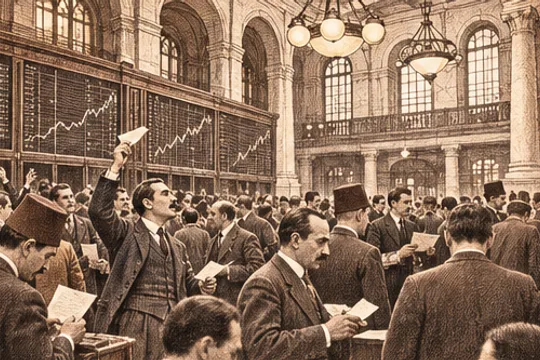
When the Gezi protests began on 27 May 2013, interest rates had reached 4.52 percent, the lowest level in the history of the Republic. As a natural consequence of the protests, the rate first climbed to 8.5 percent and then, following what I call the judicial and police coup of 17 and 25 December six months later, rose to 11 percent. As the stock market fell sharply, the dollar began to rise, jumping from about 1.80 to 2.40 lira. The dollar stood at 2.89 lira before the July 15 coup and surged to 3.018 toward the end of the month.
Donald Trump’s victory in the US presidential election gave the dollar a boost worldwide. Expectations that Trump would pursue unconventional economic policies strengthened the dollar, while the Federal Reserve’s inclination to raise rates drew hot money to the United States. The dollar climbed as high as 3.40 lira.
As uncertainty over the constitutional referendum increased demand for foreign currency, the dollar climbed to around 3.98 lira. After all the talk of whether the constitution would change, the referendum went ahead and we set sail for a new system of government without incident. The dollar began to fall again and as of today stands at 3.55 lira.
What happens next? Will the dollar rise or fall? Everyone is looking for an answer. Just about every television channel keeps up a stream of empty chatter about what course the central bank will take on interest rates, where it will set its policy rates, and whether developments abroad will put pressure on the markets.
Everyone who has never bought or sold so much as a lemon and has no idea what the real economy is goes around calling himself a bureaucrat. Economists, management specialists, and financiers who fancy themselves Turkey’s Keynes or Marshall keep spouting nonsense in every direction, armed with the economics they don’t know. I say “spouting nonsense” because there is nothing else to call what they say. Unfortunately, we are dealing with a rabble of unscrupulous, second-rate bureaucrats.
These self-proclaimed great economic experts talk about monetary expansion and contraction in Europe and America. They imagine that tinkering with interest rates will bring the economy into some sort of balance and argue that European economies will recover as the euro loses value. They are stuck on the international trade model developed by Eli Heckscher and Bertil Ohlin. You know that “stupid theorem” invoked in the 1980s in many countries, Turkey included, which holds that letting the national currency lose value against foreign currencies boosts exports, but works only in countries rich in raw materials? That is the one.
That was the theory behind the move from 70 to 1.35 million Turkish lira to the US dollar between 1980 and 2002, when Turkey’s exports rose from $3.5 billion to $35 billion. In other words, the lira lost ground against the dollar by a factor of 20,000, while Turkey’s exports grew only tenfold. Between 2002 and 2014, by contrast, under an export model based on increasing production, the dollar went from 1.35 to 2.50 lira, and our exports readily rose from $35 billion to $160 billion. In other words, the lira depreciated against the US dollar by just 85 percent, while our exports grew by roughly 400 percent.
The Heckscher–Ohlin model is a mere “fairy tale” for countries that depend on imported raw materials. Only a fool would say that a weaker euro against the US dollar will boost eurozone exports. European economies must import even the natural gas that keeps their factories running, let alone the raw materials those factories use. No other country in the European Union manufactures goods besides Germany, Britain, and France. How could those economies increase exports the way the Heckscher–Ohlin model describes, especially with China exporting practically everything under the sun to Europe and the rest of the world?
Turkey is unfortunately full of contradictions. There are hundreds of thousands of economists, but not one who can come up with a theory. Economics students take a course in the history of economic thought in their first year. It gives an overview of practically every theory and practice, from mercantilism to monetarism. Each school of thought, however, gets two or three pages at most. Everyone knows the Keynesian view that the state must intervene to get a stalled economy moving again or lift it out of stagnation and recession, but nobody knows the details of Roosevelt’s remarkable New Deal programs. In short, we are surrounded by economists who know nothing.
Before and after US economic figures are released, people crowd onto television to chatter about what will happen if rates go down and what will happen if they go up. Shouldn’t they devise a new economic model suited to Turkey instead of talking about Western economic policies?
I maintain that if you put all the economists of the Republic together and multiplied them by 100, they would not be worth the fingernail of Mehmet Cavit, one of the last Ottoman ministers of finance. People who think that putting “Professor” before their name makes them Keynes or Friedman, yet know nothing of economics, should ask themselves why not a single Turk figures in the history of world economics.
Had the Ottoman Empire’s financial authorities been made up of such idiots, a state that lasted 623 years would probably have vanished in six. When the Ottoman state was founded, there was neither mercantilism nor liberalism. Keynes and Friedman had yet to be born. So what distinguished Ottoman economic policy? Aren’t you curious? For those who are, four words in Turkish explain it all: “Sustain the people so the state may endure.”
The social, political, legal, and economic life of the Ottoman Empire was built on this principle. “Sustain the people so the state may endure” was the guiding point of reference for every official in the Ottoman administration.
One way of thinking prevailed throughout the institutions of the state: “Let us make a decision we will not have to reverse,” “Let us impose a sentence that can be carried out,” “Let us set a tax that people can pay,” and “Let us establish a charitable endowment that can serve people for centuries.”
You will find no practice in Ottoman public life that fails to take people into account. People were “entrusted by God” to those who governed. People were also at the center of the provisionist economic policy the Ottomans practiced for around four centuries. Under that policy, all goods and services produced in the country were made available first for the use and welfare of its people. If the country produced two million tonnes of cotton and the guilds and the population together needed two million tonnes, none of that year’s cotton could be exported. If demand was one and a half million tonnes, however, the excess 500,000 tonnes could be exported. The Ottomans scrupulously applied this policy to almost every kind of good for centuries. Their officials knew very well that doing otherwise would bring domestic shortages and scarcity, and that those in turn would push up the general price level and lower living standards.
The Ottomans followed this provisionist economic policy for about 450 years. The natural result was that inflation stayed very low for those 450 years and the general price level and living standards remained fairly stable. Until when? Until the signing of the Treaty of Balta Limanı, when the Ottoman economy began to become closely intertwined with Western economies. That is how cumulative inflation in the Ottoman economy came to 300 percent over four and a half to five centuries, compared with 100 million percent in the Republic’s 90 years.
The “high interest rates” that President Erdoğan raises at almost every opportunity are a problem shared by businesspeople, manufacturers, and everyone in Turkey who carries a credit card.
Investing and spending with borrowing rates reaching 12 to 13 percent takes real nerve. Some say the central bank’s interest-rate policy is sound and that lowering rates would drive foreign capital out of Turkey. In their view, a cut would help the economy initially, but once capital began to leave, the fall in the volume of credit would push rates back up. Isn’t that precisely the monetarist argument? According to monetarists, interest rates are determined by the supply and demand for credit, rather than the supply and demand for money. Increasing the money supply thus cannot lower interest rates and spur investment. Extra money put into circulation for that purpose might boost production without affecting prices in the short run. In the long run, it produces only inflation, without raising output.
Seen from that angle, the argument seems persuasive and the central bank’s policy sound. Others look at it purely in political terms and take it upon themselves to defend and shield the central bank out of hostility to Erdoğan.
Yet high interest rates in themselves are only part of what the government and the president have been protesting.
As a result of the central bank’s high-rate policy, Turkey currently pays some of the highest interest rates in the world on domestic government debt securities.
According to Treasury figures, each one-percentage-point increase in interest rates costs the Turkish Treasury an additional 6 billion lira a year, or about $2 billion. Just before the Gezi protests, rates had fallen to an unprecedented low of 4.61 percent in the history of the Republic of Turkey. The protests abruptly reversed the favorable mood in the country. As political risk increased, rates began rising rapidly, first to around 8 percent, and then to around 12 percent with what I call the judicial coup of 17 and 25 December. Taking only outstanding domestic public debt into account, this increase of roughly 7.5 percentage points cost the Turkish Treasury an additional 49 billion lira in a year and a half, equivalent to about $23 billion.
So what does that $23 billion mean?
Think what could have been done with the money paid out of the state treasury because of the central bank’s high-interest-rate policy!
The presidential complex that opposition leaders and the FETÖ organization keep bringing up, for instance, cost a total of 1.35 billion lira. We could have built a copy of that palace in each of 39 other provinces in Turkey.
We could have built 11 more Yavuz Sultan Selim bridges, at 4.5 billion lira apiece.
At 7.2 billion lira for the Ankara–Istanbul high-speed railway, we could have built seven more lines like it.
The Marmaray project, Turkey’s pride and joy, which links Asia and Europe beneath the sea, cost only 8 billion lira. With the money that went into rentiers’ pockets, we could have built six more Marmarays beneath the Bosphorus.
I don’t want to get too caught up in this, but I would remind the economists who collect salaries in the tens of thousands of dollars and hold forth on the Turkish economy while drinking whisky and rakı over fish on the Bosphorus of a proverb: “Speak if you know, so they take you for a scholar. Keep quiet if you don’t, so they take you for a man of substance.”
It is plain to see where those famous (!) Turkish economists have ended up today after attacking then-prime minister Erdoğan for refusing to renew the stand-by agreement with the IMF.
Officials of TÜSİAD, the 600-member association accustomed to bringing down governments in the old Turkey with their public statements, issued a statement before the referendum: “We are worried about 2017!”
They are worried about the sudden rise in the dollar and the exchange-rate risks it brought with it. TÜSİAD officials seem quick to worry whenever their own interests are touched. Nearly every member of this elite owns a bank or a financial institution and practices what can fairly be called usury more than banking. The sudden swing in exchange rates has sent their foreign debt soaring.
Those who failed to anticipate Trump’s election and positioned themselves for Clinton are now jumping around like monkeys with smelling salts up their backsides. There is nothing to be done. Trade is half profit and half loss. They can set the losses against what they have earned so far.
Now to Turkey itself. Is it possible in the medium and long term to bring the exchange rate down so that it cannot rear its head again? Of course it is.
So how do we do it?
Let me explain briefly.
Turkey must find a way to put the emphasis on production and exports based on branding, advanced technology, and software.
There are tens of thousands of exporting companies in Turkey, yet our exports are stuck at $160 billion and simply cannot seem to grow. This stems from our conventional approach to production and exports. We are like a car doing 70 kilometers an hour in the right-hand lane of a motorway. We need to switch lanes and change course.
Here are a few foreign companies we have all heard of, together with their annual sales:
Walmart (US): $482 billion
Volkswagen (Germany): $237 billion
Apple (US): $234 billion
BP (Britain): $233 billion
Samsung (South Korea): $177 billion
General Motors (US): $152 billion
The examples of Apple and Samsung alone are enough to show that Turkey needs to redraw its industrialization and export policies from the ground up.
With close to 65,000 exporters, all we manage to export is $160 billion, while the US company Apple alone posts $234 billion in sales, nearly one and a half times Turkey’s figure.
Turkey needs young, fresh, quick minds who can develop innovative projects and know the ins and outs of domestic and international trade.
Mr Erdoğan, who has joined the AK Party, will probably take over as party leader on 21 May 2017 and renew all its bodies, starting with the Central Executive Committee and the Central Decision and Executive Board. He will show the door to AK Party members who worked for a “NO” vote in the referendum. That is our hope, of course. A more important housecleaning, though, needs to take place in the bureaucracy.
Today all the state’s key institutions have quite literally switched off. The state bureaucracy is suffering from severe fatigue. These antiquated, rotten, worn-out, frankly broken institutions need a complete overhaul. Their attitude is: “Things have always been this way and always will be. As long as the snake leaves me alone, may it live a thousand years. Is it up to me to fix the state?”
The central bank, the Banking Regulation and Supervision Agency (BDDK), the Financial Crimes Investigation Board (MASAK), the Savings Deposit Insurance Fund (TMSF), the Energy Market Regulatory Authority (EPDK), the Radio and Television Supreme Council (RTÜK), the Council of Higher Education (YÖK), the Privatization Administration (ÖİB), and similar autonomous bodies absolutely must be abolished or brought under control. We should also remember the ministries and the dozens, perhaps hundreds, of directorates general whose purpose is anyone’s guess.
What happens if that does not come to pass?
The president’s $500 billion export target will remain a dream, and the pack of bureaucratic jackals who serve whoever is in power and do nothing but make excuses will make Erdoğan’s life miserable.
Turkey will either change lanes, step on the gas and take off, or stay where it is, roaring like a car with its handbrake on.
Dr. Mehmet Hakan Sağlam
Translated from the Turkish original. Türkçe