
This isn’t about Berat Albayrak, my friend. Haven’t you understood yet?
12 July 2018 · Personal website
(Article 240 — 12 July 2018)
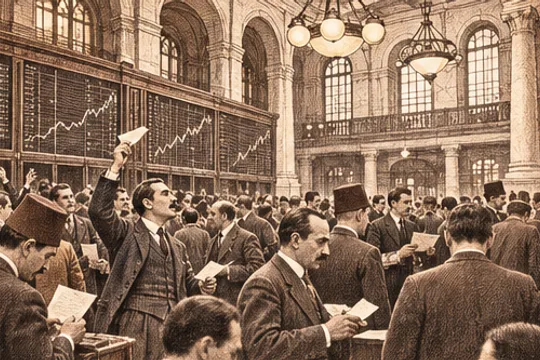
In Turkey, elections for the presidential and parliamentary were held on June 24th. The downgrading of Turkey’s credit rating by credit rating agencies like Standards & Poor’s and Fitch to the level of African nations such as Uganda and Nairobi, followed by the massive sales of shares and bonds by HSBC and Global Securities, which are owned by foreign investors, and the subsequent rise of the US dollar from 3.80 to 4.35, were key indicators that someone was initiating an economic attack.
Erdoğan announced his cabinet recently, appointing Berat Albayrak as Minister of Finance and Treasury. Following Albayrak's appointment, the Turkish lira began to rapidly appreciate against the US dollar, with the TL/Dollar exchange rate increasing from 4.51 to levels as high as 4.95 within a few days.
It’s a fact that many people are deeply concerned and, fueled by this discontent, are actively attacking the Istanbul Stock Exchange, Turkish state bonds, and the money markets, driven by a persistent and intense wave of anger stemming from the appointment of Berat Albayrak to head the economic management.
In reality, all these events we are experiencing demonstrate that it is now time to establish our own payment system, our own payment mechanisms, and our own financing model, in order to build a fully independent and strong Turkey.
If we want to prevent the United States of America from using the SWIFT (Society for Worldwide Interbank Financial Telecommunication) system – effectively, monitoring every “one” dollar moving across the globe through “World Interbank Financial Communication Association” – and forcing numerous banks, financial institutions, and companies worldwide to be penalized with billions of dollars, and to prevent imposing sanctions on countries it seeks to punish by leveraging its influence within the United Nations, then we must take a series of radical measures.
To break dependence on the US dollar and to avoid being exposed to such financial operations by the US, President Erdoğan’s approach of using gold as an index for international trade is, in fact, a reasonable method. I am a gold expert; I obtained my master’s degree on “Gold Smuggling in Turkey” and my doctoral thesis was on “The Operation of Global Gold Markets.” In 1994, I was actively involved in the establishment efforts of the Istanbul Gold Exchange. As everyone knows, the Turkish people have a strong affinity for gold. During weddings, circumcisions, and other special occasions, people traditionally exchange gold gifts, both as presents and as a symbol of community solidarity. In 1994, I conducted a survey to determine the amount of gold that the Turkish people had accumulated over centuries, and found evidence of approximately 5,000 tons of gold reserves. Currently, it is highly likely that these reserves have increased to around 7,000 tons.
In 1998, upon request from the Indian Ministry of Finance, I prepared a report on gold banking. Thanks to that report, gold banking experienced a significant development in India, as a considerable portion of the gold held by Indian citizens was brought into the banking system. However, due to the fact that my recommendations were not taken into account in Turkey, we fell significantly behind in this area.
For Türkiye to achieve financial independence and prevent continuous attempts by certain forces to interfere with its economy, it needs to “accumulate its own capital.” The key to achieving this capital accumulation lies in production and exports. However, it’s a fact that Türkiye’s exports, like in the period between 2002 and 2015, are no longer growing at a rapid pace. Our export figures, which have rapidly risen from $35 billion to $160 billion, have essentially plateaued over the past four to five years. The lack of diversification in the products subject to export, capacity limitations, market contraction, inability to establish a brand, and a shortage of patents and know-how, along with economic difficulties in the countries where exports are made, as well as global economic, political, and military crises, high interest rates, increasing currency pressure, and existing political and economic risks within the country – these are the primary causes.
However, there’s an even more important issue here that should never be overlooked. You might have a driver’s license and a really nice car, but you also need to remember that you have to fill it with gas to actually drive it. Undoubtedly, the most important factor for the functioning of the Turkish economy is “money” – or “financing.” However, “money” in Turkey is unfortunately a scarce resource.
Due to difficulties in securing financing, many investors, including banks, are borrowing from abroad at high interest rates. They then convert these foreign currency loans into Turkish Lira and offer them as loans to recipients within Turkey, adding currency exchange risk to the transactions. Meanwhile, credit costs are rising, increasing from levels of 3.5-4% to as high as 22%.
I’ve repeatedly discussed this topic. All of the explanations – such as “we will bring down the exchange rate,” “those who take currency will suffer,” and “this rise is artificial” – are simply stories, not actual analysis.
First, it’s necessary to address the issue of “dollarization” within the Turkish economy. The increasing use of foreign currency for renting homes and workplaces, the sale of cars and real estate in foreign currency, and the use of foreign currencies – such as the “dollar” and “Euro” – in state-led privatization and build-operate-transfer (BOT) projects – isn’t it creating a widespread problem, with “currency exchange offices” opening one after another on almost every street, resembling a monopoly?
Would it be more effective if the central bank officials acted more rationally and lawmakers took decisions to eliminate the trend of “dollarization” in the Turkish economy? For example, if the government issued a decision stating that “rental agreements in foreign currency, in the event of disputes between the parties, cannot be brought before the courts,” would anyone ever again make rental and purchase agreements in “dollars” or “euros”?
Such a decision would be more effective than the vague explanations given by the Central Bank’s officials – explanations like “we’ll manipulate the dollar, we’ll take the necessary steps, just like neighborhood toughs.” What if a citizen said to the Central Bank officials, “If you’re going to do something, then actually *do* it!”
Of course, nothing will happen. This is because, as they know that “nothing can be done,” the USD is rising against the Turkish Lira as it continues to rise.
So, what needs to be done is: firstly, we will stop wasting time, secondly, we will end Turkey’s obsession with foreign currency, and finally, we will take measures to increase production and exports in the medium and long term.
When it comes to the names Erdoğan has appointed to his cabinet, I believe these names have been carefully and meticulously selected. Turkey needs to move beyond certain biases and outdated perspectives. For years, the economic management has been centered around Mehmet Şimşek and Ali Babacan. However, this has led to a perception within the public that “the Turkish economy will collapse without Mehmet Şimşek and Ali Babacan.” However, wouldn’t a perspective like this be more indicative of “helplessness” or “lack of self-confidence,” rather than its most obvious characteristic? If Turkey’s entire economy is on the verge of collapsing because “there aren’t enough people,” it would be far worse – a thousand times worse, not just fifty.
No one is unquestionable, no one is without alternatives.
Don't worry about anything; “water always finds its way.” You will soon see the US dollar sharply decline and reach the levels it was supposed to be at, in a very short time.
Those who are trying to sabotage the Turkish economy by letting their own people take control are, in turn, destined to receive the punishment they deserve, one by one.
Understand that in this situation: “This isn’t about Berat Albayrak, isn’t it? You still don’t understand?”
Dr. Mehmet Hakan Sağlam
Translated from the Turkish original. Türkçe