
Let National Vision’s inept “meritocracy” henna its backside in celebration. May you never enjoy the fruits of Savcı Sayan’s efforts…
12 June 2015 · Tarafsız Haber
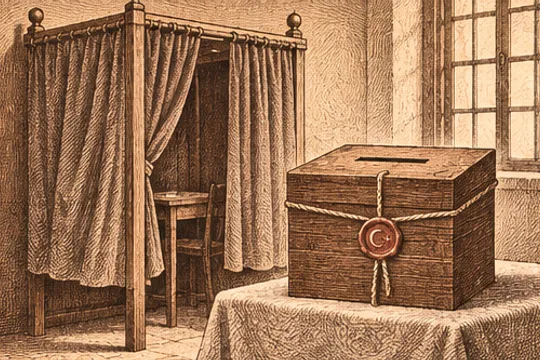
And so another election has passed. The thing I hate most in life is rubbing someone’s mistakes in their face.
There is much to say about why the AK Party failed, lost votes and lost its hold on power. But I know that every sentence on the subject will make the party leadership uncomfortable, beginning with Mr Erdoğan. I spent the past two days in Ankara and spoke with a great many people.
A few days before the election, I met a dear friend of mine, a prosecutor, in Ataköy. He made an important observation: “First, the different groups in this society need to make peace with one another. Otherwise we cannot achieve social peace.” He said that Sunnis were against Alevis, the right against the left, the left against religious Muslims, Alevis who leave Ali out of their tradition against those who honour him, women who do not cover their heads against women who do, and even communities that share the same faith against one another. Nobody showed anyone else the courtesy of listening. Practically everything in society had been politicised, he said, and people seemed to be looking for reasons to fight.
In the Ottoman period, however, people showed considerable respect for one another without discrimination on grounds of religion, conscience or morality. For many years, the republican leadership unfortunately cut the Turkish people off from their roots and set out to create a godless, faithless, rootless society. Mosques were closed, and many were sold or rented out. The Qur’an was banned and the call to prayer was made Turkish. While Türkiye’s Sunnis faced such treatment, the 1925 law closing dervish lodges and retreats targeted Alevis. Cem houses across Türkiye were closed overnight. Sunnis, Shafi’is, Ja’faris, Alevis and people of other Islamic traditions were all subjected to the greatest campaign of “de-religionisation” in Turkish history.
A street in Ankara still bears the name of a man called Abdullah Cevdet. In the republican period he used disrespectful language about our Prophet and offended the sincere feelings of devout people. He was given the title “Adüvvullah Cevdet,” meaning “Cevdet, enemy of God.” When his body was brought to the Hagia Sophia Mosque, no one came to claim him and no one said the funeral prayer. In his book The Last Moments of Famous People, Burhan Bozgeyik recounts that they could not even find a vehicle to carry him. They asked the Greek Orthodox Patriarchate in Fener for one, and he was taken to the cemetery in a vehicle bearing the sign of the cross and buried, as a matter of necessity, by a few municipal employees.
In 1924, İsmet İnönü, Şükrü Bey, the interior minister, and Mahmut Esat Bozkurt, the justice minister, met at Ankara railway station to work on the constitution. They went so far as to say, “Let’s write Christianity into the constitution as the state religion so that Westerners won’t be hostile to us.” Were they the only ones? Abdullah Cevdet, the enemy of God, argued that “civilisation came to our doorstep during the Gallipoli campaign, but the Turks resisted it.” He even said, “To improve and strengthen the Turkish race, we must bring in men for breeding from Europe and America.” When I see HDP politician Selahattin Demirtaş’s love of Christianity, I understand all the more clearly that some people have not changed in ninety years.
I believe practically everything we do should have a “philosophical” basis. Say we are going into business to make money. For a businessperson the main aim at that point is profitability. But I also ask what the business will bring to Türkiye and its people, how it will affect society and what wider benefits the product will offer. If I can see nothing wrong with the outcome, I go ahead. If any part of society, or even one person, would be harmed, I shelve the plan and move on. Some may think that excessive, but does our religion not command us to act this way? Does verse 32 of Al-Ma’idah not say, “For this reason We ordained for the Children of Israel that whoever kills a person, unless in retribution for a life or for spreading corruption in the land, it is as if they killed all humanity. Whoever saves a life, it is as if they saved all humanity”?
“To save a life is to save humanity” was a guiding principle for our ancestors. It was why Bayezid II stood by the Muslims of al-Andalus and the Jews of Spain and protected them in Ottoman territory, just as the Republic of Türkiye now stands by and protects our Syrian brothers and sisters who have sought refuge here.
You might ask what any of this has to do with the election.
Remember the years around 2002, when the AK Party came to power. The country had been through a severe economic crisis and collapse. Twenty-seven banks had closed, thousands of commercial and industrial firms had failed and millions were out of work. The national currency had become unrecognisable for all the zeros on it. Seeing no future in their country, Turks were looking for ways to leave and go elsewhere. In the uncertainty and chaos of those days, the AK Party leadership, which came from the National Outlook tradition, looked like a lifeline. In the end, people brought the AK Party to power on its own with 34.63 percent of the vote. That rose to 41.67 percent in the 2004 parliamentary election, 46.58 percent in 2007 and 49.90 percent in 2011. The rise continued without interruption until the general election of 7 June 2015, when the party’s share suddenly fell to 40.86 percent.
Now let us go back to the first election in 2002. Coming from the National Outlook tradition, the AK Party already had in its pocket the core 15 to 17 percent of votes from the Welfare Party and the Felicity Party. The coalition governments involving ANAP, DYP, DSP, Welfare, Felicity and MHP had run the country between 1994 and 2001. Unable to deal with the 1999 Marmara earthquake and the deep-rooted economic problems that worsened afterwards, they had to throw in the towel. In the 2002 general election the AK Party won 363 seats with 34.28 percent of the vote. The CHP won 178 with 19.39 percent. Türkiye’s oldest, most established parties fell below the threshold, and some disappeared altogether. In 2002 the DYP took 9.54 percent, the MHP 8.36, the Young Party 7.25, ANAP 5.13, Felicity 2.49, DSP 1.22 and BBP 1.02. To me the most striking figure was Felicity’s 2.49 percent. The Muslim conservative vote shifted wholesale to the AK Party as its core, while millions of people of different political persuasions, tired of coalition governments, gave it “temporary” or “borrowed” votes. When Recep Tayyip Erdoğan’s AK Party proved successful on the economy, social issues and democratisation, those votes became permanent, and further gains took it to 49.90 percent. Even the 2014 Gezi protests and the judicial coup of 17 and 25 December 2013 failed to push its share down. They actually helped it rise.
After 2011 a visible change took hold in the AK Party. It turned increasingly inward. People from the National Outlook movement were prized and given positions of influence at practically every level, while everyone else was shut out.
About two months ago I visited a businessman very close to the AK Party. I told him, “You’re turning ever more inward and shutting out anyone who doesn’t come from the National Outlook movement. I cast my first vote in 1983 for Turgut Özal’s Motherland Party. I voted for other parties in later years too. But since 2002 I have voted for the AK Party so my country can escape its rut, grow wealthier, gain standing and develop. Voting for the AK Party does not mean I have come round to National Outlook, and it should not. As far as you are concerned, there are two sorts of AK Party supporters: the ‘real’ ones from National Outlook and the ‘fake’ ones who do not share those views. In your words, we are the people who were welded onto the party later. To put it bluntly, you see us as converts, or at best people who for one reason or another ‘sold out’ their party and came to the AK Party. Our genes will never match yours. Worse, you cannot accept us. You will pay dearly for that in the general election.” The businessman said, “How can you say that, Mr Mehmet?” I gave him examples to explain why I felt that way. “What do you think of Savcı Sayan?” I asked. “We think well of him,” he said. “That means nothing to me. This man believes in the AK Party’s philosophy more than a million so-called AK Party supporters who contribute nothing to it. Why did you put him seventh on the list in İzmir? Do the six people above him work harder than he does, or do they have some qualities we don’t know about?” Faced with clear examples, he had nothing to say except, “I never thought people saw our actions this way.”
No one can deny that the AK Party made mistakes in its dealings with voters. So I ask:
Why were all school principals and administrative staff in Türkiye replaced a year before the election? There is a ready answer: “We did it to fight the Parallel Structure.” That is simply untrue. So many of the administrators dismissed were nationalist conservatives who had nothing whatsoever to do with that network. By dismissing them on those grounds, the party subjected them to an unjust accusation and hurt their pride. Some of those dismissed were friends of mine, so I know the matter well. All school heads and administrators who belonged to the Türk Eğitim-Sen union were dismissed and replaced by members of the Eğitim Bir-Sen union. I would particularly point out that separatists and members of the Parallel Structure entrenched in Eğitim Bir-Sen were appointed to school management posts. Who benefited from these needless, unfair dismissals or from the difficulties the education community has faced this year? Someone please explain it to me.
The death of Prosecutor Mehmet Emin Kiraz caused deep sadness almost everywhere. But why, while people were grieving for the slain prosecutor, were private security guards made scapegoats? Why did anyone announce that “the private security system should be abolished”? Why make hundreds of thousands of guards, already working for minimum wage to put bread on the table, fear for months that they would lose their jobs?
Why did the highest office of state get drawn into the row over the head of the Directorate of Religious Affairs’ car? At his discretion the president can assign him a car or even a plane. Why was it not handled quietly instead of being disclosed so loudly that even the proverbial deaf sultan could hear? And why did the finance minister describe it as “pocket change”?
Alevis are an integral part of this country. Why was the AK Party government reluctant to address their concerns? If Türkiye were 90 percent Christian and 10 percent Alevi, and Alevis were granted rights they lacked, Christians might be uncomfortable as people of a different religion. But I do not believe that people of the same faith would object to such an opening for Alevis. I am a Sunni Muslim. I would be glad if our Alevi brothers and sisters were given the right to open cem houses and if Alevi spiritual leaders received salaries. Whose reaction were they afraid of? I really want to know. Were AK Party leaders afraid of members of their own core base of 15 to 17 percent? Let us look at it from the other side. It was the CHP under İsmet İnönü that passed the law closing dervish lodges and retreats. Yet for some reason all Alevis vote CHP. The CHP imposed the ban on Alevism, yet other parties are punished for it. That is hard to understand too. What would happen if the CHP led a coalition government and lifted the ban on cem houses? In that respect, the CHP is lucky. It gets Alevi votes easily despite having banned Alevism. Imagine the standing it would gain by lifting the bans.
The AK Party chose 550 parliamentary candidates from tens of thousands of applicants and put them in the election. But with a few exceptions, none worked during the campaign. They were turned loose and left to their own devices, while the job of persuading the public fell on Prime Minister Davutoğlu and President Erdoğan. I am from Kilis, which has two parliamentary seats. The AK Party once took 65 percent there. Its vote fell to 49 percent and it lost one seat to the MHP. The day before the election I phoned Savcı Sayan, the candidate in seventh place in İzmir’s second district on the AK Party list, and wished him well. If there was one AK Party candidate who worked tirelessly and with great effort KNOWING HE COULD NOT WIN, it was Savcı Sayan. I do not know any of the six people ranked above him. What I do know is that they did no work and reached parliament solely because of his efforts. A man as valuable as Sayan could not win a seat, while four people higher on the list got into parliament on his back. Mr Sayan is a courteous man and would never utter a word of reproach. But I can say with a clear conscience, “You won your seats because of Savcı Sayan’s work in İzmir. May the fruits of his labour turn to poison in your mouths.”
What of the mediocrities who have entrenched themselves around the president and prime minister and cut them off from the outside world? This was another reason for the party’s failure. No one can reach the prime minister or president. You cannot get an appointment. Requests for meetings go unanswered. The chiefs of staff, secretaries-general and advisers show nothing but indifference. Nobody asks to meet the top officials of the state just to make conversation, and nobody needs to have tea or coffee with them. Why, during the campaign, did you not let industrialists, businesspeople, civil society heads, leaders of religious communities, opinion leaders and thinkers meet senior state officials? Why did you alienate people? Did keeping them apart get you anywhere? Were you such a success? The result is there for all to see. National Outlook’s talentless, supposedly “meritocratic” establishment can go put henna on its backside.
As a Turk, can you stomach the headlines in foreign media about President Erdoğan? Here is how the foreign press covered the AKP’s failure to win the 276 seats it needed to govern alone:
Wall Street Journal: “The AK Party suffered a crushing defeat.”
Israel’s Haaretz: “The election turned the Sultan’s dream into a nightmare.”
Israel Today: “Erdoğan is gone. We are stronger now.”
The New York Times: “This election has run Erdoğan aground.”
Italy’s La Repubblica: “The Saladin of the new millennium was stopped on the last metro. A revolution for the land of the crescent, Türkiye.”
Bild: “The brakes are put on Erdoğan.”
Frankfurter Allgemeine Zeitung (FAZ): “Erdoğan’s party loses its majority.”
ZDF: “President Erdoğan loses altitude.”
The Telegraph: “Recep Tayyip Erdoğan’s dreams of more power are shattered.”
Financial Times: “Things are going badly for Erdoğan. After thirteen years in power, President Erdoğan’s AK Party lost its parliamentary majority in a stunning blow.”
Corriere della Sera: “Sultan Recep Tayyip Erdoğan’s dream of turning Türkiye into an authoritarian presidential system has suffered a setback.”
Practically everyone is now celebrating the AK Party winning only 258 seats and losing the chance to govern alone. We will soon see the economic difficulties and losses. Perhaps no one paid much attention amid all the commotion to HSBC deciding the very day after the election to lay off 25,000 staff and looking to pull out of Türkiye, the courts halting work on the roads for the Yavuz Sultan Selim Bridge, the currency market rising and the stock exchange hitting bottom, or the steep rise in petrol prices. We will see things like this often from now on.
The HDP, CHP, MHP, BBP, Felicity and many others made common cause out of hostility to Erdoğan. They have reaped the rewards “for now,” and only for now. I suggest that the fools who cannot read and are hooting, “We toppled the dictator and brought the Sultan’s palace down on his head,” read the Constitution of the Republic of Türkiye. The “coup” constitution they refuse to change gives the president such powers that even if every one of these parties banded together with the backing of the US and British legislatures, they could not touch a hair on Erdoğan’s head.
Articles 101, 102, 103, 104, 105 and 106 define the president’s duties and powers. Suppose every party except the AK Party agrees to change the constitution. They will then have to read Article 175 very carefully.
The 1982 constitution says, in effect, “You do not want Erdoğan to speak, but on parliament’s first day he will come and make a speech, and you will have to sit there and listen like donkeys. The president can do it again whenever he likes and convene parliament whenever he chooses.”
The “coup constitution” also says, in effect, “Don’t think you’re anything special just because you have the majority. It doesn’t matter how many laws you pass. The president does not have to approve them. He can return them to parliament for reconsideration. You can get into a pissing contest with him and send the law back without changing a comma. But then you’ll run into another of Erdoğan’s constitutional powers: ‘The president promulgates laws.’ No provision can enter into force before it is published in the Official Gazette. What if Erdoğan does not have it published? It does not enter into force, and you are left looking like fools. The same applies to decrees. And never forget that Erdoğan can ask the Constitutional Court to annul a law. He also has the power to call a fresh election!”
Do not ask whether Erdoğan can really have that much power. This is barely the beginning. He appoints the prime minister and cabinet ministers. Anyone he does not want cannot become a minister, and he can even dismiss ministers. He can convene and chair cabinet meetings.
As for the Gülen movement, its position is far from promising. There is no need to dance for joy. Under the constitution Erdoğan can appoint the chief of the general staff. He can also call a meeting of the National Security Council and chair it. If Erdoğan does not want it, no living soul can remove the head of the National Intelligence Organisation. Most importantly, the president can activate the State Supervisory Council and have it investigate and act in almost any matter affecting the country’s national unity, starting with the Gülen movement.
I don’t know about any of that…
The president’s powers are extensive…
All the opposition parties will one day be desperately looking for the very presidential system they oppose now…
So it turns out that “not reading, or not understanding what you read” is something nearly all societies have in common. A presidential system can be scrutinised from almost every angle. Yet all of Türkiye’s enemies, starting with the United States, Britain and Germany, say “Keep the coup constitution,” helping keep Türkiye governed by an undemocratic constitution. If that herd of oxen actually read Türkiye’s casuistic constitution, their jaws would drop and they would press us to change it at once.
If I were President Erdoğan, I would never mention the presidential system again and would govern “people as they deserve to be governed.”
Translated from the Turkish original. Türkçe