
The Masonic republicans who killed Mustafa Kemal
23 August 2014 · Personal website
The 2002 election, when the AK Party burst onto the Turkish political scene, sent shock waves around the world.
The French press came up with a magnificent headline. Le Figaro said, “The Turkish people have emptied their bowels,” while another newspaper wrote, “The Turks flushed, and all the political parties went down the sewer.”
The results of the 10 August 2014 presidential election would once again invite similar headlines.
Over the past year almost everyone in the country, from right to left, from socialist to fascist and from secularists to Kemalist nationalists, has come together in hatred of Erdoğan. Those who forged this holy alliance around a table should study carefully the loss of votes suffered by ANAP, DSP and DYP, then among Turkey’s strongest and oldest parties, when voters punished them mercilessly in 2002.
For years Süleyman Demirel shamelessly repeated, “These people are sheep and I am their shepherd. I could put my hat up for election and get myself elected.” And what happened in the end? Politicians like Demirel command no respect in society today, even though they served as president.
During the campaign, the Felicity Party’s Mustafa Kamalak and the Great Unity Party’s Mustafa Destici showed themselves before the cameras, convinced their voters would follow them like lambs. The MHP’s Devlet Bahçeli meanwhile committed the biggest act of political self-destruction of his career. Ideologies, beliefs and principles are in ruins. To safeguard their personal futures, they would even stand next to Benjamin Netanyahu for a photograph or condemn Hamas if someone asked them to. Do not be surprised if Bahçeli and Destici visit the families of Deniz Gezmiş and Mahir Çayan and say, “We were asses, and we apologize.”
The outcome was the same: on 10 August the bowels were emptied. Fourteen parties, Pennsylvania, the mainstream media and all the forces of chaos in the country strained to muster just 38 percent of the vote. The leaders and officials of the parties that allied with the CHP drowned in their own swamp. Now everyone is picking through that 38 percent with tweezers, one saying, “This vote is mine,” and another saying, “Mine.”
There was a judge who sentenced Menderes to death. I mean that spineless lawyer Salim Başol, the president of the Yassıada courts. No shopkeeper who recognized that disgraceful man would sell him so much as a loaf of bread for the rest of his life, and for years he could not show his face in public. Bahçeli, Destici, Kamalak and the other politicians will end up like Başol. They will never be able to explain this unholy alliance even to their own children.
We now have a new prime minister: Professor Ahmet Davutoğlu.
There have been very few Turkmen grand viziers in Turkish history. In the republican era, apart from Erdoğan, there have been virtually none. The administrators who founded the republic, all of them Freemasons, kept Turkmens out of government and built a state apparatus of their own. Like many intellectual and political associations of its day, the Committee of Union and Progress was not a Masonic lodge but adopted the ideals championed by Freemasonry. As Freemasons made up the bulk of its founding members, it used Freemasonry as the model for its organization. The website of Turkey’s Grand Lodge of Free and Accepted Masons, founded in 1909, lists the Freemasons among the founders of the republic as follows: Fethi Okyar, Ali İhsan Sabis Pasha, speakers of parliament Kazım Özalp Pasha and Abdülhalik Renda, Prime Minister Hasan Saka, interior ministers Şükrü Kaya and Mehmet Cemil Ubaydın, foreign ministers Bekir Sami Kunduh and Tevfik Rüştü Aras, health ministers Adnan Adıvar, Refik Saydam and Behçet Uz, education ministers Reşit Galip and Hasan Ali Yücel, Economy Minister Sırrı Bellioğlu, members of parliament Cevat Abbas, Atıf Bey, Edip Servet Tör, Yunus Nadi, Reşit Saffet Atabinen, Memduh Şevket Esendal, Hilmi Uran, Tevfik Fikret Sılay and Ahmet Ağaoğlu, Ankara Governor Nevzat Tandoğan and Mayor Süleyman Asaf İlbay, Istanbul governors Muhittin Üstündağ and Lütfü Kırdar, Council of State President Mustafa Reşat Mimaroğlu, Gendarmerie Commander General Galip Pasha, Independence Tribunal President Necip Ali Küçüka, and Admiral Mehmet Ali Pasha.
The leader of the republic’s Freemasons was Atatürk’s doctor, Mim Kemal Öke.
Mustafa Kemal was surrounded by Freemasons. In 1935 Mustafa Kemal recognized the danger of the Masonic organization and closed Turkey’s Grand Lodge of Free and Accepted Masons. That move set in motion the events that led to his death. Mustafa Kemal had unmistakable red marks of cirrhosis on his body, but Masonic doctors deliberately misdiagnosed him and his condition deteriorated. Atatürk did not like Freemasonry because he regarded it as nothing more than a Jewish sect. On 10 October 1935 Anadolu Agency informed newspaper offices that “the Masonic lodges had been closed their assets and properties seized and their effects sent to social institutions.”
Mustafa Kemal’s closure of the Masonic lodges had wide repercussions abroad. When Freemasons overseas learned of it, they began making efforts to get rid of Atatürk. Avram Benaroyas, a Bulgarian Jew from Varna and a 33rd-degree Freemason, wrote: “Those who strike a devastating blow against our ideal [meaning Freemasonry] will meet their death in terrible circumstances… His death will be mysterious, a mystery all its own.” The attack on Atatürk had begun.
At that point the Freemasons began efforts to destroy Atatürk. Mustafa Hakkı Nalçacı and Dr Mim Kemal Öke played the leading roles. Atatürk had previously contracted malaria. Once advanced, the disease could cause cirrhosis and many other illnesses. Had it been diagnosed early, the malaria could have been treated. But the diagnosis was deliberately delayed, the disease progressed and it then turned into cirrhosis. In a letter to Afet İnan on 14 June 1938, Atatürk wrote, “Afet, this is my situation. In my view, the doctors’ mistaken opinions and judgments meant that the disease was not halted and has progressed.”
Information and documents that came to light years later show that Atatürk was assassinated by poisoning and did not die of cirrhosis.
The main meeting about Atatürk’s health took place on Wednesday, 3 August 1938. Turkish and foreign doctors were to confer. Eppinger and Bergmann, who had come from Europe, attended along with Turkish doctors and Prime Minister Celal Bayar. Atatürk’s abdomen was swelling, his face was turning pale and yellow, and he had intermittent bouts of vomiting and shivering. The foreign doctors’ recommendation that he be given the diuretic Salygran as an emergency treatment was accepted. That same day he received a 2 cc intravenous injection of Salygran. It became clear that a large share of the medicines to be given to Atatürk would have to be brought in from France, and so they were. On 6 August Dr Bergmann examined Atatürk for the last time before taking his leave. He stressed in particular that Salygran should be administered.
A report written by the medical team that examined Atatürk on 3 August 1938 noted that he had had malaria twice before his death. The findings of the panel, which included Dr Bergamann, Dr Epinger, Dr Neşet Ömer İrdelp, Dr Nihat Reşat, Dr M. Kemal Öke, Dr Mehmet Kamil, Dr Süreyya Hidayet, Dr Abravaya and Dr Akil Muhtar, were as follows:
1) Atatürk had cirrhosis with ascites and mild jaundice…
2) Alcohol could have been the cause, though the effects and contribution of the two previous bouts of malaria could not be ruled out…
3) Phlebitis of the portal vein (inflammation of the vein leading to the liver) was also possible…
4) The patient had a fever, the liver extended below the costal margin and the spleen was enlarged. The fever could be explained by the same condition. The following treatment was agreed:
a) Injections of “Salyrgan” would be used in an attempt to relieve abdominal ascites.
b) After two or three administrations, a puncture would be performed.
c) A dose of 0.90 centigrams of pyramidon would be given for the fever.
d) Quinine treatment might be administered.
e) Mild painkillers would be given if needed.
Days passed without any relief. On 24 August Atatürk received another injection of Salygran, but his temperature rose to 38 degrees. Dr Neşet Ömer noted that Atatürk was in a state of “intoxication,” which in medical Turkish means “poisoning.” The doctors’ recommendation for Atatürk was always to give him SALYGRAN, a mercury-based diuretic.[1]
At dinner one evening Atatürk turned to the Freemasons’ grand master, Mim Kemal Öke, and asked, “Kemal Bey, it’s your turn now. You will tell us about Freemasonry. First tell us what its principles are.” After Mim Kemal had explained them one by one, Atatürk said, “Very well, I understand. Who is your leader?” Mim Kemal said what no one else would have dared to say: “It is Your Excellency, who desires peace and tranquillity at home and seeks to realize that ideal by addressing the whole world.” Atatürk suddenly frowned. His tone hardened as he said, “I will not join the Masonic society. The only principles I follow are my own.”
On 10 October 1935 at the Çankaya residence, Mustafa Kemal told Dr Mim Kemal Öke, “I considered it imperative to close the Masonic society because I regarded its activities as opposed to my reforms. From this moment on, consider this society dead and do not attempt to revive it.”
Looking at the chain of cause and effect around Atatürk’s death, we come across another curious event.
Mustafa Kemal, like Sultan Abdülhamid II, opposed the idea of establishing a State of Israel on Palestinian land. In a statement in August 1937 Atatürk said, “It is true that we kept our distance from the Arabs for a few years. But now we have sufficient confidence in ourselves and know our strength, so we will prevent the holy places of Islam from falling under Jewish and Christian influence. We wish therefore to say that we will not allow these places to become a playground for European imperialism. Until now we have been accused of irreligion and indifference to Islam. Despite those accusations, we are ready to shed our blood this very day to fulfil the Prophet’s last wish, that the holy lands remain forever under Muslim rule. By God’s grace we are today strong enough to declare that we will not allow the lands for which our ancestors fought the Christians under Saladin to come under foreign rule and influence. We have no doubt that at Europe’s first move to take possession of these holy places, the whole Muslim world will rise and take action.”
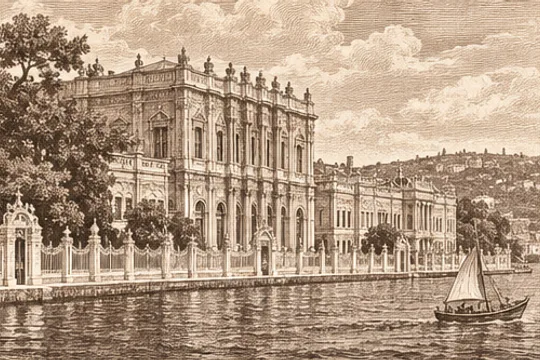
The drug that contributed to Atatürk’s death is now on the World Health Organization’s list of banned products. The medical literature recognizes that it causes certain death within ten days, so why it was used needs explaining. Atatürk did not have cirrhosis as is commonly thought. He was given too much quinine, which caused his liver to fail and become cirrhotic. The doctor treating him was Mim Kemal Öke, one of the Masonic lodge’s grand masters. Mustafa Kemal spent about two months resting aboard the Savarona, where the heat and humidity made him worse, and he was then taken to Dolmabahçe Palace. In fact, sending him to the yacht was itself part of the scheme.
In short, Mustafa Kemal died shortly after midnight, around 1:30 a.m. on 10 November 1938. (The reported time of 9:05 a.m. is also a lie.) His aide Salih Bozok was executed that very evening to stop him from telling what he knew. The story that “he loved Atatürk so much that he could not bear the grief and took his own life” was made up.
Mustafa Kemal did not simply die. He was killed.
His killers were the Freemasons in the ranks of the republic. The reason no autopsy was performed was the fear that mercury, a heavy metal, would be found.
What was İsmet İnönü doing all this time?
He did not come to Istanbul when Mustafa Kemal died in Dolmabahçe. With the army’s support, he had soldiers surround parliament and had himself elected president that same day. In 1948 he revived Freemasonry and returned its property.
[1] The document concerning Atatürk’s suspicious death is held in the library of the Grand National Assembly of Turkey, accession no. 1970, 20, call mark S.A.1376. Its contents are important for what they reveal about the circumstances behind Atatürk’s killing. It was published under the name of Apostolos Grazos in the Popular Front newspaper Laiko Metopo on 1, 2, 3, 4 and 5 September 1949.
Translated from the Turkish original. Türkçe