
Orly spelled the end of ASALA. Karlov will spell the end of FETÖ…
2 January 2017 · Personal website
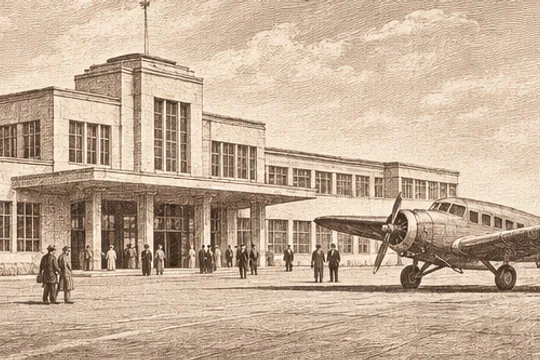
(Article 126 — 2 January 2017)
The 1974 Cyprus Peace Operation was a turning point for Turks and Westerners alike. In 1923 Turkey had been made to swear a solemn oath never to go beyond its borders. Nearly half a century later it extended its territory for the first time and set foot on Cyprus. The West’s attention turned to Turkey in an instant.
In Turkey in 1974 everything was imported, down to needles and thread. There was no domestic production to speak of, and what there was remained limited. Economic and military embargoes took effect immediately. Across the country, shortages began to affect essentials such as petrol, electricity, bottled gas, flour, sugar, cooking oil, food and medicines.
With energy and raw materials in short supply during the embargo, factories came to a halt, unemployment rose. An enormous exercise in social engineering manufactured clashes between right and left. The Cyprus Peace Operation, the first step toward an imperial Turkey, alarmed Britain above all, as well as the United States. The clashes between right and left, the joint product of MI6 and the CIA, tore through the country for some five years. Poor Ahmet, who wanted nothing to do with socialism, and penniless Mehmet, who took a stand against capitalism, kept shooting at one another, and thousands of young people perished.
Then in 1980 the balance of power in the Middle East suddenly shifted and the Iran–Iraq War broke out. As Khomeini flew from exile in Paris and landed at Tehran airport, Iranian students occupied the US embassy and took embassy staff hostage. The evacuation of Americans and other Western nationals from Iran and Iraq, and the possibility of using İncirlik Air Base in a military operation against those countries, made Turkey more important. Then came the military coup of 12 September 1980, an American project. All the right- and left-wing youths were rounded up in a single day at addresses supplied by the Americans. The day after the coup, clashes between right and left had simply vanished from Turkey.
But Turkey was not to be left alone. A new problem had to be created somehow and the country’s energies diverted elsewhere, and that is exactly what happened. The new problem was ASALA.
French and American intelligence led the effort to create this organization. ASALA carried out many attacks between 1979 and 1983. Armenian terrorists carried out 110 attacks in 21 countries, killing 42 Turkish diplomats and four foreign nationals. Their first terrorist attack inside Turkey was the bombing at Ankara’s Esenboğa Airport on 7 August 1982. Nine people were killed and 72 injured. The Armenian terrorists were caught and promptly executed after a brief trial.
The organization made the greatest mistake of its existence in July 1983, when it bombed the Turkish Airlines counter at Paris’s Orly Airport. In what went down in history as the “Orly massacre,” eight French citizens died and 52 people were injured. ASALA’s fate was sealed in an instant. Once the attack affected them directly, the Westerners who had done nothing to help Turkey fight the organization consigned it to history overnight.
Turkey breathed a sigh of relief when ASALA’s terrorism ended. But that was too much relief for the Turks. Something had to be devised that would be Turkey’s problem, whose attacks would take place inside Turkey and would never spill over into Europe. A new exercise in social engineering began. This time there were a few more players around the table. America’s CIA, Germany’s BND, Israel’s Mossad, Britain’s MI6 and France’s DGSE produced a masterpiece: the PKK (Partiya Karkerên Kurdistan), the Kurdistan Workers’ Party.
The PKK carried out its first armed attacks on 15 August 1984 in Eruh and Şemdinli. Around 35,000 people died in attacks that continued until 2013. The $350 billion that could have gone into roads, dams, schools, hospitals and education instead went into the pockets of American, British, Israeli, German and French arms manufacturers.
The people pulling the PKK’s strings thought through every detail and planned each attack thoroughly. At times unarmed soldiers were shot, and at other times civilians were killed. Every attack aimed at Kurdish, Alevi, Turkmen, Syriac or Arab communities sowed fresh hostility. Every attack had a story, a purpose and a message for a particular group. There even came a point when the fight was simply abandoned and left to run its course.
The year 1993 was a particularly grim and dark period for Turkey. Unsolved murders, assassinations, terrorist attacks spreading into big cities, bombings, chaos and unrest all took place that year. In 1993 President Turgut Özal, who advocated a peaceful end to PKK terrorism followed by the unification of northern Iraq and Turkey, personally put Gendarmerie Commander General Eşref Bitlis in charge of the matter.
The mere fact that Turkey had begun to refer frequently to Mosul and Kirkuk was enough to alarm the West. General Eşref Bitlis argued that PKK terrorism could be ended peacefully and held talks with leading figures in the region in search of a solution. On 7 February 1993 he said, “US aircraft taking off from İncirlik Air Base are delivering aid to the PKK.” Just ten days later, on 17 February 1993, his aircraft crashed over Ankara for reasons that have yet to be clarified, and the general lost his life in the line of duty. Several senior military officers on his team, including Rıdvan Özden and Bahtiyar Aydın, were later killed on duty. Next came the turn of Turgut Özal, who had gone so far as to say, “Let’s go into Mosul and Kirkuk.” Exactly two months after Eşref Bitlis’s death, on 17 April 1993, Özal was poisoned and killed at the Çankaya residence. The operation was complete.
The years from 1993 to 2001 were years of decline for Turkey. Governments were formed with difficulty and collapsed in quick succession. Coalitions broke up, early elections were called, economic crises and terrorist attacks followed one another, and organized crime took hold in the cities, aided by politicians, police officers and people in the press and media. Over all of it loomed the immense pressure of military tutelage, waning state authority, a stalled economy, domestic government borrowing rates approaching 400 percent and overnight interbank rates reaching 7,500 percent. Ahmet Necdet Sezer was elected president and threw a booklet containing the constitution at Prime Minister Bülent Ecevit during a National Security Council meeting. Turkey’s worst economic crisis followed. Kemal Derviş came to Turkey. Politicians schemed, public banks were drained, failed banks cost the treasury $250 billion, and the list goes on.
On 15 October 1973 the Organization of Arab Petroleum Exporting Countries (OAPEC), made up of the Arab members of OPEC along with Egypt and Syria, declared an oil embargo in response to US support for the Israeli army in the Yom Kippur War. When OPEC asked oil companies to increase their payments, the price of oil more than quadrupled, from $2.59 to $12 a barrel. The increase had a profound effect on oil-exporting countries, and oil revenues under the control of Western states began flowing to Middle Eastern countries.
These two events, the 1974 Cyprus Peace Operation and the 1973 oil crisis, made clear to the West that the Middle East had to be planned anew, and the role of religion came under fresh scrutiny.
In 1974 two organizations that were practically copies of each other were created in Turkey and Iraq. Quietly and insidiously, they began to shape society. The one in Iraq was called Kasnazani. The one in Turkey was Fethullah Gülen.
Fethullah Gülen began making a name for himself in 1975 and 1976 with lectures in several Anatolian cities on the Quran and science, Darwinism, the Golden Generation, social justice and prophethood. His first articles appeared in Sızıntı magazine, which went on sale in February 1979. He rose quickly in society without attracting attention. Over forty years he organized and recruited supporters in virtually every public institution, from the military and the police to religious affairs and the treasury, and from private tutoring centres to universities. Finally, when he felt he could mount a military coup in Turkey, he struck what he intended as a mortal blow through his supporters in the military on 15 July 2016. But he misjudged the good sense of the Turkish people and Erdoğan’s leadership, and everything he had built in forty years was wiped out in twenty-two hours.
The Kasnazani network and Fethullah Gülen’s network are practically identical. Imperial powers no longer mount crusades the way they once did. Instead, they exploit weak links in society. Terrorist organizations large and small are created with the formula “a hundred fools, a hundred thousand dollars and a hundred Kalashnikovs.” They manipulate the Islamic world’s sects, religious orders and communities, pursuing a policy of setting one dog on another.
The Western powers once opened missionary schools as the advance guard of colonialism. Today they have Muslims open and finance those schools in the name of raising devout generations. The brainwashed followers of Fethullah Gülen and the Kasnazani network are the clearest examples of these schools raising people stripped of independent thought to serve the global elite.
Sheikh Abdul Karim al-Kasnazani founded the Kasnazani order. While leading a tribe in Sulaymaniyah, he was initiated by a Qadiri sheikh and became the postnishin, or head of the order. In 1978 his son Muhammad al-Kasnazani took over its leadership.
Muhammad al-Kasnazani was a rather mysterious figure. New and inexperienced disciples kissed his foot, senior disciples kissed his hand, and the highest-ranking disciples, the regional imams, kissed his shoulder.
The order underwent remarkable changes after the younger al-Kasnazani took charge. Sheikhs and disciples took more interest in politics than in devotional recitation. Esoteric accounts filled the discussions at the order’s meetings. Although the Qadiris frowned on demonstrations involving blood and knives, disciples were drawn to these rituals. The displays with blades and blood and the sessions in which people ate razor blades and broken glass fascinated and amazed the spectators. If a disciple died performing them, he was blamed for his own death. It was said he had not believed fully or performed the act with sincerity and devotion.
The Kasnazani order used a method of indoctrination built around “suggestion,” “the throne” and “the peacock.” First, in private gatherings run by professionals at the organization’s houses, suggestion was used to cultivate the members’ interest in the sheikh. Second, they were offered a “throne” in God’s name. Unemployed people were offered government jobs in return for a commission, while civil servants were promised promotion. Then came the “peacock,” which opened the way to magic, esoteric accounts, prophecy and miracles. Along with messages supposedly received from the Prophet, peace be upon him, in dreams, disciples were told of divine messages. Modern forms of hypnosis were also used. In this way the followers were turned into virtual zombies, their minds brought under control and an army of brainwashed people formed.
Saddam Hussein, Iraq’s leader for thirty-three years, was overthrown during the American military invasion of 2003 thanks to the Kasnazani order and its disciples. Members had infiltrated even the innermost workings of the palace. Among the disciples were Saddam’s wife Sajida, his brothers Watban and Barzan and his son Uday. Mossad and CIA dollars flowed to those in key state posts who hesitated to join the order. Izzat Ibrahim al-Douri, one of Saddam’s most trusted men, was also a member.
By the time Saddam realized what had happened, it was too late. The infiltration of state institutions that began in the 1990s was complete by the early 2000s. As American forces occupied the country, Sheikh Abdul Karim al-Kasnazani advised his followers “not to resist American soldiers,” telling them the Americans were not as dangerous as people supposed. At his urging, generals who should have fought for their country’s independence raised white flags and stood by as the Americans occupied it. By the end of the occupation, three thousand intellectuals, scientists, researchers and doctors had been killed for refusing to cooperate with the United States and Israel. They included physicists, historians, lawyers, writers and theologians. Some were shot and others tortured to death. According to UN figures, 84 percent of Iraq’s higher education institutions were burned, looted or destroyed. The memory of an entire country was erased.
How similar the Kasnazani and Fethullah Gülen networks are in their methods and teachings. There are the gatherings and suggestions in the organization’s houses, promises of jobs and positions, esoteric accounts and appearances of our Prophet in dreams. Al-Kasnazani urged people not to resist the American occupiers. Fethullah Gülen said almost the same thing: “It is not very dangerous for the Crusaders to occupy your country. The most dangerous thing is not for the devil to make an unbeliever an unbeliever, but to pass off a hypocrite as a Muslim. They will not lay a hand on your wife or daughter.”
The killing of the Russian Federation’s ambassador to Ankara, Andrey Gennadyevich Karlov, on 19 December 2016 by a riot police officer affiliated with FETÖ has gone down in history as the act that will bring Fethullah Gülen’s network to an end. The assassination was as fatal a mistake for Gülen and his organization as the Orly massacre was a strategic mistake for ASALA.
It takes no scholar to recognize this as a deliberate plot to damage Turkish-Russian relations. Fortunately, both Russia and Turkey are well aware that the assassination was a provocation.
The bells have begun to toll for FETÖ and Fethullah Gülen.
Fethullah Gülen’s network, seen until now as our problem, has become the whole world’s problem as a global threat.
From now on, it is the West’s problem…
Dr. Mehmet Hakan Sağlam
Translated from the Turkish original. Türkçe