
Wiping the slate of memory clean in the Middle East
14 August 2014 · Personal website
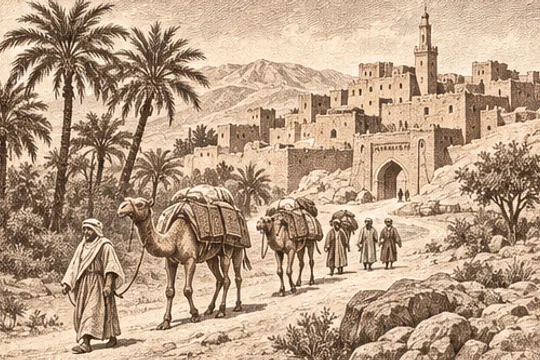
I want to remind you of the countries established in the Middle East, stemming from the Ottoman Empire, and how many years we lived alongside them.
Iraq (404 years), Syria (402 years), Jordan (402 years), Israel (402 years), Lebanon (402 years), Palestine (401 years), Kuwait (375 years), Saudi Arabia (393 years), Qatar (42 years), Bahrain (56 years), Yemen (146 years), Oman (8 years), Western Iran (28 years), and Cyprus (343 years).
In 1914, World War I began, and by the end of the war, a vast expanse of lands in the Middle East slipped away from us “like water.”
Today is 2014.
Almost a hundred years have gone by. For years during that time Turkey wrestled with its own internal problems. Its collective energies were repeatedly sapped by events such as the 1960 coup, the 1970 military memorandum, clashes between the right and the left, the 1980 coup, the problems posed by ASALA and the PKK, the postmodern coup of 28 February 1997, court cases to shut down political parties, the Gezi protests and the judicial coup of 17 and 25 December 2013.
The countries of the Middle East, after separating from the Ottoman Empire, never found peace. Almost every country transformed into a colony of another nation, one located thousands of miles away, from a political and economic perspective. Countries such as Saudi Arabia, along with Iraq, Kuwait, Bahrain, and Qatar, became colonies of England through companies like ARAMCO and Shell.
These countries have states on paper, but they have no rights over the oil beneath their soil. Even if oil is extracted from beneath the ground worth $10, the money they receive at best would be one or two dollars. For years, Western countries have amassed the majority of this wealth. Instead of this money being used to benefit the people of these countries, it has flowed into the bank accounts of the rulers – kings and emirates – who govern them. The situation is the same in almost every country, from Saudi Arabia to Qatar, from Bahrain to Kuwait. Kings, emirs, and princes who possess billions of dollars are simply hoarding their wealth in banks in Switzerland, the US, and England – which is, in itself, quite remarkable.
In the Middle Eastern region, there’s only one enduring reality that has persisted for a century: the lack of peace and security. I’ve conducted detailed research based on old, printed maps illustrating the political and administrative structure of the Ottoman Empire in the Middle East. The borders between vilayets, sancaks, and mutasarrifates were so precise and carefully drawn that it’s hard to believe they were ever created. All ethnic and religious differences, customs, and beliefs have been taken into account on these maps. No single ethnic or religious group has ever been allowed to dominate another. In areas where Shias are the majority, Shia administrators have been appointed, and in areas with Sunnis, Syriac Christians, and Christians, administrators from within those communities have also been appointed. No one has ever been forced upon anyone.
Let’s consider present-day Iraq. There wasn’t a place called “Iraq” or even a region in the Ottoman era. Instead, the area comprised entirely separate provinces: Baghdad, Mosul, and Basra, with the Sunni population residing in Baghdad, the Shia population in Basra, and the Kurds and Turkmen living in the Mosul province.
The proverb “like a crazy person throwing a stone into a deep well and not retrieving forty smart ones,” is being used today as people debate how to “fix” or improve the Middle East. However, no one is considering looking back at the past. Şeyh Edebali says, “As long as there is a state, there must be people to sustain it.” This was the fundamental principle that kept the Ottoman Empire standing for 623 years – adhering to this principle in all areas, including economics, law, and finance. When making any decisions regarding justice, “humanity” is always the primary consideration. It has never been desired to demand taxes exceeding what individuals can afford, and economic policies have always been based on a provisionary approach, aiming to maximize the benefits for individuals. This sensitivity, encompassing a vast array of ethnic structures, diverse languages, religions, beliefs, and sects, has ensured the continued stability of the Ottoman Empire for 623 years.
There exists in the Ottoman Empire a remarkably well-structured state, deeply rooted in traditional customs and practices, with strict adherence to tradition throughout the government.
The order established by the Ottoman Empire in the Middle East and Africa functioned flawlessly for centuries. Thankfully, we now have access to the archives of the Ottoman Empire, which are among the world’s most perfect and reliable. It’s worth noting that a portion of these archives, during the Republican era, were even loaded onto wagons and sold as scrap paper to Bulgaria, but the rest remains preserved in our possession. Please examine these archival documents. During the roughly 400-year period of dominance in the Middle East, aside from common crimes like murder and theft, there were very few incidents and events that caused social unrest when they reached Istanbul. In fact, even if we consider all the countries in the Middle East, the number of ethnic and religious events happening in a single day in Iraq, Syria, or any part of the Middle East is greater than the number that occurred in the Ottoman Empire over 400 years.
The Middle East needs a fundamental shift – a serious transformation – on social, political, economic, and social levels. Those working to solve the problem are focused on minor issues, failing to see the core problem. The issue lies in artificial boundaries. The issue stems from a lack of respect for individuals, and a failure to achieve equitable distribution, meaning people are unable to control their own wealth. This is due to leaders who come from within and do not represent the people. This stems from being unable to escape the control and direction of imperialist states. Like a donkey turning a millstone blindly, they actually exist in a vicious cycle, yet they believe they are moving steadily forward. If we could rewind the region back to 1918 and refresh our memories, and understand that the “Peace at Home, Peace in the World” is a fabricated lie designed to isolate us, then everything would improve.
Translated from the Turkish original. Türkçe