
Who are you to lecture the governor of Kilis?
30 August 2014 · Personal website
(Article 014 — 30 August 2014)
Today, I came across an article in a newspaper, written by Hıncal Uluç.
The subject is the conversion of Kemaliye Elementary School in Kilis into a mosque. The renowned author, having picked up his pen, was carefully considering the issue from one side to the other.
I read it where Hıncal Uluç said, “I read it there.”
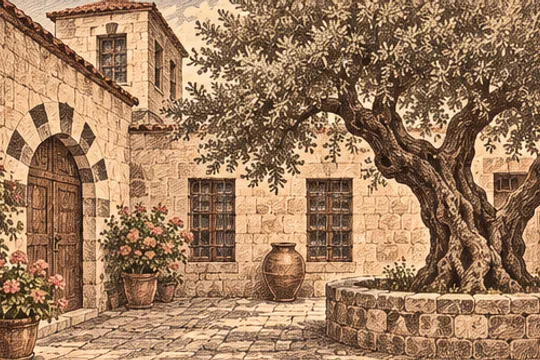
Right next to the two-story stone building was a small mosque with a particularly beautiful minaret. I actually didn’t realize this when I was younger, but later I found out that it was actually the school’s own mosque.
This school building was first used as a mosque in 1841, by Cudi Mehmet Paşa, and then continued to function as both a mosque and a madrasa for 63 years, with an additional madrasa added. In 1904, it began to be used as a private school. Its name was changed to “Second Girls’ School” in 1924, then to “Second School,” and finally to “Necip Asım School” in 1930. The mosque minaret, a historical artifact, still stands today in a corner of the school’s garden, preserving traces of the year 1841.
Mr. Hıncal wrote that he received a disturbing email from Kilis. He said the email itself was unpleasant, and therefore he immediately wrote a column to ask the Kilis Governor. “Is this true, Mr. Governor? They are planning to convert the Kemaliye Elementary School into a mosque. There are already plenty of mosques around the Kemaliye school. Praise be to God, we are Muslims. There are dozens of mosques in Kilis, and yet, it seems that few people actually pray in them.” In Kilis, there are truly so many mosques. If there’s a need for a new one, there’s also a great deal that needs to be done. Why would I try to “take over” the symbol of my beloved Kilis – the school?
I’m actually finding myself completely stuck trying to figure out how to improve this piece of writing.
Initially, the school’s garden should be expanded by demolishing the minaret of the mosque, as the rest of the structure had already been destroyed in the past. The practice of destroying historical sites and replacing them with meaningless concrete buildings was a common urban planning approach, and no one raised any objections to this systematic destruction of history during that time. It’s only recently that the importance of history and ancient sites has begun to be truly understood, and people’s sensitivity has gradually increased. There are many examples of this in Turkey. What should we say about the Cumhuriyet (Republic) perspective on actions like demolishing the magnificent Topçu Barracks, built in 1780 in Taksim, and replacing it with the “Gezi Park” – a center for procuring drugs, or demolishing the walls of Yıldırım Bayezid’s Anadolu Hisarı (Anadolu Citadel), which was built during the time of Yıldırım Bayezid, and redirecting the road during the construction of the Bosphorus shoreline, demolishing two houses instead, or demolishing the stables of Dolmabahçe Palace and replacing them with Dolmabahçe Stadium? Unfortunately, the history of the Republic is filled with such historical atrocities. It’s hard to imagine, isn’t it, that the magnificent Blue Mosque, which is now listed among the world’s most important cultural heritage sites and is known as Sultanahmet Mosque due to its stunning blue tiles, was used as a barracks in the 1940s? Sadly, the secular Republic’s understanding of “modernity” involved destroying and eliminating everything belonging to the Ottoman era.
There is absolutely no consideration being given to converting Kemaliye Elementary School into a mosque, because the school’s architectural and physical condition simply doesn’t allow for it. Secondly, Mr. Uluç, who hasn’t been to Kilis in 55 years, seems to have forgotten the significant distance between the school building and the old mosque. Therefore, the two buildings are completely separate. What is the fate of Cudi Mehmet Pasha, who commissioned this mosque in 1841? Currently, aside from the minaret, this mosque is exposed to the wind. Restoring this mosque to its original design would not be a loss for Kilis, but rather a gain.
This is what comes of living 1,187 kilometres from Kilis and taking up your pen to call its governor to account without ever having seen the town. The population of central Kilis is about 100,000. With the refugees who have arrived from Syria over the last three years, the population of Kilis is now approaching 250,000. Mr Uluç generally spends his summers in Bodrum. I suspect he is confusing the mosques there with those in Kilis. At almost every prayer time the mosques in this Anatolian border town are so packed there is scarcely room to drop a pin. And spare us your professions of piety.
When it comes to asking Vali Bey (Governor Bey) about this, currently, Süleyman Tapsız, who is holding the position of the Governor of Kilis, is the most successful public official to have served in this city. Kilis is just beside Syria, which is burning fiercely. Tens of thousands of people are struggling to survive in the two camps located in Kilis. No one is considering how the food, drink, and basic needs of those living in the camps are being met. Turkey is writing a legend at the Öncüpınar and Beşiri camps. And undoubtedly, the architect of this legend is the Governor of Kilis. For three years, an incredible level of dedication has been shown to hundreds of thousands of people fleeing the war, who have fled to Turkey as the Republic of Turkey, carrying their families and running across mine-filled areas.
All Syrians wish to be seen as having their own governor, rather than the Turkish Republic’s governor. These people are receiving all kinds of social and psychological support, including healthcare, and opportunities for preschool, primary, secondary, and university education, as well as Turkish language instruction. If you happen to visit the state hospital in Kilis, please do so. This hospital provides healthcare to Turkish citizens and Syrian refugees without any discrimination. Turkey is demonstrating all the characteristics of a large and powerful nation in Kilis.
To the people who have lost everything – their limbs, their loved ones, their homes – due to war, those who worry not about tomorrow, but about today, only Turkey has truly cared. This is evident in the behavior of Hıncal Uluç, who, without understanding the situation, chooses not to ask questions, as demonstrated by his engagement with the Governor of Kilis, Süleyman Tapsız, who is dealing with such critical matters.
Doesn't it seem necessary for the people of this country – those who live here and sustain themselves by its waters and bread – to assist the Governor of Kilis and the Kilis Governorate, who are best representing the Republic of Turkey in this remote corner of the country?
It’s inappropriate to ask this valuable Governor, who even lacks the simplest things for the tiny babies born in camps – like their blankets, baby food socks, booties, and “zıbın” (a traditional Turkish baby garment) made of Kilis fabric – but, please forgive me, it is absolutely not right to do so.
Translated from the Turkish original. Türkçe