
A Turkmen state will be established in Syria, and Aleppo will become our 82nd province…
2 August 2015 · Tarafsız Haber
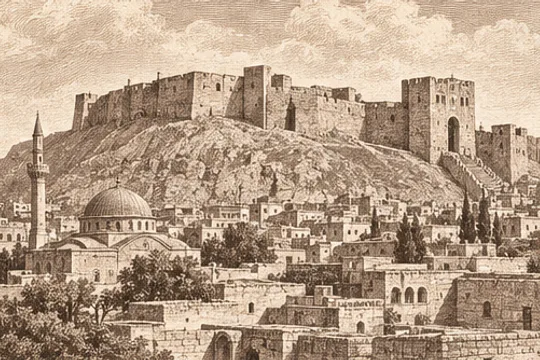
When Abdullah Öcalan’s message was read in Diyarbakır’s square during the 2013 Newroz celebrations, a new period began in Turkey. People’s longing for peace immediately began to bear fruit, and faces began to brighten. But over the next two years so much happened against the Republic of Turkey that patience finally ran out. Turkish warplanes then razed PKK camps in both Syria and northern Iraq. These strikes will no doubt grow more intense. Meanwhile the HDP, promoted as an “apostle of democracy” with the support of the mainstream and “parallel” media, and its ineffectual leader have gone completely silent.
There is a well-known saying in Kilis: “A dog whose time has come either lies down at a crossroads or shits on the butcher’s table.”
The HDP, PKK, YPG, PYD and the rest of the three-letter rabble started treating Turkey as Kurdish land and the Turkish people as a minority. Their actions and rhetoric grew so fierce that people’s patience finally snapped.
The enemies of Turkey had gained strength during the Gezi protests and imagined that a popular movement, a public uprising, would bring down the government. When their efforts failed, the Fethullah Gülen Terrorist Organisation stepped in and staged the judicial coup of 17 and 25 December 2013. When that failed too, a higher hand intervened, and the events of 6–7 October 2014 erupted on the pretext of Kobani.
The events of 6–7 October were a turning point in our political history. Fifty people were killed after the HDP’s Demirtaş called people into the streets, and they were killed with particular brutality. The destruction and intimidation set off a series of developments. Strongly negative views took hold about the peace process and Kurds affiliated with the PKK. State policy shifted in several ways, including an expansion of police powers. The machinery of the state began working out a new practical approach to the Kurdish question.
One point of contention was whether the Kobani events were organised or unfolded spontaneously. Some even called for empathy with those responsible, including those who had killed people mercilessly. But the events were undoubtedly organised from the start under the leadership of the KCK.
According to the author, the shops and groups targeted had been chosen beforehand. The first incident he cites as evidence of coordination was the attack on people preparing to distribute sacrificial meat at the Köy-Der association in Bağlar. Turan Yavaş, aged forty, was killed at the scene. Hüseyin Ahmet Dakak, Hasan Gökgöz and Riyat Güneş fled the association and took refuge in a house on a nearby street. The attackers surrounded the house and lynched all three. One was thrown from the third floor, another’s body was partially burned, and the third was killed by having his throat cut.
What happened during the Kobani events was, in the author’s comparison, as cruel as Tutsis killing Hutus in Rwanda. How could those who described themselves as victims, said they were fighting for their rights and claimed to be defending a people’s honour kill and burn people so brutally? Philip Zimbardo, a leading figure in social psychology, says that human nature is fluid and can pass easily from good to evil. Yesterday’s oppressed can readily become today’s oppressors. In the film Gandhi, Indian soldiers under British command beat and chase protesters. At one point, the protesters turn and pursue the soldiers, who take refuge in a police station. The protesters set it alight and burn them alive. Demirtaş, who set the events in motion by calling people into the streets, defended himself at the time: “I told them to go out into the streets. I did not tell them to kill.” There was no sign of remorse or even a hint that he might think he had made a mistake. Was it not a grave failure to call a crowd already mobilised under the KCK into the streets without foreseeing that massacres of this kind could follow?
If you call crowds into the streets for protests, rallies or campaigns without saying what they are about or what they demand, is that not tantamount to calling on them to “strike, smash, burn and kill”?
But it is plain to see: those who called people into the streets wanted all these deaths to occur. And what of the events leading up to the elections of 7 June? In Istanbul and other major cities, some neighbourhoods had all but become training grounds for the organisation. Did the near-daily incidents there not drive the Turkish people to exasperation?
At a recent press conference, Prime Minister Davutoğlu listed the kinds of terrorist acts carried out by the PKK and its offshoots over the preceding seven months. He said members of the PKK and HDP had used the Peace and Brotherhood Project as a shield while terrorising our cities. He went on to say that they had begun branding anyone who opposed them an “ISIS supporter” and executing them. This was happening not only in Diyarbakır. Even in Gaziosmanpaşa, in the heart of Istanbul, he said, one of our citizens had been killed simply because he wore a beard.
Things have now been set in motion. The Kurds were offered the peace opportunity of the century and have lost that chance until the next one. However many votes the HDP and parties linked to the PKK win from now on, they will carry no weight in the eyes of Turks. The author accuses Kurds as a whole of hypocrisy and dishonesty, and says that, like bankrupt merchants, they will take a long time to regain the standing they have lost.
CHP voters and self-styled secular nationalists in Nişantaşı, Ulus, Levent, Kadıköy and Bakırköy voted in the 7 June parliamentary elections for Demirtaş, who took up a saz and sang folk songs on television, and for his entourage. They will never escape the curse of the two police officers killed in their sleep in Şanlıurfa. Turkey has seen many betrayals in its recent past, but hardly any period in its history compares with what it has endured in the last two or three years.
Hostility towards Tayyip Erdoğan brought together Kemalists, secular nationalists, Alevis, PKK and HDP supporters, the BBP and SP, and even people the author calls “transvestites.”
The peace process is over. There is no time for preliminaries now, and the thread will snap where it is thinnest. Qandil will be the PKK’s grave. The PYD will lose its gains in Kobani, Jarabulus, Afrin and Tal Abyad one by one. The PKK and PYD took the bait offered by coalition forces and came to think themselves important. After yesterday’s statement from the US State Department, they must have realised where they really stand.
When Turkey banged its fist on the table and said “Enough!”, the United States and the other Western powers had to bow to strength. They were not the only ones. The mainstream and “parallel” media that had portrayed the HDP and PKK as angels, and the traitors who gave the PKK every kind of support, have now fallen silent. As the old saying goes, “Either rise to lead the state or end up carrion for the raven.”
Now is the time for the state to show its strength and make its presence felt.
Otherwise this country could become a place where genocides like the one in Rwanda take place. Let me recall what happened for those unfamiliar with it.
The year 1994 was a long one for Turkey and the world. Turkey went through an economic crisis while fighting in the southeast continued unabated. In the Balkans, Bosnian Muslims were being massacred by Serbs. At a time when people were debating the clash-of-civilisations thesis, 800,000 people died in Rwanda in a hundred days. The rest of the world heard reports of the massacre only fifteen days after it began. As former French president Mitterrand put it, these were supposedly the sort of things that happened in Africa. Many failed to acknowledge the massacre, gave it little attention, and made no effort to find those truly responsible. The Hutu perpetrators lived in Rwanda, but the author traces the massacre of the Tutsi to centuries of conflict between masters and slaves.
Nowhere in the world is there as much ethnic diversity as in Africa. Sudan, Nigeria, Congo, Tanzania and Uganda are home to more than a hundred ethnic communities. Many differ in language and religion. Ethnic differences have also given rise to ethnic politics, as in Nigeria, Burundi, Rwanda and Côte d’Ivoire. In the sweep of Africa’s five thousand years of history, the civil wars of the twentieth century were unprecedented. The main architects of these wars were the European colonial powers. Europeans maintained their presence by dividing African communities, drawing distinctions between them and setting them against each other. The new rulers of postcolonial Africa exploited inherited hostilities to oppress and intimidate other ethnic communities, exclude them from the economy and politics, and keep the wealth for themselves. For instance, although Hutus outnumbered Tutsis in Rwanda, the Belgians, on leaving, left the minority Tutsi in their place. Before the 1994 genocide, Tutsis accounted for only fifteen percent of the population. In the author’s account, Tutsis inherited the white man’s attitudes towards Africans and pursued a violent policy before independence towards Hutus, whom the author describes as less educated and darker-skinned, seeking to exclude them from politics, the military, the civil service and the economy.
The Germans who came to colonise Rwanda were more interested in economic gains than in Rwandan society and culture. The Belgians who came after them sought to spread Christianity among Tutsis and create an elite to represent Belgian interests. They treated the Tutsi and Hutu as distinct ethnic communities and tried to prevent movement between them. They went so far as to issue separate identity cards and rigidly reorganise relations between the two groups. They did not even allow them to marry each other, live in the same neighbourhoods or attend the same schools. The Belgians taught the Tutsis to be masters while instilling rebellion in the Hutus.
The first clashes between Tutsis and Hutus broke out in February 1959. In the author’s account, the Tutsi king appointed by the Belgians imposed new taxes on the Hutus and ruled through violence and repression. The Hutus used violence against minority Tutsi rule and massacred Tutsis, especially in rural Rwanda. In 1962 the Hutus gained independence, ending the rule of a Tutsi minority that made up fourteen percent of the population. They treated independence as a revolution, removed Tutsis from government and established a system based on Hutu supremacy. Some Tutsis were driven into Burundi, Uganda and Congo. Unable to return home, Tutsis attacked the Hutu government with support from the countries where they had settled. The Hutu authorities responded by killing civilians. In Burundi the Tutsi government also tried to expel Hutus, described as a minority in the source, and stepped up violence against civilians. Around half a million Hutus fled to Rwanda, causing its economy to collapse.
The first civil war began in 1990 and lasted until 1992. UN intervention halted the fighting temporarily. But Burundi’s elected Hutu president, Melchior Ndadaye, was killed in 1993, and two hundred thousand Hutus were massacred. Barely a year later, Rwandan president Habyarimana was killed when his plane was shot down. The author attributes the downing to Rwandan Patriotic Front fighters. These events precipitated the massacres in Rwanda.
The massacres in Rwanda began in April. In the roughly one hundred days to July, more than eight hundred thousand Tutsis and moderate Hutus were killed. On 13 April Hutu attackers stormed the Gaddafi Mosque in Nyamirambo, near the capital Kigali, where Hutu and Tutsi Muslims worshipped together. They butchered worshippers and killed about five hundred Muslims who had sought refuge in the Islamic cultural centre. The perpetrators, according to the author, were soldiers trained by the French and Interahamwe militia members.
The author describes the Rwandan genocide as a calculated exercise in social engineering and alleges that France supported it throughout, contributed to it and ran it under its own control. The French government never admitted to carrying out genocide, even though, the author notes, independent reports described France as complicit in the massacre.
As Turkey debated a coalition and early elections, a major operation launched in response to mounting terrorist attacks ushered in a new period in which “the game had changed” at home and abroad. Turkey has been changing for thirteen years. There has clearly been a reactionary front against each wave of change. Among its attempts were coup plots and threats, the Republic rallies, the case to close the AK Party, revolutionary people’s war, the serhildan uprising, the Gezi revolt, the “Parallel Structure’s” attempted coup of 17 and 25 December, threats and blackmail tapes. Ahead of 7 June, the reactionary front used the HDP as a battering ram to threaten the peace process while trying to get results through a smear campaign at home and abroad claiming the AK Party was working with ISIS. The strategy was to trap and isolate the AK Party, at home and abroad, over the Kurdish question and the debate on the presidency. When the parliamentary elections of 7 June produced a Grand National Assembly in which the AK Party could not govern alone, people thought the strategy had worked. The HDP co-chair Selahattin Demirtaş, the spearhead of the effort to isolate Erdoğan and bring down the AK Party, was so emboldened that, while announcing support for a CHP–MHP coalition, he told President Erdoğan, “Don’t worry, we won’t hang you. We’ll put you on trial.” Yet on election night itself, MHP chair Devlet Bahçeli had already made it clear that the MHP would take no part in this project, or in the “60 percent bloc,” as Kılıçdaroğlu called it.
The HDP and PKK joined this project for reasons that went beyond opposition to Erdoğan or a preference for a secular way of life. The PKK calculated that if the HDP cleared the electoral threshold, it would consolidate the gains the PKK had made in northern Syria and in eastern and southeastern Anatolia, and create conditions for still greater political success. After all, the United States openly supported the PKK and PYD in their fight against ISIS. Drunk on power after Kobani, the pea-brained leaders of the PKK and HDP were so sure they had unlimited Western public support and goodwill that they started defying Turkey at every opportunity without looking at their own shit. They assumed that with Turkey struggling to form a coalition and its political leadership weakened, Ankara would stay silent while the PYD united the cantons in northern Syria and declared a federal Kurdish region along Iraqi lines, and while violence intimidated the security forces and public institutions of eastern and southeastern Anatolia. The scenario they put to the test was one in which the Syrian civil war gradually spilled into Turkey, the state lost the initiative and withdrew from the region for fear of derailing negotiations and being drawn into the war in Syria.
To bring this about, the PKK tightened its grip through 281 incidents after 7 June, including roadblocks, kidnappings, the burning of construction equipment, bombings and assassinations. The ceasefire was declared over. KCK co-chair Bese Hozat announced a new phase of revolutionary people’s war and serhildan, or uprising. Cemil Bayık called on people to arm themselves. The ISIS bombing in Suruç, which killed thirty-two people amid these developments, gave the PKK a fresh opportunity to spread propaganda against Turkey, rise up and take action in Syria.
The author argues that the PKK’s strategic priority was to declare a PYD state in Syria and paralyse Turkey by provoking political and armed confrontation at home. [Operational details omitted.] Paralysis would have brought Turkey’s political divisions to a head, allowing the PKK to get what it wanted amid the internal conflict. Turkey, anticipating the difficulties that inaction would cause, acted at that point. Despite their provocations, the PKK and HDP had believed Turkey would not mount such an operation and were taken by surprise. Operations against ISIS and PKK-linked groups began simultaneously in Turkey, Syria and Iraq. Their stated aim was to protect political stability and the democratic rule of law in Turkey, and eliminate the threats posed by ISIS and groups linked to the PKK.
Turkey launched the operation with its own resources, while building a broad alliance with the coalition against ISIS and especially with the United States, NATO and other allies. When Turkey entered the Syrian equation in alliance with the United States against ISIS, in Obama’s words, “the game changed.” It is now clear that the change concerns the fate of the PKK and PYD as much as the future of ISIS and Syria. The PKK interpreted the end of the Arab Spring as the elimination of political Islam worldwide and believed the AK Party would be swept away in Turkey as well. In Syria, the PKK believed that its secular identity had won it American air and special forces support against ISIS and enabled a revolution in Rojava. It thought that a secular alliance backed by the West, especially the United States, could repeat that experience in Turkey. Next would come the overthrow of Barzani, who had allied himself with Erdoğan and the AK Party government. The PKK would thus become an indispensable ally of the West and the United States, as the sole representative of secularism in the Middle East. Under the protection of American air power, it would complete the transition from the Rojava revolution to a PKK state and forestall Turkish opposition. The PKK and HDP had badly misread Turkey.
Open American support for Turkey’s operations exposed their miscalculation. At home, the fault in their reasoning had been clear from Devlet Bahçeli’s remarks on 7 June. Before long the CHP and Aydın Doğan’s media outlets, which had been the HDP’s strategic partners ahead of the election, began to distance themselves from it. As operations against the PKK and HDP intensify, you will see the traitors at home desert their ranks one by one.
The PKK had also expected the armed forces, the National Intelligence Organization, the police, the gendarmerie, the judiciary and civilian administrators to avoid taking risks in a period of political instability and perhaps take a stand against the AK Party. That expectation also came to nothing. In underestimating the state’s traditions, institutions and personnel, the PKK was largely relying on the damage inflicted by the “Parallel Structure.” The state rallied around Erdoğan and Davutoğlu with remarkable cohesion and showed that it would follow the orders of the political leadership. Opposition parties, too, chose to support the decision. The breadth and resolve of this front will inevitably unsettle the HDP’s constituent groups and supporters and the base of the Parallel Structure. The PKK and HDP will therefore try to undermine its resolve under the name of a peace bloc. The aim is to get Abdullah Öcalan to intervene, extricate them from their impasse and internal disagreements and call for a new ceasefire. Under intense pressure, the PKK might agree to a ceasefire and withdrawal from Turkey in exchange for keeping its gains in northern Syria. But Turkey cannot be expected to allow a guerrilla force that could be turned against it to take shape there. It therefore seems unlikely that negotiations will resume unless the PKK abandons the Rojava revolution, which has poisoned the peace process, and its policy of establishing a PKK state in Syria under the PYD name.
The PKK mistakenly thought Turkey would tolerate a Kurdish entity in northern Syria that could cut all its links to the Middle East. The PKK and HDP will never again enjoy the credibility they had a month ago. Turkey now controls the entire balance of power in Syria.
The author argues that the proposed safe zone near the Turkish border, linked to allowing American aircraft to use İncirlik, strengthened the position of Syria’s Turkmens. He predicts that Aleppo and several other towns will fall to the Free Syrian Army and Turkmen groups and that the PYD and Kurdish groups will pay dearly for what he calls their betrayal. [Operational details omitted.]
Whatever anyone may say, Turkey’s latest operations against the PKK and ISIS have completely changed the situation in Syria. Syria’s Turkmens will establish a state of Türkmeneli in the near future. With Turkey’s help and support, everything in Syria is beginning to fall into place.
Only our gullible intellectuals and our traitors could believe that a Kurdish state made up of a few thousand rabble could be inserted between Turkey and the Middle East and stand in the way of Turkey’s future.
As the saying goes, “The axe turns, the handle turns, and a bad calculation comes back from Ankara.”
Eighty-two is very close.
All we have to do is trust the Turkish state and wait patiently…
Translated from the Turkish original. Türkçe