
United States of Fetulamerica…
24 November 2017 · Personal website
(Article 191 — 24 November 2017)
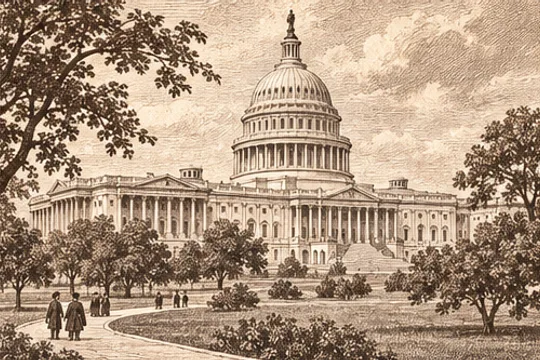
Let’s consider this from another angle. Let’s imagine that the FETO network has created a new area of operation, and is sustaining itself in a secluded location across the ocean from Philadelphia. The United States, with a population of 323 million, appears to be in the hands of the “Imam from Pennsylvania.”
The operation intended to be carried out through Reza Sarraf will ultimately rely on Trump. There have been so many instances of this kind of thing…
Al-Qaeda and the Taliban represent the most extreme example of this.
Let's go back a bit, to the 1970s. In the first quarter of the 70s, Afghanistan was a country that functioned as a fully operational state.
However, on December 27, 1979, the Soviet Union effectively invaded Afghanistan. The Afghan president, Hafizullah Amin, was killed, and Babrak Karmal was installed in his place. The Soviet’s invasion led to a large number of Afghans seeking refuge in Pakistan and Iran.
In 1979, following the Soviet Union’s invasion of Afghanistan, some groups within the country began to resist the Soviet occupation. The first uprising occurred in the eastern province of Herat, where a local government, working alongside Afghan soldiers, seized power. However, the government in Kabul responded by bombing the uprising, using aircraft supplied by the Soviets.
Approximately 50,000 people lost their lives during these events. Villages were raided, and leading religious figures were killed. The Afghans, who began to resist the Soviet invasion, formed seven major fronts with the addition of Muslims from all over the world.
The mujahideen’s resistance to the Soviet invasion forced the Soviet Union to withdraw its forces from Afghanistan by 1988. Mikhail Gorbachev announced on February 8, 1988, that the Soviet army would withdraw from Afghan soil within ten months, but that Soviet-Afghan relations would continue, and that the Soviet Union would continue to support the Najib government.
It is reported that the number of Soviet soldiers killed in Afghanistan during the war ranged from 15,000 to 30,000, and that over 1,000 Soviet tanks were destroyed.
Just as America experienced in Vietnam, the Soviet Union calculated that Afghanistan could be invaded with a force of 50,000, but despite this force increasing to 150,000, it still failed.
On February 15, 1988, the Soviet army began withdrawing from Afghanistan, leaving approximately one and a half million Afghans as casualties. This defeat in Afghanistan led to the rapid disintegration of the USSR. The enormous budget allocated to the Afghan operation, combined with the desire for independence among the soldiers within the Soviet forces, ultimately led to its inevitable collapse.
Following the Soviet Red Army’s withdrawal from Afghanistan, the Mujahideen began fighting against the Najibullah government. The weakened Najibullah regime, which had significantly diminished after the Russians’ departure, lost cities one by one. When the Mujahideen confronted Kabul, Najibullah’s most powerful commander, General Rashid Dostum, remained by his side. My friend, who defends both his own region of Mezra-i Sherif and Kabul, reached an agreement with Ahmet Şah Mesud, a member of the group known as Cemiyet-i İslami Afganistan, in early 1992, which facilitated the mujahideen’s takeover of Kabul on April 17th.
During this period, the capital, Kabul, suffered a devastating destruction unlike anything seen during wartime, with thousands of people losing their lives due to bombing and fighting. In the ongoing conflict between the two groups, a total of 25,000 Afghans were killed. Iran and the Tabani community, as well as Pakistan, provided support – including weapons, funds, and political backing – to the Hikmetyar community during this conflict.
The Pakistani government, after failing to achieve its desired outcomes in its conflict with Hikmetyar, abandoned him and, in 1994, formed a new group called “Taliban,” consisting of students gathered around Molla Muhammed Ömer, a religious figure associated with the Diyobend madrassa in Kandahar, a region densely populated by Pashtuns. The Pakistani intelligence [ISI] had been preparing this, intending it to serve as an alternative to the Hikmetyar network, with the knowledge of the American intelligence [CIA].
Supported by Pakistan, the Taliban have rapidly emerged and taken control, launching attacks on cities and areas in Afghanistan, effectively seizing control of them one after another.
During the Taliban regime, Afghanistan became a country defined by a profound and isolating solitude. Following the Taliban’s takeover of Kabul in 1996 and its subsequent decline, the most prominent issue in the country was the complete assurance of security.
During the Taliban era, attempts were made to apply Islamic Sharia law in legal punishments, but certain measures taken to address poverty sparked resentment among the people. Simultaneously, a drought that began in the country in 1998 and lasted for three years left Afghanistan in need of assistance from the outside world.
As economic difficulties persisted in Afghanistan, the attacks on the U.S. embassies in Kenya and Tanzania brought the country immediately to the forefront of global attention. During Bill Clinton’s presidency, the U.S. administration identified Osama bin Laden, known to be residing in Afghanistan, as the person behind both attacks, marking the first time Afghanistan became a direct target for the United States.
Prior to this attack, the Taliban movement had friendly and warm relations with the United States and Saudi Arabia. However, the bombing of the embassies damaged these relationships. Following this event, both the United States and Saudi Arabia decided that the relationships needed to be reviewed and reevaluated. The Taliban initiated talks with Saudi Arabia to end the problems stemming from the bombing of embassies, focusing on Osama bin Laden’s surrender. However, the United States’ bombing of Afghanistan in 1998 prevented these negotiations from reaching a conclusion.
When the 11 September events occurred, everything completely turned around.
Afghanistan’s twenty-plus years, marked by invasions and civil war, led to the formation of a militant cadre that, alongside hundreds of thousands of deaths, injuries, and disabled individuals, had also challenged the dominance of major global powers. This militant group became a source of manpower for numerous armed organizations.
Usama Bin Ladin traveled to Afghanistan during the Soviet occupation in 1979-1989, where he fought against the Soviets. At that time, Usama bin Ladin was not the terrorist that the United States was looking for. According to the U.S. perspective, he was an anti-communist guerrilla fighting against the communists. In fact, he was a hero fighting for U.S. interests.
The United States supported Osama bin Laden with all kinds of weapons and ammunition during this war.
Osama bin Laden, who had previously fought against Soviet imperialism, decided in 1990 to fight against American imperialism. The Al-Qaeda organization, loyal to Osama bin Laden, carried out numerous operations. However, their name had not been widely known until the attacks on the World Trade Center in 2001.
Supported by the US, the Taliban, which was established and supported to weaken and dismantle the Soviet Union, carried out attacks on the Twin Towers and the Pentagon with passenger planes in 2001.
The United States experienced a profound shock in the face of an attack by a terrorist organization it itself had established, funded, and provided with weapons.
Following that, Osama bin Laden was killed, but the terrorists he had cultivated spread out across North Africa, the Middle East, Europe, and Asia, carrying out numerous successful operations in their own name.
Having failed to learn from history, the US is now facing a second “USAME” situation.
The U.S. government, which has clearly supported the 15 July coup, continues to protect FETO’s leader and those associated with him to the extent that it can.
While the Riza Sarraf operation appears to be targeted at Turkey and President Erdoğan, in reality, it’s a play orchestrated for Trump’s benefit.
In Turkey, members of FETO have infiltrated virtually every state institution, including the military, police, and judicial system. They have also infiltrated U.S. institutions in a similar manner.
How can the US legal system’s alleged attempt to carry out the 17/25 DECEMBER judicial and police coup – involving directives from numerous senators and governors based on instructions from FETÖ – be explained other than as a comprehensive and systematic effort to completely remake the American system?
Do you believe in destiny?
The United States, founded by Americans in 1776, exactly 241 years ago, has as of 2017 been taken over by TRAITORS who fled Turkey.
The Americans may think they are very clever, but they ended up as captives of a crazy, deformed person.
It’s not uncommon to know that there are numerous images of senators and court members, obtained secretly, in the possession of members of the FETÖ group.
When similar recordings – many belonging to Americans – begin to be released one after another, targeting members of the MHP and CHP leader Deniz Baykal, don’t be surprised.
At the end of this, the Americans will find that they have a state before them, called “UNITED STATES OF FETULAMERICA” instead of “UNITED STATES OF AMERICA.”
But by then, it will have already been over.
I can’t decide whether I should be happy or sad, but “not being sad” feels like a heavier weight.
Dr. Mehmet Hakan Sağlam
Translated from the Turkish original. Türkçe